


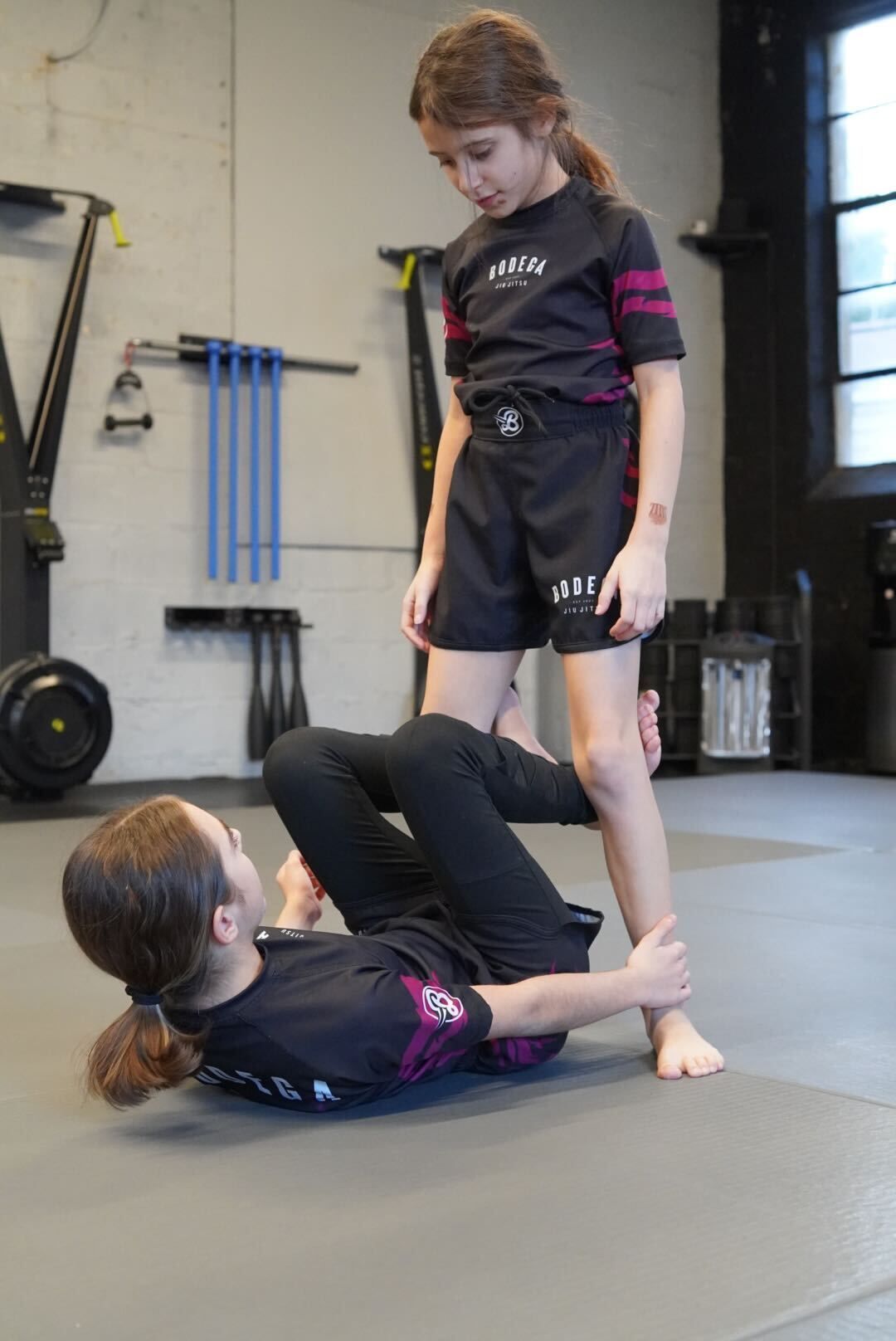
Youth Jiu-Jitsu gives kids a place to move, learn, and laugh while building real athletic skills that carry over into everyday life.
When Maplewood parents look for an after-school activity, the wish list is usually pretty clear: you want something active, structured, and safe, and you want your kid to actually enjoy showing up. Youth Jiu-Jitsu checks those boxes in a way that surprises families, especially when kids realize class feels more like an energetic challenge than a workout assignment.
In our Youth Jiu-Jitsu program, kids build fitness through movement that has a purpose. Instead of repeating drills that feel like chores, students learn how to balance, scramble, grip, base out, and move with control. The result is the kind of full-body conditioning that sneaks up on you, in a good way.
And in Maplewood, where schedules can get packed fast, we keep things practical. Our class schedule is designed to support consistent training without turning your week into a logistical puzzle, and our youth classes are structured so beginners can step in without feeling behind.
Why Youth Jiu-Jitsu is such a strong fitness builder for growing bodies
Youth fitness is not just about burning energy. Kids need coordination, mobility, strength, and the confidence to use their bodies well. Youth Jiu-Jitsu develops those traits through natural, athletic movement patterns like squatting, bridging, crawling, rolling, and changing levels. That variety matters, because kids rarely thrive on one-note training.
A good class also teaches body awareness. Students learn where their limbs are, how to keep balance when someone is pushing or pulling, and how to move with intention. Over time, that can translate into better posture, fewer awkward falls on the playground, and more confidence in sports and PE.
Because grappling involves the whole body, kids tend to develop balanced strength rather than just “strong arms” or “fast legs.” They learn to use hips, core, and legs together, which is a big deal for injury prevention and long-term athleticism.
The “sneaky workout” effect kids actually like
Many kids do not love the idea of “exercise.” But in Youth Jiu-Jitsu, fitness is built into the game. The warmups often look like playful movement, the technique practice feels like solving a puzzle, and the partner drills keep attention engaged because there is always something happening.
By the end of class, kids are breathing hard and smiling, and most do not label it as cardio at all. That is one of the reasons Youth Jiu-Jitsu in Maplewood works so well for families who want a screen-time alternative that does not require constant nagging.
Fitness benefits that show up outside the mats
We usually notice progress in a few ways: kids move better, tire less easily, and carry themselves differently. Youth Jiu-Jitsu helps develop functional fitness, the kind that supports running around at recess, climbing, playing sports, and even just sitting still with better posture and less fidgeting.
Here are a few of the most common physical gains parents tell us they see over time:
• Better balance and coordination, especially during quick direction changes and partner drills
• Stronger core and hips from bridging, shrimping, and maintaining stable positions
• Improved flexibility and joint mobility through safe, guided movement patterns
• Increased endurance from short bursts of effort repeated across rounds
• More overall body control, which helps kids feel capable in new physical situations
None of this requires your child to be “naturally athletic” on day one. Youth Jiu-Jitsu is skill-based, and that means kids build ability through repetition, not genetics or size.
Confidence, discipline, and emotional regulation, without the tough-guy attitude
Parents often come in asking about confidence, and for good reason. Confidence is not just feeling brave; it is trusting yourself to try, fail, adjust, and try again. Youth Jiu-Jitsu creates that loop constantly. Kids learn a technique, test it with a partner, get it wrong, and learn how to stay calm and keep working. That process builds resilience in a very real, practical way.
Discipline grows from structure. Class has clear expectations: listening, taking turns, being respectful, and being safe with training partners. Those small habits add up. Over time, kids learn self-control because it is part of the sport, not because somebody lectures them about it.
We also see emotional regulation develop in a straightforward way. Grappling can feel intense at first, even when it is controlled. Students learn to breathe, think, and respond instead of panicking. That ability to “stay steady” is useful in school, sports, and social situations, and it tends to build quietly over weeks of consistent practice.
Is Youth Jiu-Jitsu good for shy kids or high-energy kids?
Yes, and often for different reasons. Shy kids get a structured way to connect with teammates without having to be loud or perform. High-energy kids get a healthy outlet that still has boundaries and rules. Everyone learns that we can be enthusiastic and controlled at the same time, which is honestly a life skill.
Safety First: how we keep kids training in a controlled, supervised way
Safety is usually the first serious question, and we appreciate that. A well-run Youth Jiu-Jitsu class is not a brawl, and it is not kids being tossed around. We teach age-appropriate technique, we supervise closely, and we keep training controlled.
One of the most important safety habits in grappling is tapping. Kids learn early that tapping is a clear signal to stop, and we reinforce that stopping immediately is non-negotiable. That culture of communication makes training safer and helps kids feel secure, especially beginners.
We also structure partner work carefully. We match students with appropriate partners whenever possible and keep intensity aligned with age and experience. The goal is steady development, not proving something.
Readiness: when a child is “ready” to start
Readiness is not about being tough. It is about being able to follow directions, participate in a group setting, and handle gentle contact in a respectful way. If your child can listen, take turns, and try their best even when something is new, Youth Jiu-Jitsu can be a great fit.
If you are unsure, a trial class is the simplest way to find out. You get to see how the room feels, and your child gets to experience the vibe firsthand.
What a Youth Jiu-Jitsu class looks like in Maplewood
Parents deserve clear expectations, because the unknown is what creates most of the anxiety. Our Youth Jiu-Jitsu in Maplewood classes follow a predictable rhythm so kids feel comfortable, but we keep it varied so it stays fun.
Most classes include a warmup that builds movement skills, a technique segment where we teach a specific position or concept, and partner drills to practice safely. Depending on the age group, we may include controlled sparring-style rounds where kids try to apply what they learned with clear rules and close supervision.
We keep instruction simple and concrete. Kids do best when they know exactly what to do, why it matters, and what success looks like. And we expect effort, but we do not expect perfection.
What to bring and what to wear for the First Class
For a first class, keeping it simple is best. If your child does not have a uniform yet, we will help you understand what is needed and when.
A few practical tips that make day one smoother:
1. Arrive a little early so your child can settle in and we can answer quick questions
2. Bring a water bottle, because kids get moving fast
3. Wear comfortable training clothes if you do not have a gi yet
4. Make sure fingernails and toenails are trimmed for safe partner work
5. Let us know about any concerns, from anxiety to past injuries, so we can coach appropriately
When kids know what to expect, they relax. When kids relax, they learn faster. That first day matters more than people think.
How often should kids train to see results?
Consistency beats intensity, especially for youth. Most kids do well starting with one to two classes per week, then building up if they love it and your schedule allows. Youth Jiu-Jitsu rewards repetition, so even one class weekly can build momentum if your child shows up regularly.
We also encourage families to think in seasons. Some months are busier than others. The goal is to create a routine your child can maintain, not a sprint that burns out after three weeks.
If your child is interested in competition, we can guide that path in a healthy way, but competition is never the only measure of progress here. For many kids, “winning” looks like staying calm, remembering a technique, or simply sticking with something that felt hard at first.
Why Maplewood families love Youth Jiu-Jitsu as an after-school routine
Maplewood families tend to value programs that feel community-based, structured, and welcoming. Youth Jiu-Jitsu fits naturally into that, because training partners rely on each other. Kids learn quickly that you cannot improve without helping someone else improve too. That creates a friendly team feeling, even though the sport is individual.
It is also a strong indoor activity option, which matters during cold months, rainy weeks, or when outdoor sports are not in season. Instead of defaulting to more screen time, kids get a place to move, sweat, and focus.
And because Youth Jiu-Jitsu is skill-driven, kids can start at different levels and still progress. You do not have to wait for tryouts or hope your child gets enough playing time to learn. Every class includes practice, feedback, and a chance to improve.
Common parent questions about Youth Jiu-Jitsu in Maplewood, NJ
Will Jiu-Jitsu make my child more aggressive?
Our goal is the opposite. We teach self-control, respect, and calm problem-solving. Kids learn that techniques come with responsibility, and we reinforce that training is for growth, not for showing off.
Is it too intense for beginners?
Beginners are expected and supported. We introduce skills step by step, and we keep intensity appropriate for age and experience. The class is active, but it is not chaos.
Does Youth Jiu-Jitsu help with bullying?
We focus on confidence, awareness, and the ability to stay composed under pressure. That often changes how kids carry themselves, which can reduce bullying dynamics. We also teach kids to make smart choices and to involve trusted adults when needed.
What if my child is not athletic?
That is completely fine. Youth Jiu-Jitsu builds athleticism. Many kids discover they enjoy movement for the first time because the learning feels practical and game-like.
Ready to Begin
If you want an activity that blends fitness, focus, and fun without turning every afternoon into a battle, Youth Jiu-Jitsu is worth experiencing in person. Our Maplewood youth program is designed to keep kids active while building real skills, real confidence, and a sense of belonging.
When you are ready, we will help you choose a starting point that fits your child and your schedule. At Bodega Jiu-Jitsu, we keep the process simple, supportive, and centered on steady progress, so your child can grow into the adventure one class at a time.
Put the techniques you read about into practice on the mats at Bodega Jiu-Jitsu.