


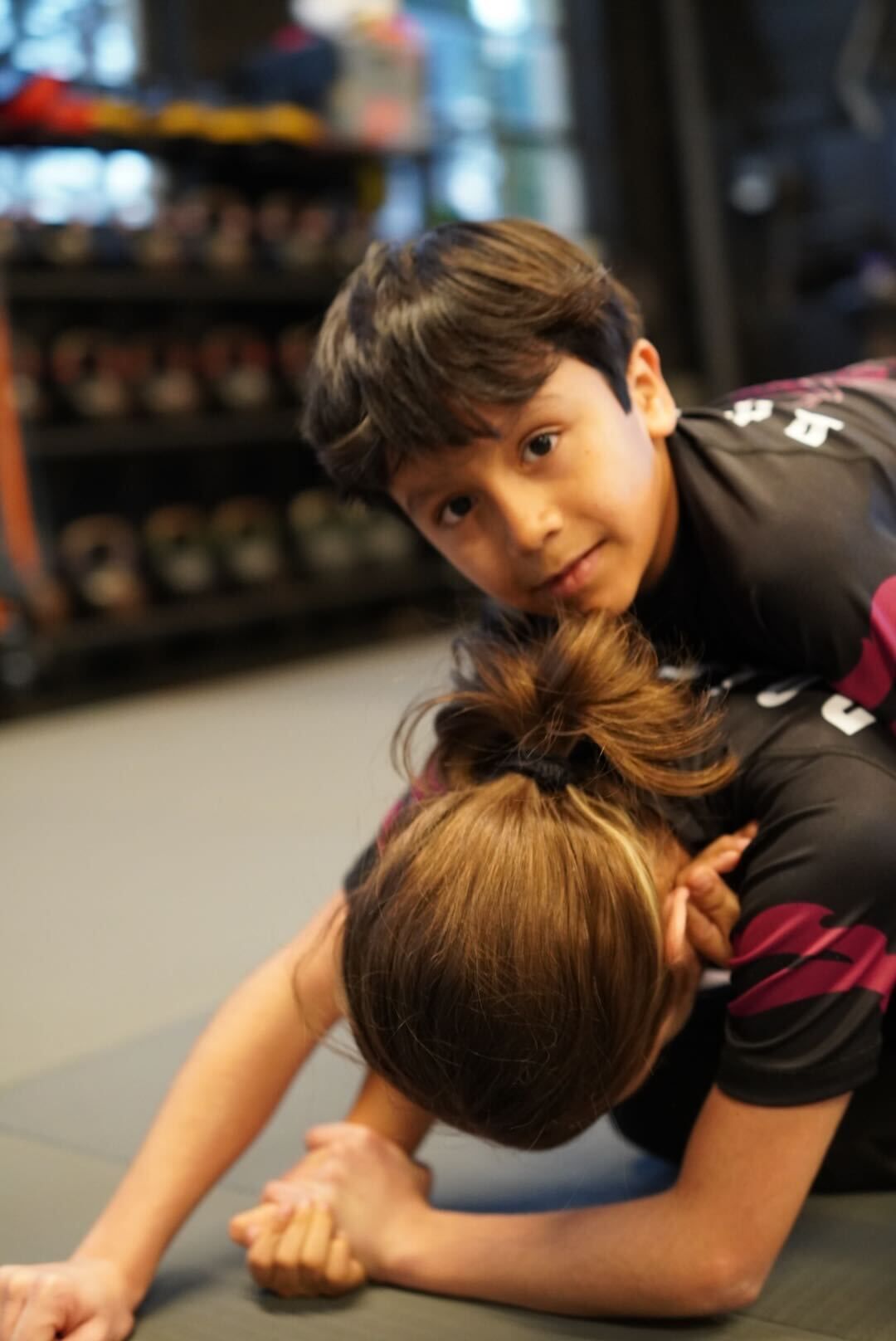
Youth Jiu-Jitsu turns after school energy into better listening, steadier balance, and calmer decision making.
If you are looking for an activity that does more than just “wear your kid out,” Youth Jiu-Jitsu is one of the most practical options we teach. It is physical, yes, but it is also a structured way to train attention, sequencing, and self-control, the same skills kids lean on in school when instructions get longer and distractions show up.
In Maplewood, families juggle busy commutes, homework, practices, and calendars that can feel like a game of Tetris. Our Youth Jiu-Jitsu in Maplewood program fits well because the class structure is predictable and progress is measurable. Kids learn how to move their bodies with purpose while learning how to pause, listen, and try again when something does not work the first time.
And that “try again” part matters. Research summaries on kids martial arts often point to the strongest improvements in self-control and classroom behavior, with attention and executive function gains showing up as well. We see the same pattern in our youth classes when kids train consistently: focus improves because the environment requires it, and coordination improves because the movements are specific, coached, and repeated.
Why focus and coordination often rise together in Youth Jiu-Jitsu
We tend to think of focus as a purely mental skill. In youth training, it is often physical first. When a child has to keep posture, track grips, balance on knees, and follow a simple sequence, the brain and body have to cooperate. That cooperation is the foundation of coordination, and it is also the foundation of attention.
Youth Jiu-Jitsu asks kids to process information in layers. We demonstrate a movement, name the steps, and coach the details in real time. Your child is not just running laps or chasing a ball. Your child is learning how to notice where their hands are, where their partner’s hips are, how to control breathing, and how to move without panicking. That is attention training with a purpose.
Because jiu-jitsu is grappling-based, it adds a coordination layer that many families have not seen in typical activities. Kids learn posture, base, balance shifts, safe falling, and controlled movement under pressure. Those are not abstract concepts in class. We coach them as real skills that show up every time kids move on the mat.
The Maplewood after-school reality and why structure matters
Our Maplewood community has a strong youth recreation culture, and many kids already have access to sports, township programs, and school activities. That means families are not asking, “Is there anything to do?” Families are asking, “What is worth our time on a weekday?”
Youth Jiu-Jitsu in Maplewood works well for that question because our classes run with consistent routines. Kids line up, we review expectations, we warm up with purposeful movements, we practice technique, and we finish with controlled training that matches age and experience. The repetition is not boring when it is coached well. Repetition is what makes kids more confident, and confidence is what makes focus easier to access.
If your child needs a little extra support with following directions, our predictable class rhythm helps. Kids learn that listening leads to action, and action leads to improvement. Over time, that creates a calm “I can handle this” mindset that parents often notice off the mat.
How Youth Jiu-Jitsu builds attention that transfers to school
Focus in class is not about being silent or perfect. It is about practicing the skill of paying attention, resetting, and trying again. In Youth Jiu-Jitsu, kids get immediate feedback. If they miss a step, the technique does not work. That sounds harsh, but it is actually gentle and useful: the result is clear, and we can fix one detail at a time.
We also train sequencing, which is a school-ready skill. A basic escape might be step one frame, step two hip out, step three recover guard. A simple takedown entry might be step one stance, step two grip, step three step in. That kind of structured thinking supports executive function: kids learn to hold instructions in working memory and execute them in order.
Most importantly, we coach self-control as part of the sport. Kids learn to wait for the signal, to move with control, to stop when asked, and to respect partners. Research discussions around youth martial arts regularly highlight improvements in self-control and classroom behavior, and our experience matches that. When kids practice controlled effort, it shows up later in how they handle frustration, transitions, and “not right now” moments.
What focus looks like during a typical Youth Class
You will usually see small, practical moments of attention training that add up over time:
- Kids line up and look to the coach for a clear start, which reinforces listening before moving.
- We use simple cues and repeat them, helping kids connect words to actions.
- Partners rotate, so kids practice adapting to new people without losing the assignment.
- Short rounds teach kids to stay engaged for a defined time window, then reset.
- We end class with a consistent wrap-up so kids leave feeling organized, not scattered.
Coordination and “less clumsy” movement: the Grappling advantage
Parents ask about coordination all the time, especially when a child trips easily, struggles with balance, or avoids sports because movement feels awkward. Youth Jiu-Jitsu helps because it trains whole-body awareness. Kids learn where their weight is, how to shift it, and how to keep a stable base while their partner moves.
Grappling is not just strength. It is angles, balance, and timing. When kids practice shrimping, bridging, technical stand-ups, and posture control, we are giving them repeatable patterns that improve motor skills. Those patterns become automatic over time, which is when you start hearing things like, “My kid is moving with more confidence,” or, “My kid seems steadier.”
We also teach safe falling and controlled contact. That does not mean kids are thrown around. It means we coach how to land, how to protect the head, how to post safely, and how to use hips and legs instead of stiff arms. Those skills build trust in their own movement, which is a big piece of coordination.
Confidence without hype: why small wins matter
Confidence in Youth Jiu-Jitsu grows in a realistic way. Kids do not need a dramatic speech to feel proud. They need a series of achievable challenges, coached well, in a room where effort is respected.
In class, a “win” might be remembering to keep elbows in. It might be escaping a position that felt impossible last week. It might be speaking up and asking a question instead of freezing. Those moments are quiet, but they add up. Confidence built through skill tends to transfer to social settings and school because it is not pretend. Your child knows what they can do, and they know they can learn what they cannot do yet.
This is also where resilience shows up. Jiu-jitsu is a problem-solving sport. Mistakes are normal. We coach kids to reset, breathe, and try again. That habit is valuable in the classroom, too, especially for kids who get discouraged when work feels challenging.
Safety, age-appropriate training, and how we keep intensity in check
Safety is not a marketing line for us. It is a coaching priority, especially in youth classes. Youth Jiu-Jitsu can be safe for younger kids when the environment is structured, technique comes before intensity, and coaches insist on control.
We start with fundamentals: movement, posture, frames, and positional awareness. We match partners thoughtfully and set clear rules for contact. When kids do live training, we keep it controlled and age-appropriate. The goal is learning, not winning a tough round.
If you are wondering whether your child will be overwhelmed, that is a fair concern. Our job is to meet kids where they are. Some kids jump in quickly. Some need a few classes to settle in. Both are normal, and we coach both.
What age should kids start, and what progress looks like
Most kids can start Youth Jiu-Jitsu when they can follow basic directions, participate safely with partners, and handle structured group time. In practice, that often lines up with early elementary ages, but readiness matters more than a number.
As kids grow, the emphasis shifts. Younger students spend more time on movement patterns, balance, and simple positional goals. Older students can handle longer sequences, more detailed technique, and more problem-solving during controlled rounds.
Progress is not a straight line, and that is actually a good thing. Some weeks your child will look sharper. Some weeks your child will look tired or distracted. Over months, though, consistent training tends to produce meaningful changes in focus, coordination, and confidence.
How often should your child train to see benefits?
Families want a realistic answer, tied to school schedules. We usually recommend starting with two classes per week if your goal is skill development and noticeable focus improvements. One class per week can help, especially for nervous beginners, but consistency is what makes the biggest difference.
The sweet spot is a schedule your family can actually keep. If the routine is too aggressive, kids burn out and parents feel stressed. If the routine is too random, progress feels slow. We like steady, sustainable training that becomes part of the week, like homework and dinner, just with a gi and a water bottle.
What to expect on day one and what your child should wear
First classes should feel welcoming and clear. We keep the onboarding simple, explain expectations, and guide new students through the warm-up and technique step by step. Your child does not need prior experience. Youth Jiu-Jitsu is beginner-friendly when the coaching is thoughtful and the room is organized.
For what to wear, you can start with comfortable athletic clothing if you do not have a uniform yet. Avoid clothes with zippers or hard parts that can scratch. Bring water, arrive a little early, and let us know if your child is nervous. That happens a lot, and it usually fades once kids realize the class is structured and supportive.
How Jiu-Jitsu differs from many kids sports
If your child has tried sports and struggled, it does not always mean your child is “not athletic.” Sometimes it just means your child learns better in a different environment. Youth Jiu-Jitsu is individual skill development inside a group class. That is a helpful mix for many kids.
Here is what makes the experience distinct in a practical way:
1. Kids get coached in detail, not just told to “try harder,” which helps focus and confidence.
2. Movements are repeatable and measurable, so kids can feel progress quickly.
3. Partner work teaches awareness and boundaries, which supports self-control.
4. The game is problem-solving, not just speed, so different learning styles can thrive.
5. Class routines stay consistent, which helps kids who do better with structure.
Take the Next Step
If you want an after-school activity that builds focus, coordination, and real confidence, we would love to show you what training looks like in person. The structure of Youth Jiu-Jitsu matters, and when kids train in a consistent, coached environment, the benefits tend to show up both on the mat and in everyday routines.
We run our Youth Jiu-Jitsu in Maplewood program with clear expectations, age-appropriate progressions, and a calm emphasis on control before intensity. When you are ready, we can help you choose a training rhythm that fits your family and helps your child grow. At Bodega Jiu-Jitsu, that is the standard we hold ourselves to.
Turn what you learned here into practical grappling skills by training at Bodega Jiu-Jitsu.