
Jiu-Jitsu turns pressure into practice so you can stay steady when real life gets loud.
Maplewood moves fast in a quiet-looking way: commutes, school calendars, meetings that run long, and the constant tug of family and personal goals. When stress shows up, most of us try to think our way out of it. We believe resilience is built differently, through consistent practice in a place where challenge is normal, safe, and even a little fun.
That is why Jiu-Jitsu works so well here. It blends physical effort with problem-solving, and it asks you to stay calm while your body wants to hurry. The result is not just better fitness or technique, but a more reliable ability to handle everyday pressure without spiraling.
In our Maplewood classes, we see the same pattern: people walk in looking for a workout or a new skill, and they stay because training changes how they respond to stress. You learn how to breathe, reset, and try again, and that habit follows you off the mat.
What everyday resilience really means, and why Maplewood needs it
Resilience is not a personality trait you either have or do not. It is a skill you can build, one repetition at a time, especially when you practice inside controlled discomfort. That matters in Maplewood because daily life often stacks small challenges until you feel worn down, even if nothing is technically “wrong.”
Jiu-Jitsu gives you a structured environment to practice responses that transfer to real situations: staying composed, solving problems under pressure, and recovering after setbacks. You do not need to be naturally tough. You need a place where effort is expected and support is real.
The best part is that resilience develops in layers. Some benefits show up immediately, like the stress relief that comes from hard training. Other benefits build over months, like the confidence that you can handle unfamiliar situations without panicking.
The science and the sweat: how Jiu-Jitsu relieves stress
One reason Jiu-Jitsu feels so effective for mental health is simple: your body is working. Physical exertion supports endorphin release, and that can shift your mood quickly. You leave class tired, but often calmer than when you walked in.
There is also the focus factor. When you are learning a guard pass or trying to maintain position, your brain cannot multitask the way it does during a stressful day. You are present because you have to be. That single-tasking is a relief for a mind that usually runs in ten directions.
Over time, the mat becomes a reliable reset button. You train, you sweat, you problem-solve, and you go back to your day feeling more grounded. It is not magic. It is repetition, attention, and a community that expects you to show up again.
Mental toughness without the “tough guy” vibe
A lot of people hear “grappling” and assume it comes with a certain attitude. Our experience is the opposite. Real mental toughness is quiet. It is the ability to stay thoughtful under pressure, to accept feedback, and to keep going after you fail in a very visible way.
In Jiu-Jitsu, you tap out. A lot. That is not a flaw in the system, it is the system. You learn quickly that tapping is information, not embarrassment. It is your nervous system practicing recovery: recognize danger, communicate, reset, re-engage.
That training carries into work and relationships. When a meeting goes sideways, you do not have to “win” the moment. You can pause, breathe, adjust, and try a different approach. That is resilience in real time.
Why sparring builds calm under pressure (and why that matters off the mat)
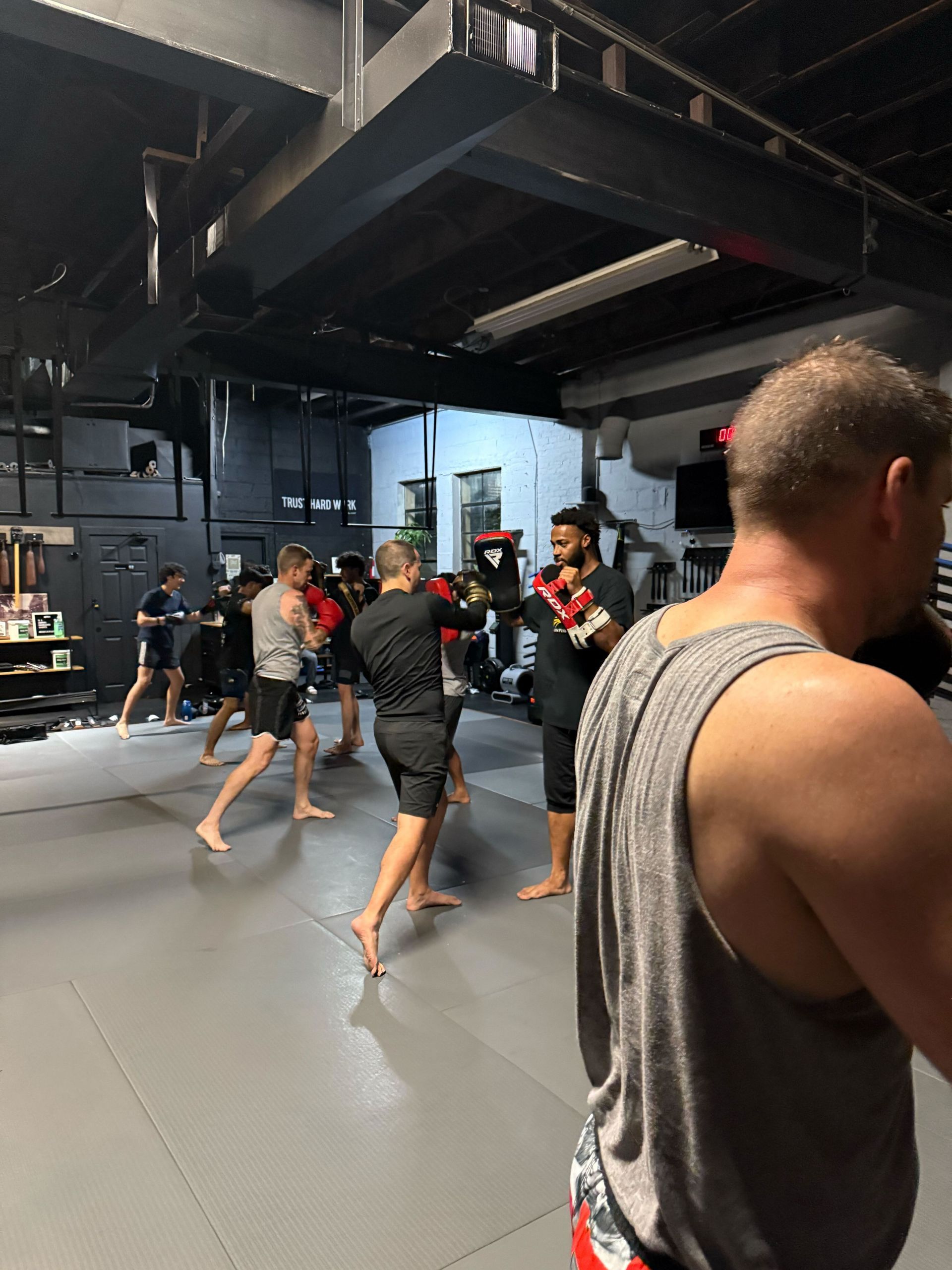
Sparring, often called rolling, is where Jiu-Jitsu becomes a live problem-solving practice. You are not memorizing a routine. You are adapting to a moving situation with another person who is also trying to solve it.
This is where “everyday resilience” becomes more than a slogan. Rolling teaches you to stay calm in discomfort, to avoid rushing, and to make decisions when you feel tired. That is exactly the skill set most adults want when life feels heavy.
You also learn to manage adrenaline. Early on, your body wants to sprint through every moment. With coaching and time, you learn pacing: when to explode, when to settle, when to defend and let the moment pass. That pacing shows up in daily life as better emotional control.
The “live-action chess match” effect: resilience through problem-solving
People often describe Jiu-Jitsu as a live-action chess match, and that is accurate in the best way. Every position has options. Every grip changes the next decision. Every small angle matters, which is oddly comforting when the rest of life feels vague.
Problem-solving builds resilience because it shifts you from reacting to responding. Instead of feeling trapped, you practice asking: What is the problem right now, and what is my next best move? That question is useful whether you are pinned in side control or pinned by a deadline.
We coach you to think in simple priorities, especially as a beginner:
- Protect yourself first with posture and frames
- Improve position before chasing submissions
- Use technique and timing rather than raw force
- Stay curious when something fails instead of getting frustrated
Those are training principles, but they also double as life principles. They help you stop wasting energy on panic and start using it on progress.
Beginner-friendly by design: why you do not need to be athletic to start
A common worry in Maplewood is time and readiness: “I am out of shape,” “I have not trained before,” “I am too old to start,” or “I do not want to get hurt.” We get it. Starting something physical can feel like stepping into the unknown.
Our classes are built to meet you where you are. Jiu-Jitsu is famously technique-driven, which means you can learn to move effectively without needing to be the strongest person in the room. You improve by showing up consistently, not by being perfect.
We also keep training structured and progressive. You will learn fundamentals, practice them with a partner, and gradually add resistance as your comfort grows. That gradual exposure is part of what makes the art such a strong builder of resilience: you face challenge, but in a controlled dose.
What you learn in our Adult Grappling in Maplewood program
Adult training tends to attract people with real-life responsibilities, which means the program needs to be practical. In our Adult Grappling in Maplewood classes, we focus on skill development that supports confidence, fitness, and composure, without turning training into chaos.
Here is what you can expect to spend time on:
- Positional basics like guard, side control, mount, and back control, so you understand what “good” looks like
- Escapes and defensive habits that keep you safer and reduce panic when you feel stuck
- Takedown entries and standing awareness, taught in a controlled way with safety as the priority
- Submissions and the mechanics behind them, with clear tapping culture and partner respect
- Live rounds that match intensity to experience, so you can grow without feeling thrown into the deep end
This approach is also what makes Grappling Arts Maplewood so appealing to adults who want more than a workout. You train your body, but you also train your decision-making.
Kids and teens: respect, confidence, and better choices under stress
Resilience is not just an adult need. For kids and teens, everyday pressure can look like social stress, academic expectations, and learning how to manage conflict. Training gives young students a structured way to practice respect, boundaries, and emotional control.
Our youth training emphasizes discipline, listening skills, and conflict resolution. We teach students how to stay calm, follow instructions, and work with partners safely. That partner-based learning matters, because it builds empathy along with confidence.
Over time, kids learn that frustration is not an emergency. It is a signal to slow down and keep trying. That is a powerful lesson, and it tends to show up at home and in school in ways parents notice.
Community resilience: how training strengthens Maplewood beyond the mat
Maplewood is a community where people value connection, but connection can be hard to maintain when schedules are packed. Training creates a consistent place to see familiar faces, work toward shared goals, and build trust through effort.
Grappling is unique because you cannot do it alone. You need partners. That requirement turns into a strength: you learn how to communicate, how to be a good teammate, and how to support someone else’s progress while protecting your own.
We also see how training contributes to a sense of safety. Practical self-defense skills and situational awareness can change how you carry yourself, which often reduces fear and increases confidence in everyday environments.
How resilience develops over time: what to expect in your first months
We like to keep expectations honest. Your first few weeks can feel awkward. You may forget steps, get tired quickly, or feel like everyone else knows what is happening. That is normal, and it is part of the resilience lesson.
Most adults notice mental benefits quickly because the stress relief is immediate: you train hard and your mind quiets down. Skill confidence takes longer, but it builds steadily if you stay consistent.
A simple timeline many students recognize looks like this:
1. Weeks 1 to 2: you learn the culture, basic movements, and how to tap early and often
2. Weeks 3 to 6: you start recognizing positions and making small, smart decisions
3. Months 2 to 3: you gain cardio, composure, and a sense of progress that feels real
4. Months 4 and beyond: your resilience becomes reliable, because you have practiced it hundreds of times
That is the heart of Jiu-Jitsu: you do not wait to feel ready. You train, you adapt, and readiness follows.
Take the Next Step
If you want a practical way to build everyday resilience in Maplewood, our training is designed to help you handle pressure with more calm and more options. Jiu-Jitsu does that by blending conditioning, focus, and problem-solving into one consistent practice, and the results tend to show up in your workday, your relationships, and your self-confidence.
We built our programs at Bodega Jiu Jitsu to support beginners, busy adults, and families who want something real and sustainable, not a quick fix. When you are ready, we will help you get started with a clear path and a community that respects the process.
Build practical self-defense skills and resilience by joining a class at Bodega Jiu Jitsu.