
Adult grappling turns uncertainty into capability, and capability into real belonging.
Adult grappling is one of the rare activities where you can feel progress in a matter of weeks, not months, and that progress shows up outside the gym, too. We see it when a beginner stops apologizing for taking up space, when someone who feels “out of shape” starts moving with purpose, and when a room of strangers becomes a steady support system. In Maplewood, where many of us juggle work, commutes, and family schedules, that kind of grounded confidence matters.
Grappling, especially Brazilian Jiu-Jitsu, rewards calm problem-solving over brute strength. You learn how to breathe while you’re uncomfortable, how to think while you’re tired, and how to keep going when your first idea doesn’t work. A study of adult practitioners found 87.6% reported improved confidence, and that lines up with what we watch happen on the mat every day: skill mastery has a way of changing how you carry yourself.
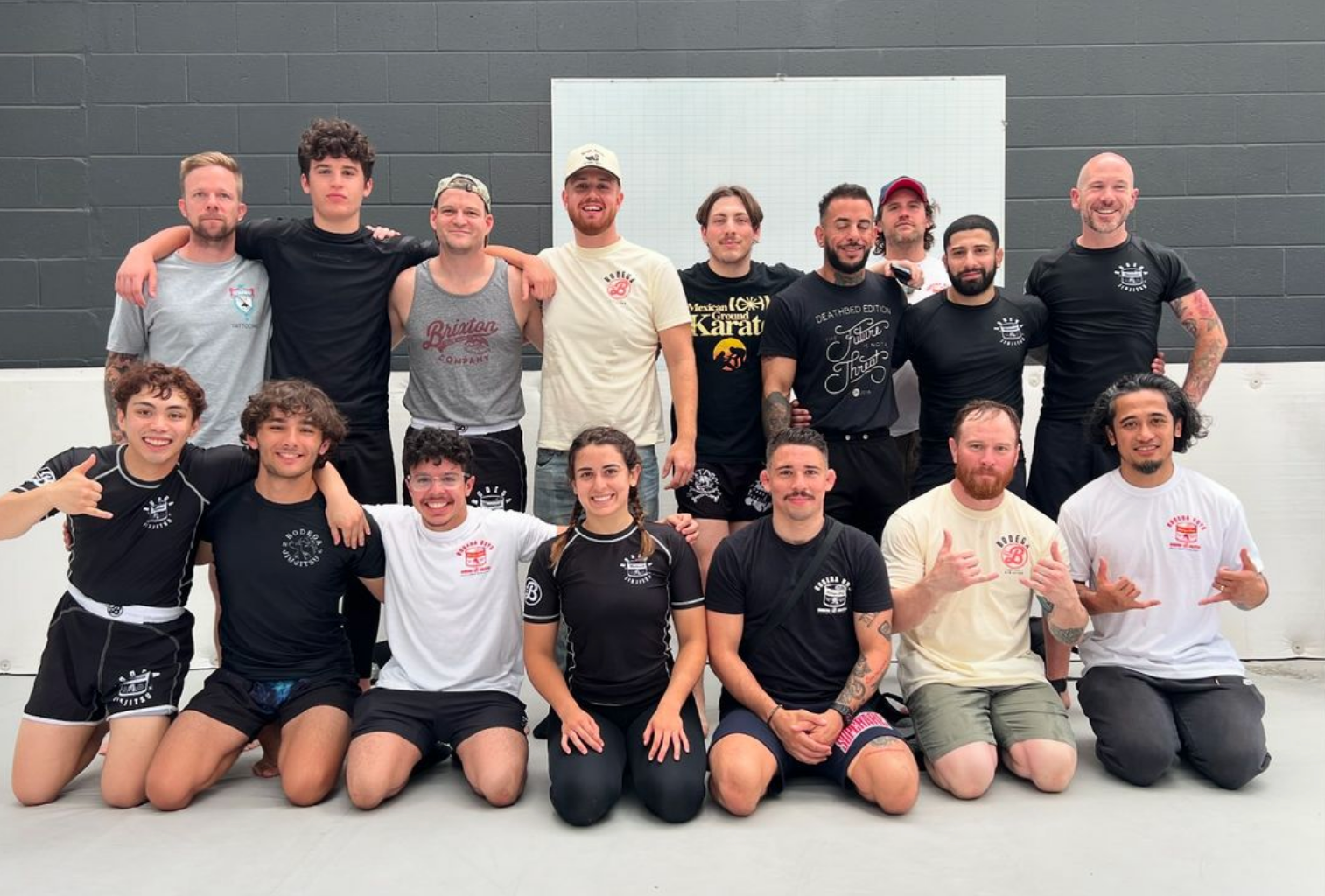
Community is the other half of the story. Grappling is partner-based, and progress is shared. The same study reported 100% of adults felt a strong sense of community and respect in training environments. When your training requires trust, people tend to show up for each other, and that’s a big deal in a world that can feel pretty disconnected.
Why Adult Grappling Builds Confidence Faster Than You Expect
Confidence is not a motivational speech. It’s evidence. Adult grappling gives you evidence in small, repeatable moments: you escape a bad position, you hold balance longer, you remember a sequence under pressure, you stay composed when you would have panicked before.
You Gain Confidence Through Skill Stacking
A lot of fitness routines rely on willpower. Grappling relies on learning. Each class gives you a few pieces, and over time those pieces stack into something you can actually use. That’s why even busy adults tend to stay engaged: there’s always another detail to refine, another puzzle to solve.
In practice, this looks like:
- Learning how to frame and create space so you can breathe and reset
- Understanding leverage so you don’t feel “behind” just because someone is stronger
- Recognizing patterns so positions start to feel familiar instead of chaotic
That process is also why adult grappling classes work well for beginners. You don’t need to be athletic to start; you need a willingness to learn in steps.
Promotions and Milestones Make Progress Tangible
Adults often don’t get clear markers of progress in everyday life. In grappling, you do. Whether it’s belt promotions in gi training, leveling up in no-gi rounds, or simply noticing that you’re thinking more clearly during sparring, the milestones are built into the practice.
And yes, those milestones matter. They reinforce that your effort is doing something real. Over time, that builds a calm, durable confidence, the kind you can lean on at work, in relationships, and in stressful moments.
Self-Defense Applicability Changes How You Walk Through the Day
There’s a difference between “I work out” and “I can handle myself.” Adult grappling teaches distance, control, grips, balance, and escapes, all of which are relevant to real-world self-defense. We keep training responsible and controlled, but we don’t treat the art like it only lives in a sport bubble.
When you’ve practiced getting up safely, controlling someone without striking, and staying composed under pressure, daily life feels less intimidating. You’re not looking for conflict; you’re less worried about it.
The Maplewood Factor: Why Community Hits Different Here
Maplewood has a strong community vibe, but it’s also a place where people are busy. Many residents commute, manage full calendars, and try to squeeze wellness into whatever gaps are available. That’s exactly where adult grappling in Maplewood fits: it’s structured, social, and mentally engaging, not just another treadmill session you forget the next day.
Grappling creates connection because you cannot train alone. You drill with partners. You rotate rounds. You learn each other’s names because you have to. It’s simple, but it works.
Trust Is Built Into the Training
A healthy grappling room runs on a few non-negotiables: respect, safety, and shared responsibility. You tap, your partner releases. You communicate. You learn to train hard without ego. That dynamic is a big reason adults report such strong belonging and respect in studies, and it’s a big reason people stay consistent.
Over time, you start looking forward to seeing familiar faces, even if you’re the type who usually keeps to yourself. It’s not forced. It’s just what happens when you do challenging things together.
You’re Not “Behind” If You Start Late
One trend we’re seeing nationally, especially post-2024, is a surge of adults joining grappling for holistic wellness, stress relief, and mental health, not just fitness. Over-40 adults in particular are turning to BJJ for mobility, cognitive sharpness, and community, and for good reason: leverage-based technique scales across age and size.
If you’re starting at 35, 45, or 55, your path is still legitimate. You train smart, you recover well, and you build a practice that supports the rest of your life.
Stress Relief, Focus, and the “Flow” State During Rolling
Adult grappling has a sneaky mental health benefit: it demands your full attention. You can’t half-check your email while someone is passing your guard. Your brain has to be present, and that presence often feels like relief.
Research backs this up. In one study of adult practitioners, 87.5% reported reduced anxiety, 96.9% improved mood, and 81.3% enhanced mental flexibility. We also see how quickly training can reset a stressful day. You arrive with your mind spinning and leave feeling like the volume has been turned down.
Why Grappling Rewires Your Response to Pressure
When you roll, you practice staying calm in a controlled kind of chaos. Your breathing becomes a tool. Your posture becomes a decision. You learn that panic wastes energy and that small improvements add up.
Neuroscience-focused discussions around BJJ often describe “rewiring” for resilience and focus. One data point cited in recent writing suggests grapplers show a 38% greater confidence increase compared to traditional training methods. Whether you care about the exact number or not, the mechanism makes sense: pressure plus problem-solving plus repetition builds adaptability.
Emotional Control Becomes a Trainable Skill
One of the most underrated benefits of adult grappling classes is learning emotional stability under stress. You will get stuck. You will lose positions. You’ll have rounds where nothing works. But you also get another round, and another chance to adjust.
That carries over into life in a surprisingly practical way:
- You pause instead of reacting
- You stay curious instead of getting defensive
- You recover faster after a tough moment
That’s confidence, just in a quieter form.
What to Expect in Our Adult Grappling Classes
If you’re new, it’s normal to wonder what you’re walking into. Our adult grappling classes are structured so you can learn safely, get a solid workout, and actually remember what you practiced. We keep the environment focused, but not tense. People are here to train, improve, and support each other.
Most classes include technical instruction, drilling, and live training (sparring) that’s scaled to experience level. You’ll sweat, but you’ll also think. Grappling is physical chess, and you’ll start seeing patterns sooner than you expect.
Gi and No-Gi: Two Paths, Same Core Skills
We offer training that can include gi and no-gi options. The gi slows things down and adds grip strategy. No-gi tends to be faster and more movement-based. Both build timing, control, balance, and composure.
If you’re not sure where to start, we help you choose based on your goals and comfort level. Many adults do both because each style teaches something slightly different.
A Simple Timeline for Real Results
Everyone progresses at a different pace, but the benefits tend to show up in a predictable sequence when you train consistently. If you’re wondering how often to train, 2 to 3 sessions per week is a realistic sweet spot for most adults: enough repetition to improve, enough recovery to avoid burnout.
Here’s what many students experience over time:
1. Weeks 1 to 3: You learn basic positions, how to tap, and how to move safely with a partner
2. Weeks 4 to 8: You start escaping more often, understanding control, and feeling less overwhelmed
3. Months 3 to 6: You develop “go-to” techniques and notice real changes in fitness, mood, and focus
4. Months 6 plus: You refine strategy, build deeper friendships, and see confidence show up everywhere else
That rhythm is part of why adult grappling in Maplewood fits so well for busy professionals. You don’t need perfect consistency. You need steady practice.
Beginner Concerns We Hear All the Time (And How We Handle Them)
Most adults want to try grappling, but a few concerns can keep people on the fence. We take those concerns seriously because they’re real, and because good coaching should make training accessible.
“I’m Not in Shape Yet”
You don’t need to get in shape to start. Training is how you build fitness. We scale intensity, teach efficient movement, and help you pace yourself so you can improve without feeling crushed.
“I’m Worried About Injuries”
Safety is a culture, not a rule sheet. We emphasize controlled training, clear communication, and tapping early. You’ll also learn how to move with good mechanics, which reduces risk over time.
“Will I Fit In?”
If you show up willing to learn, you fit in. Grappling rooms tend to build camaraderie quickly because everyone remembers being new. The shared work makes conversation easier, and respect is baked into the training.
Practical Ways to Get the Most Out of Adult Grappling
Adult grappling rewards consistency more than intensity. The adults who thrive long-term tend to do a few simple things well, even when life gets hectic.
• Show up twice a week before you worry about doing more
• Focus on one position at a time, like guard retention or side control escapes
• Ask questions after class and keep a short mental note of what confused you
• Prioritize sleep and hydration, because recovery is part of training
• Treat sparring as practice, not a test, so you keep improving without ego
This approach also makes adult grappling classes sustainable for adults over 40, parents, and professionals with unpredictable schedules.
Take the Next Step
If you want confidence that comes from real capability and a community that feels earned, not manufactured, we built our adult program for exactly that. At Bodega Jiu Jitsu, our focus is simple: teach you practical grappling, help you progress with structure, and keep the room welcoming so you can train for years, not just a few weeks.
When you’re ready, the class schedule and beginner pathway make it easy to start with a clear plan. Adult grappling is challenging in the best way, and once you feel the momentum, it tends to stick.
Ready to level up your training? Join a grappling class at Bodega Jiu Jitsu today.