Grappling turns fitness into something you can feel in every muscle group and measure in real-world stamina.
If you want a workout that actually uses your whole body, grappling is hard to beat. You are pulling, pushing, bracing, rotating, posting, bridging, and moving through awkward angles that a normal gym routine rarely touches. The result is a training session that builds strength, conditioning, flexibility, and coordination at the same time, without feeling like you are just logging miles on a treadmill.
Around Maplewood, we see the same pattern: busy schedules, desk-job stiffness, and stress that piles up fast. Our adult training is designed to be an efficient answer to all of it. You will work hard, but you will also learn a skill set that keeps your mind engaged, which is a big reason people stick with it.
A typical hour of Brazilian Jiu-Jitsu style training can burn roughly 700 to 1,000 calories, depending on intensity and body size. More importantly, you are not just chasing sweat. You are building a kind of fitness that shows up when you carry groceries, climb stairs, play with your kids, or want to feel steady on your feet when life gets chaotic.
What makes grappling a true full-body workout
The simplest way to explain it is this: you cannot “hide” weak links in grappling. If your grip is tired, you notice. If your hips are stiff, you notice. If your core cannot stabilize when someone applies pressure, you definitely notice. That honesty is part of why the training works.
In our adult grappling classes, the full-body effect comes from combining multiple movement categories in one session:
• Lower-body drive for takedowns, posture, and standing balance
• Hip mobility and rotational strength for escapes, guard work, and sweeping
• Core endurance for bracing and breathing under pressure
• Upper-body pulling and pushing for control, framing, and finishing mechanics
• Neck and upper-back engagement for posture and safe alignment
Because every technique involves your whole structure, your strength becomes more “connected.” It is not just bigger biceps or stronger legs in isolation. It is the ability to coordinate your body as one unit.
The muscle groups you train without thinking about it
One underrated part of grappling is how naturally it trains stabilizers. You spend time in positions where you must maintain balance while your partner shifts weight and angle. That is joint integrity work, disguised as learning a skill.
Arms, shoulders, and back
Yes, you will feel your arms. But the bigger story is your back and shoulders learning to work efficiently. You are learning how to pull with your lats, how to frame with your forearms, and how to keep your shoulders in safer positions while moving.
We coach details like posture and scapular control because it helps performance and helps you train consistently. The goal is progress you can repeat, not a one-time heroic workout that wrecks you for a week.
Core, hips, and legs
If you have ever tried a hip escape or a bridge-and-roll, you already know: your hips and core do a lot of the heavy lifting. Grappling builds functional leg strength through base, pressure, and constant micro-adjustments. You are basically doing athletic “anti-fall” training the whole time.
This is one reason adult grappling in Maplewood appeals to people who want a workout with carryover. You are not just getting tired. You are getting capable.
Conditioning that beats “monotonous cardio”
We like cardio. We just do not love cardio that makes your brain check out. Grappling conditioning is different because it blends aerobic work (steady effort) with anaerobic spikes (short bursts), which is closer to how your body is challenged in real life.
When you roll or drill with intent, you are training:
• Lung capacity and breathing control under pressure
• Heart strength through repeated effort cycles
• Recovery speed between bursts of intensity
• Muscular endurance in positions that demand constant tension
That conditioning is one reason many adults feel changes quickly. In recent performance discussions across the sport, athletes track workload and intensity with metrics like volume per minute, and consistent training can produce noticeable improvements in a few weeks. You do not need to be a competitor to benefit from that structure. You just need a routine you can maintain.
Calorie burn and body composition changes you can actually sustain
People often ask about weight loss, and we keep the answer practical. Grappling sessions can burn hundreds of calories, often in the 700 to 1,000 range for an intense hour. But the bigger win is that the training also builds lean muscle and keeps your metabolism elevated after class.
That combination matters because it supports body recomposition rather than just “burning off” last night’s dinner. When you train consistently, you tend to notice:
• More definition through the arms, back, and shoulders
• Stronger legs and glutes from base and movement
• A tighter, more functional core from constant bracing and rotation
• Improved posture from learning to align your spine under pressure
We also keep the experience realistic. If your nutrition and sleep are a mess, the results come slower. If you train 2 to 3 times per week and recover well, the changes often show up in 3 to 6 weeks in ways you can feel in your energy and how your clothes fit.
Mobility and injury prevention for real adult bodies
A lot of adults show up feeling tight, especially hips and upper back. We build mobility into the process because grappling demands movement quality. Positions like guard retention, technical stand-ups, and hip escapes encourage you to use your joints through active ranges of motion, not just passive stretching.
Done correctly, this improves:
• Hip mobility for safer bending, squatting, and stepping
• Thoracic rotation for better posture and less upper-back stiffness
• Ankle and knee stability through balanced footwork and base
• Shoulder and elbow awareness through controlled framing and gripping
We take safety seriously. You will learn how to tap early, how to train with control, and how to choose intensity levels that fit your current conditioning. That is not “going easy.” That is training smart enough to keep showing up.
Why grappling also trains your nervous system
Strength is not only muscle size. A big piece is coordination, timing, and the ability to generate force in the right direction. Grappling builds that because you constantly solve movement problems in real time.
Your nervous system adapts by improving:
• Balance when weight shifts unexpectedly
• Proprioception, meaning you sense where your body is in space
• Coordination between hands, hips, and feet
• Reaction speed under controlled pressure
This is why beginners often feel clumsy at first, then suddenly feel smoother. Nothing magic happened. Your body learned the patterns.
The mental side: focus, stress relief, and confidence
The physical benefits are obvious after a few sessions. The mental benefits sneak up on you. Grappling requires attention. If your mind drifts, you get swept or stuck, and that instant feedback pulls you back into the moment.
Many adults report lower stress and anxiety with consistent training. In some surveys, a large majority of practitioners report reduced anxiety and improved confidence, and nearly everyone mentions the sense of community. We see the same thing in our room: you work hard, you learn to stay calm under pressure, and you leave class feeling lighter.
It also builds a specific kind of resilience. You get comfortable being uncomfortable, then you learn how to problem-solve anyway. That carries into work, parenting, and everyday stress in a way people do not always expect when they first sign up.
What to expect in our adult grappling classes
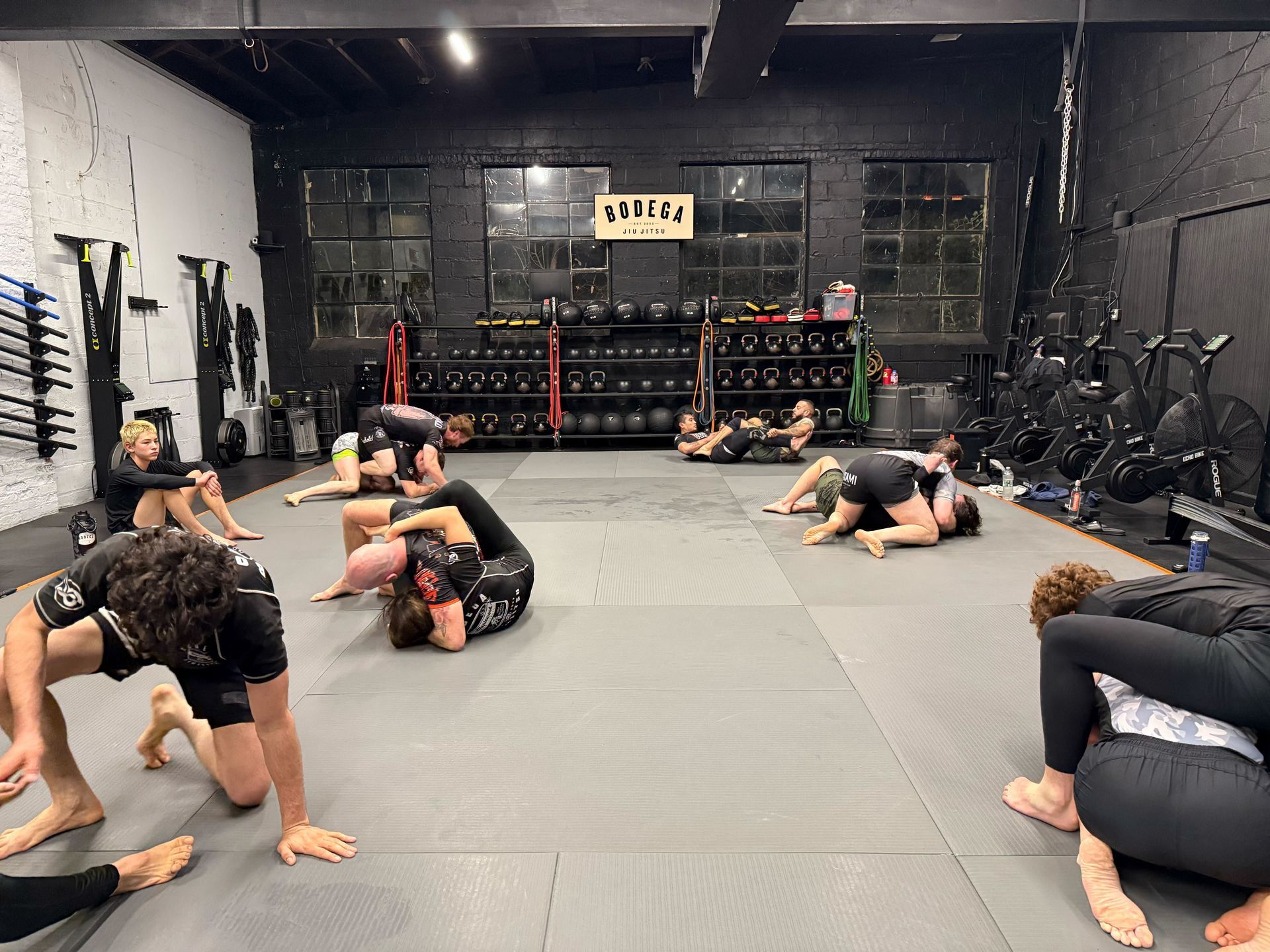
Our adult program is structured to make progress feel steady. We teach technique, then we drill to build confidence, then we apply it with controlled sparring so it becomes real. You will not be thrown into chaos on day one, but you will be challenged.
A typical class flow looks like this:
1. Warm-up focused on joint prep, mobility, and movement skills you will use that day
2. Technical instruction with clear details, not vague “just do it like this” advice
3. Partner drilling to build timing, positioning, and efficiency
4. Situational rounds where you practice from specific positions
5. Optional rolling with guidance on intensity and goals
That structure is also why adult grappling classes work well for beginners. You can scale effort, start safely, and still leave knowing you trained your whole body.
How often should you train to see results
Consistency wins. For most adults, 2 to 3 classes per week is the sweet spot for getting fitter without feeling run down. If you are coming from a sedentary routine, even 2 sessions can be enough to feel real momentum.
We recommend:
• 2 classes per week if you are rebuilding fitness or managing a busy schedule
• 3 classes per week if you want faster conditioning and skill improvement
• 1 additional light day of walking or mobility if you sit a lot for work
If you want a simple marker, track how your breathing and recovery improve during rounds. Many people notice they can stay calmer and move longer within the first month, especially when sleep and hydration improve alongside training.
Common concerns we hear from Maplewood adults
“I am over 30. Is this still for me?”
Yes. Most of our room is adults with jobs, responsibilities, and some mileage on the joints. We coach smart pacing, good mechanics, and sustainable intensity. You do not need to “win practice.” You need to train in a way you can repeat.
“Do I need to be strong before I start?”
No. Grappling builds strength as a byproduct of learning leverage and positioning. You will get stronger, but you do not have to arrive strong. Our job is to coach you from where you are.
“What if I am worried about getting hurt?”
That is a fair concern, and we address it directly with coaching, controlled rounds, and clear tapping culture. You will learn how to protect yourself, how to communicate with training partners, and how to choose appropriate intensity. Safety is not an afterthought for us. It is part of the curriculum.
Take the Next Step
If you want a workout that trains strength, cardio, mobility, and mental toughness in one place, our approach is built for that. We keep the training practical, progressive, and welcoming for adults who want to feel better in their bodies and sharper in their minds.
When you are ready to experience it in person, we would love to have you on the mat at Bodega Jiu-Jitsu. Our adult grappling in Maplewood is structured to help you start safely, build real skills, and get the full-body benefits that make grappling such a powerful training method.
Develop solid fundamentals and continue progressing by joining a grappling class at Bodega Jiu-Jitsu.