Grappling gives you a full-body reset and a clearer head in less time than most workouts.
If your calendar is packed and your energy feels like it is always “almost there,” grappling can be a surprisingly efficient fix. We see it all the time in Maplewood: professionals who do fine on coffee and willpower all week, then finally want something that actually changes how they feel, not just how tired they are. Grappling does that because it is physical and strategic at the same time.
The martial arts industry is booming, and Brazilian Jiu-Jitsu is leading that growth, with search interest more than doubling over the last two decades. That rise makes sense: grappling is one of the few training styles where you can go hard without needing to get hit, and you can progress by learning systems, not by muscling through. When your job already asks your brain to sprint all day, that matters.
In our adult programs, we keep training practical and time-efficient. You get movement that wakes you up, problem-solving that sharpens you, and a community that makes it easier to show up after work, even when you are tempted to just melt into the couch.
Why grappling works for busy professionals
Most workouts give you one main benefit at a time: strength, cardio, flexibility. Grappling compresses multiple benefits into one session because every round includes movement, balance, timing, and decision-making under pressure. You are not just exercising, you are actively learning, and that tends to keep your mind engaged instead of wandering back to your inbox.
There is also a simple reality: busy schedules need training that “sticks.” When you learn a guard pass, an escape, or a choke setup, you are building a skill you can refine for years. That long runway is part of why Jiu-Jitsu has millions of practitioners worldwide, including hundreds of thousands in the US. People stay with it because it keeps unfolding.
And if you like real data, competitive submission grappling shows how technical the art has become. At ADCC 2024, submissions happened at a 34 rate, with chokes leading the way, and wrestling-style takedowns showing up constantly. You do not need to compete to benefit, but the trend highlights what we teach in class: clean mechanics, smart pressure, and efficient control.
Energy benefits you can feel quickly
High output without “gym burnout”
A lot of professionals try to solve fatigue with more low-intensity work. That can help, but it can also feel like adding another obligation. Grappling sessions are different: you alternate bursts of effort with moments of control and breathing. That pattern tends to wake people up rather than drain them, especially when you train with good pacing.
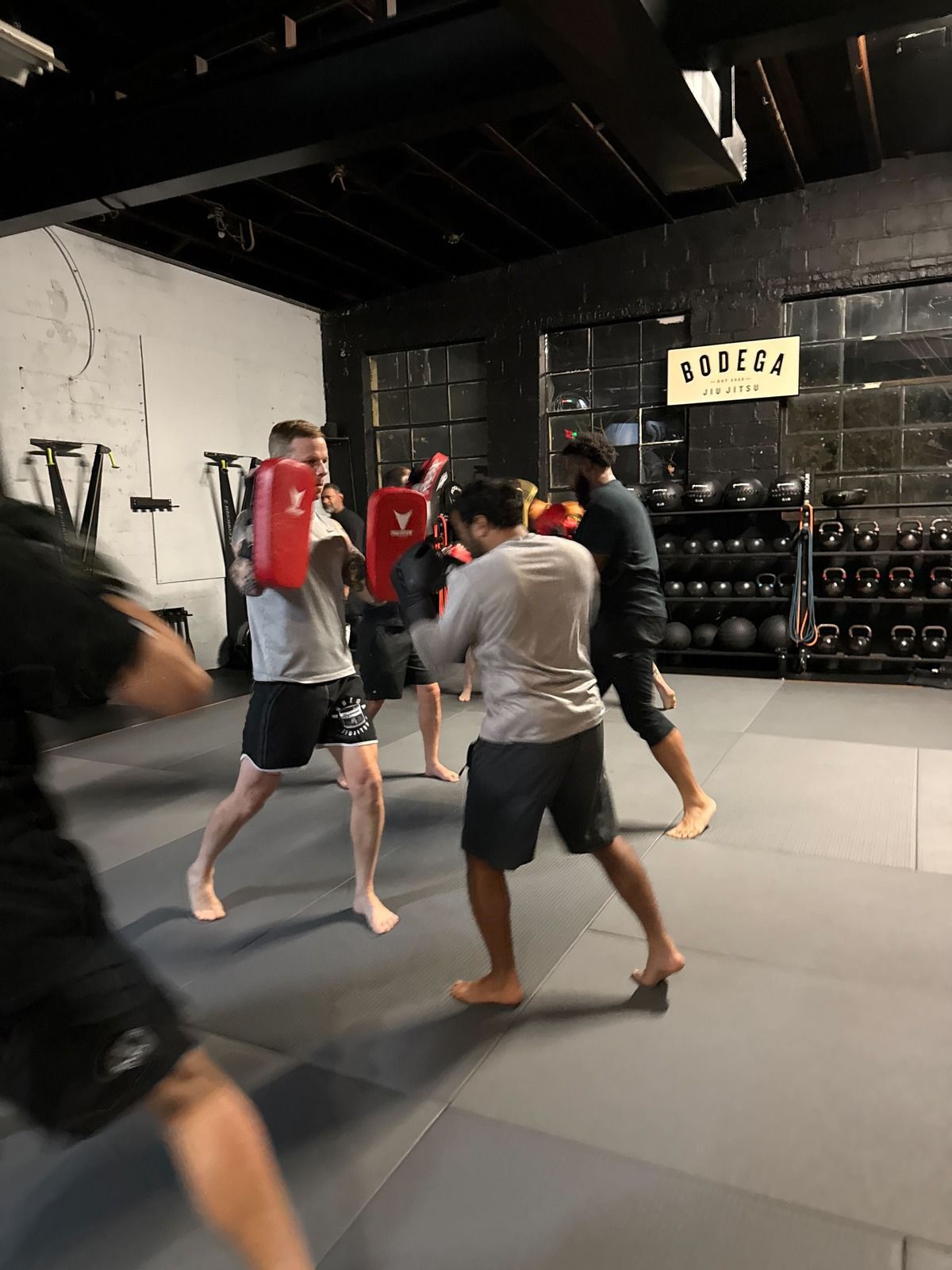
In a typical class, you might drill a takedown entry, transition into top control, then finish with positional sparring. The intensity comes in waves. You learn to recover while still moving, which is a skill you can take right back into your workday: stay calm, keep thinking, do not panic when the pace spikes.
Endorphins plus a clear “off switch”
After a long day, many people struggle to shift from work mode into real rest. Grappling gives you an off switch because you cannot half-focus while somebody is trying to pass your guard. For many students, that hour on the mats is the first time all day that the phone might as well not exist. You leave class physically tired, yes, but mentally lighter.
We also keep a close eye on sustainable training. You should leave feeling like you did something real, not like you got run over. That difference is why one to two sessions a week can still make a noticeable impact.
Focus benefits: why your brain sharpens on the mats
Grappling is basically fast, physical chess with sweat. You are constantly scanning for grips, angles, frames, and timing cues, then choosing a response. Because feedback is immediate, your attention naturally locks in. That kind of present-moment focus is a skill, and it improves with reps.
We structure training so you are not just collecting random moves. You learn patterns: how an escape connects to a guard recovery, how a pass connects to control, how control connects to a submission, and how to abandon a plan when it stops working. That ability to pivot, calmly, is the same mental muscle you use in meetings, negotiations, and deadlines.
If you have ever finished a workday feeling scattered, grappling can be a reset. You practice making decisions under pressure, then returning to baseline. That rhythm builds confidence, and it is very practical for professionals who need to think clearly even when things get hectic.
What to expect in our adult grappling classes
We run adult grappling classes with a simple goal: help you improve safely, consistently, and without wasting time. Sessions typically run 60 to 90 minutes, and we organize them so beginners are not thrown into chaos. You will learn fundamentals first, then layer complexity as your comfort grows.
A common class flow looks like this:
1. Warm-up with movement that supports grappling, like hip escapes, stand-ups, and controlled rolls
2. Technique instruction with a specific focus, such as guard retention or side-control escapes
3. Partner drilling with coaching, so you feel what details actually matter
4. Positional sparring, where you start in a set situation and work the problem
5. Optional live rounds, scaled to your experience and goals
We also understand that not everyone wants the same thing. Some students train for fitness and stress management, some want self-defense, and some like the challenge of competition. Nationally, a meaningful portion of practitioners compete, but plenty never do, and our room supports both paths without making it weird.
The time commitment that actually fits your week
Busy professionals do not need six days a week to get value from grappling. Consistency matters more than volume, especially at the beginning. If you can train twice a week, you will build momentum. If you can train three times, progress often accelerates. If you can only make it once some weeks, we help you make that session count.
We encourage you to treat training like an appointment you keep, not a task you squeeze in. Maplewood is a commuter-friendly area, and we design our evening schedule to match real life. You can check the class schedule page on the website to plan ahead and avoid last-minute guesswork.
Beginner-friendly training for professionals over 30
A lot of adults worry they are “too old” to start. In grappling, that is usually just a mindset issue, not a reality issue. Good training is scalable: you can focus on timing, leverage, and positioning rather than speed and strength. We coach you to use frames, angles, and pressure so you do not feel like you have to win every exchange with athleticism.
We also build a culture where tapping is normal. You learn safely by acknowledging when a position is lost and resetting. That is not defeat, it is feedback. Over time, your body adapts, your breathing improves, and your confidence grows in a steady, non-dramatic way. It is honestly one of the most satisfying parts of the process.
Gi, no-gi, and practical options in Maplewood
We offer training paths that include gi and no-gi styles, because each teaches you something valuable. The gi slows things down and helps you learn grips and control. No-gi tends to be faster and often emphasizes wrestling-style movement and connection, which aligns with what we see in high-level submission grappling events today.
For professionals, variety helps. Some days you want the technical puzzle of the gi. Some days you want the athletic flow of no-gi. Either way, the core stays the same: control position, protect yourself, improve escapes, and learn finishes that work because the mechanics are sound.
If you are brand new, we recommend starting with fundamentals and wearing basic training gear like a rash guard for comfort and hygiene. We will help you sort the rest out in your first week, without making you feel like you need to buy a closet full of stuff.
A quick desk-to-mat reset: simple habits that help
You do not need to overhaul your life to get more out of adult grappling classes. Small habits make a big difference, especially when your days are long.
Here are a few practical habits we suggest to busy students:
• Block your training nights on your calendar like a meeting, and protect that time
• Eat something small and easy 60 to 90 minutes before class, so you are not running on fumes
• Show up a little early to breathe and shift out of work mode before warm-ups start
• Keep one set of training gear ready, so getting out the door is friction-free
• Aim for sustainable intensity in sparring, because consistency beats hero rounds
These are simple, but they work. Most people do not quit because grappling is too hard. They stop because the logistics get messy. We help you keep it simple.
Cost, value, and why adults keep showing up
Across the US, martial arts memberships often average around $150 per month, and economic pressure can make people hesitate. We understand that. Our goal is to make sure you feel the value quickly, not in six months. When you train regularly, you are investing in energy, stress control, strength, mobility, and a skill set that keeps growing.
The bigger industry numbers tell the same story. The US martial arts market hit $16.8 billion in 2024 and is projected to reach $21.0 billion by 2026. People keep choosing this kind of training because it solves real problems, especially for adults who want efficient, engaging fitness instead of another repetitive routine.
Take the Next Step
If you want training that improves your energy and focus without demanding your entire week, we built our programs for exactly that. At Bodega Jiu-Jitsu, we coach grappling in a way that respects your schedule, your body, and your goals, whether you are brand new or returning after time away.
When you are ready, start by checking the class schedule, pick a realistic weekly rhythm, and let your first few sessions be about learning and getting comfortable. We will guide you through the process, and you will feel the difference sooner than you might expect.
Ready to train? Join a grappling class at Bodega Jiu-Jitsu today.