Real self-defense happens in close range, and grappling gives you the control to stay safe when space disappears.
In Maplewood, most adults are not looking to become professional fighters, but we do want skills that hold up when things get messy and unpredictable. That is exactly where grappling shines: it is built around control, positioning, and getting yourself out of bad spots without needing perfect timing or athleticism.
We also see a simple truth play out again and again in training: situations change fast. One moment you are standing, the next you are tangled up, pinned, or trying to get back to your feet. Grappling, especially Brazilian Jiu-Jitsu, gives you a framework for staying calm, protecting yourself, and making practical decisions under pressure.
And this is not some niche interest anymore. Brazilian Jiu-Jitsu has become the fastest-growing martial art in America, with Google search interest up 104.35 percent from 2004 to 2024. That growth lines up with what we hear from Maplewood adults every week: you want something practical, time-efficient, and grounded in reality, not flashy.
Why grappling is such a strong fit for adult self-defense
Self-defense for adults has to meet a few non-negotiable requirements. It needs to work when you are tired, when you are surprised, and when the other person is stronger or more aggressive than you expected. Grappling is not about trading punches. It is about learning how to manage contact, disrupt balance, and control the situation long enough to escape or end the threat.
One reason grappling works so well is that it is position-first. We teach you to prioritize getting to safer positions, like standing back up, creating distance, or controlling someone so you can disengage. When you train this way, you are not relying on luck or brute force. You are building repeatable habits.
Competitive data backs up what we emphasize in class. In elite submission-grappling events, chokes dominate the finish rate, hitting around 65 percent of submissions, while arm attacks make up about 20 percent. Even better for self-defense, upper-body submissions account for roughly 78 percent of finishes. That matters because upper-body control usually maps more cleanly to real-world scenarios and tends to be easier to apply safely than risky, twisting lower-body attacks.
The self-defense situations Maplewood adults actually need to prepare for
We keep training grounded in the kinds of moments that are most likely to happen to an adult going about normal life. No over-the-top movie stuff. Just common problems with clear solutions.
Here are situations we build skills for through progressive training:
- Someone grabs your wrist, clothing, or backpack strap and you need to break grips and create space.
- You slip or get knocked down and need to protect yourself, recover guard, and stand up safely.
- Someone crowds you at close range, and you need to manage clinch contact without panicking.
- You end up in a scramble on the ground and need to avoid being pinned while you look for an exit.
- You have to control someone briefly while you move yourself or a family member to safety.
In real life, the “win” is often getting away, not finishing a technique. We treat grappling for self-defense as a set of tools for control, escape, and decision-making.
The three pillars we build in our adult program
A lot of adults assume grappling is only ground fighting. The ground matters, yes, but our approach includes the full chain: how you manage distance standing, how you handle takedowns or trips, and how you survive and escape on the floor.
Pillar 1: Standing control and takedown awareness
Elite competition has been trending toward more proactive wrestling and takedowns. At ADCC 2024, takedowns surged, with 62 in the men’s division alone. We pay attention to that shift because it reflects something important: top position and initiative matter.
For self-defense, you do not need to become a high-level wrestler. You do need to understand:
- How to keep your base so you are harder to topple
- How to pummel for inside control in the clinch
- How to defend common takedown entries
- How to safely bring someone down if you truly must, without following them into danger blindly
We also teach a simple but overlooked skill: how to fall and get up without giving away your back.
Pillar 2: Escapes and positional survival
If you only learn submissions, you are skipping the part that keeps you safe. Adults need escapes first. Period. When you can escape mount, side control, and back control, you have options again. Options reduce panic.
We coach survival as a process: frames, hip movement, breathing, and patience. It is not glamorous, but it is what makes grappling usable outside the gym. Once your body learns the “rules” of pressure, you stop feeling trapped so quickly.
Pillar 3: High-percentage finishes and restraint
Self-defense sometimes requires restraint, not damage. Grappling gives you that range. You can control, you can disengage, or you can finish if you have no other choice.
Chokes show up as the most common finishes at the top level for a reason. When applied correctly, they work across size differences and do not depend on pain compliance. We teach them with a heavy focus on mechanics, safety, and awareness, because being able to apply a technique is only part of the responsibility.
Essential skills every Maplewood adult should learn first
We like to keep early progress simple and measurable. If you train consistently, these skills start to stack, and you feel the difference in a way that is hard to miss.
That list is not meant to overwhelm you. It is meant to give you a roadmap. Adults do better when the path is clear.
What a beginner should expect in adult grappling classes
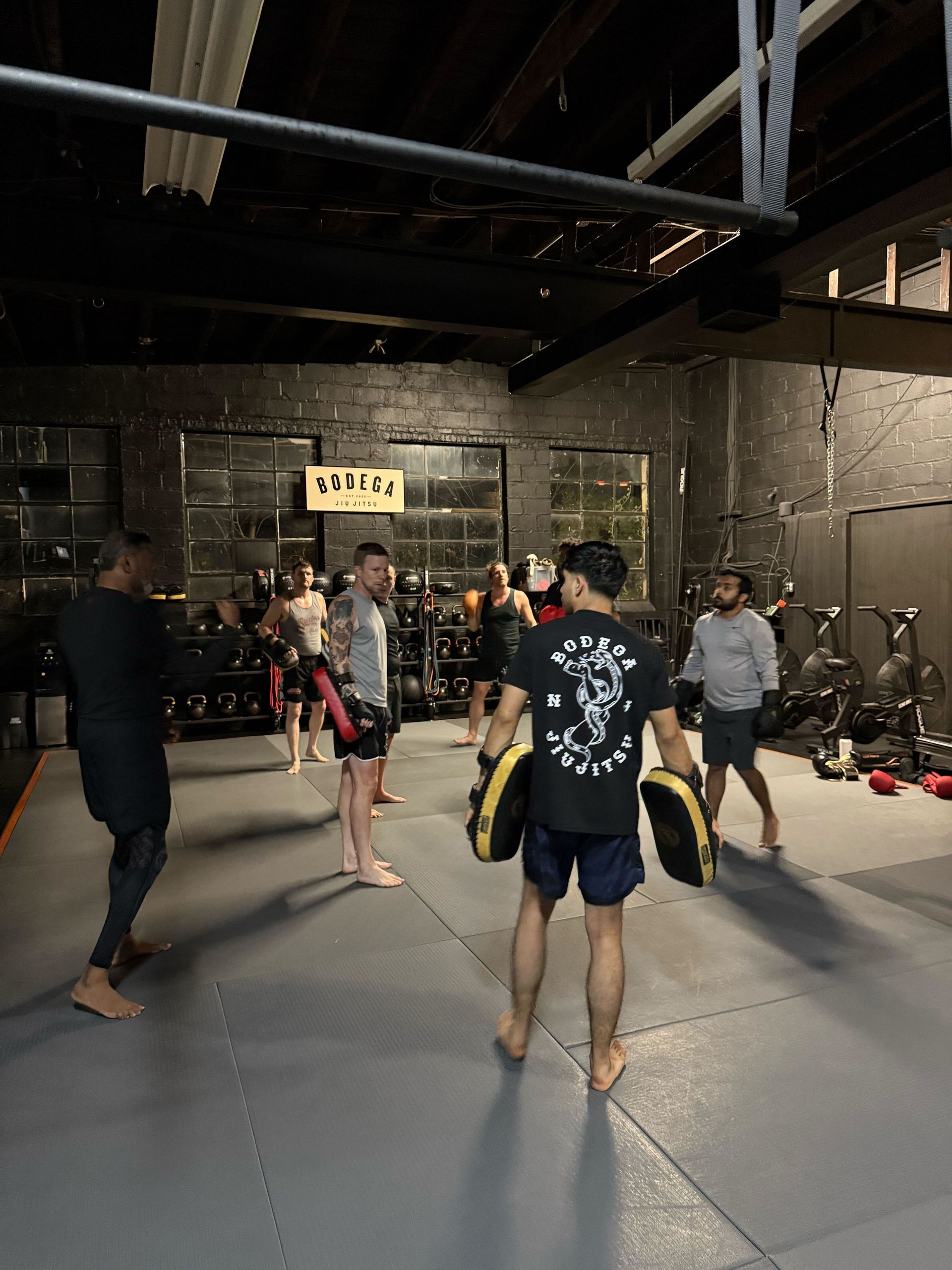
We design adult grappling classes to be welcoming without being watered down. You will sweat, you will learn, and you will mess up techniques a bunch of times. That last part is normal, and honestly, it is part of what makes training satisfying.
A typical class includes warm-ups that actually support the techniques of the day, technical instruction, guided drilling, and controlled sparring. Sparring is where you learn timing and composure, but we scale it to your experience level. If you are new, we keep the intensity appropriate so you can learn without feeling like you are in a survival contest.
Beginners often start with closed guard because it gives you structure and clear goals. As skill grows, many adults find half guard and top passing systems become more natural, which lines up with survey trends showing closed guard common at white belt and half guard more popular with higher belts.
Safety, injuries, and training smart as an adult
We take safety seriously because adults have jobs, families, and responsibilities. Data from a 2019 study found injury rates around 59 percent over six months in Brazilian Jiu-Jitsu. That number sounds scary until you understand the context: training frequency, intensity, and experience level change the risk a lot.
Our goal is to keep you training consistently, not to grind you down. We do that by emphasizing:
- Clear tapping rules and partner communication
- Technique before intensity, especially for newer students
- Structured rounds where you know the goal, not random chaos
- Mobility and warm-ups that protect common trouble areas like neck, ribs, and knees
If you are worried about getting hurt, tell us. We can scale training, pair you thoughtfully, and keep you progressing without feeling fragile.
How often Maplewood adults should train for real progress
Consistency beats hero workouts. For most adults, two to three sessions per week is the sweet spot for building usable grappling skill while still recovering well. If you train once a week, you can still learn, but progress feels slower and your body spends more time re-learning positions.
If your schedule is tight, we recommend picking two days you can protect like appointments. When training becomes routine, your confidence rises quietly. You notice better posture, calmer breathing under stress, and fewer “freeze” moments during sparring.
Competition is optional. A survey of around 2,000 practitioners found 43.6 percent competed recently, which is a big number, but it also means plenty of people train for self-defense, fitness, and personal growth without ever stepping into a tournament.
Why grappling is booming and what that means for Maplewood
The bigger martial arts market has grown into a massive space, reaching roughly 16.8 to 19.4 billion dollars in the U.S. in 2024, with more than 50,000 studios and about 6.6 million participants. Brazilian Jiu-Jitsu is one of the clearest winners of that growth, driven by practical self-defense demand, fitness goals, and the influence of MMA.
Maplewood sits in a spot where practical training makes sense. We are close enough to major transit and city flow that adults want efficient, real-world skills, but we also have a community vibe where people want to train in a respectful environment. Grappling fits both: it is serious, but it is also deeply social in a good way. You learn to solve problems with partners, not against enemies.
We also see more women joining, which reflects the broader trend of women making up about 40 percent of the martial arts market and rising in Brazilian Jiu-Jitsu. Good training is for everyone, and a room that respects training partners is not optional. It is the baseline.
Ready to train with a plan at Bodega Jiu-Jitsu
If you want self-defense that holds up under pressure, grappling gives you a practical path: learn to stay balanced, escape bad positions, control safely, and get back to your feet when it counts. We built our adult program around that reality, with coaching that prioritizes fundamentals, smart intensity, and steady progress.
When you are ready to take the next step in Maplewood, we would love to help you start. Bodega Jiu-Jitsu is where we train these skills with structure, community, and a focus on what actually works.
If you are curious about grappling training, join a class at Bodega Jiu-Jitsu and learn with confidence.