
Grappling gives you a repeatable way to stay calm under pressure, and that calm becomes real confidence.
Most adults don’t need more motivational quotes. You need something you can practice on a Tuesday night and feel in your body on Wednesday morning. That’s one reason grappling works so well for confidence: it’s skill-based, measurable, and honest. You either found the solution, or you didn’t, and you learn to improve without spiraling.
In Maplewood, life can move fast even when you’re not trying to rush. Commuting toward the city, juggling family schedules, and keeping up with work can make stress feel normal. We built our adult programs around a simple idea: confidence grows when you train your nervous system to stay steady while you solve problems.
And the research lines up with what we see on the mats. Studies on Brazilian Jiu-Jitsu and related training show strong psychological benefits for adults, including improved confidence (87.6 percent report gains), reduced anxiety (87.5 percent), and a powerful sense of community (100 percent report stronger bonds). That’s a rare combination: personal growth you can feel, plus a room full of people who want you to succeed.
Why grappling builds confidence differently than most workouts
A lot of fitness routines make you feel better because you’re moving. That matters, but it’s only part of the confidence equation. Grappling adds a learning loop: you attempt a technique, you get immediate feedback, and you adjust. Over time, that creates competence-based confidence, the kind that doesn’t depend on mood.
Here’s what we mean by competence-based confidence. You learn how to escape a tight position, how to improve your balance, and how to breathe when you want to tense up. You earn progress in small wins, and those wins stack. That is why adults often describe the confidence as “quiet” or “grounded” instead of loud.
Researchers have found that consistent training is linked to self-efficacy and mood improvements, without increases in aggression. In other words, you can become more capable and more composed at the same time. That’s the version of confidence most Maplewood adults are actually looking for.
Pressure is the teacher, not the enemy
In daily life, pressure shows up as traffic, deadlines, awkward conversations, or the feeling that you’re behind. On the mat, pressure is literal: someone is controlling space and you’re figuring out how to regain it. Because it’s safe, structured, and supervised, you can practice staying calm while the situation feels intense.
That practice transfers. You start noticing that you don’t hold your breath as much. You pause before reacting. You look for options instead of locking into one plan. This is mental flexibility in action, and studies report strong gains here as well, with about 81.3 percent of adults noting improvement.
The data behind confidence and resilience in adult training
We like inspiration, but we also like evidence. The current research trend is clear: adult participation is rising because people want better mental health, stress control, and a sense of progress that feels real.
A 2024 Australian Institute of Sport study reported that 92 percent of participants training twice weekly felt better mental resilience. That frequency matters because it’s realistic for busy adults. You don’t need to live at the gym. Two consistent sessions per week can be enough to shift how you handle stress.
These aren’t abstract benefits. Confidence looks like speaking up in a meeting without overthinking it for an hour afterward. Resilience looks like getting bad news and still making the next right decision. Anxiety reduction looks like sleeping better and not carrying tension in your shoulders all day.
How adult grappling classes help Maplewood professionals handle stress
Maplewood is friendly, walkable, and community-driven, but it’s also connected to a bigger, louder rhythm. A commute can eat your morning. Work can leak into evenings. And even the good stuff, like kids’ activities and community events, can turn into a schedule that never breathes.
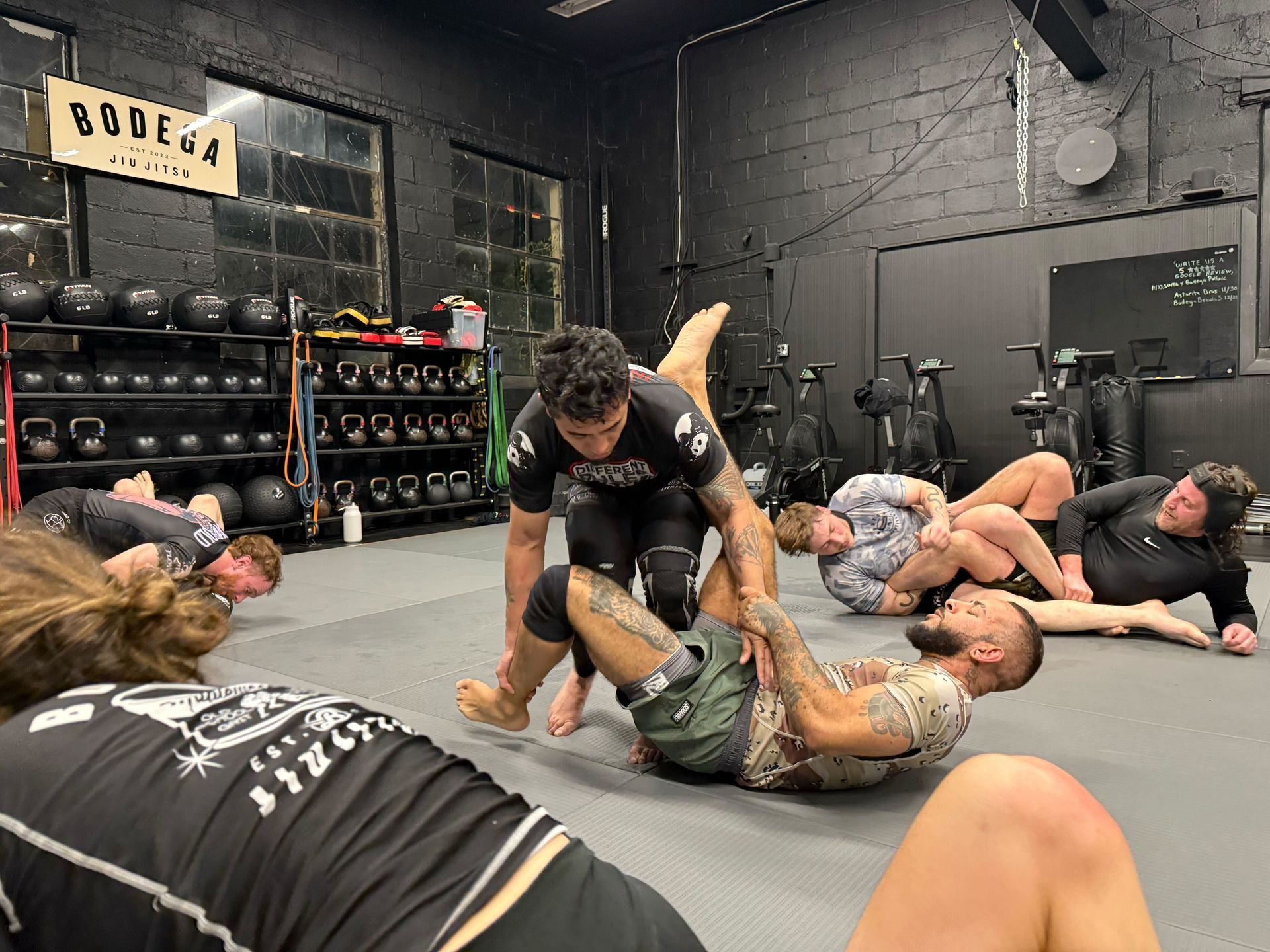
Our adult grappling classes are built to be a release valve and a training ground at the same time. You get physical effort, yes, but more importantly you get practice managing discomfort in a controlled setting.
A realistic example of the “mat mindset” showing up at home
When you’re stuck under side control, the goal isn’t to panic. The goal is to frame, breathe, and create space inch by inch. That exact pattern shows up in normal life. If you feel overwhelmed, you can’t brute force your way out. You identify what you can control, you make a small adjustment, and you keep going.
This is why many adults describe training as mentally refreshing even when it’s physically demanding. You focus so completely that the background noise quiets down. And when class ends, you walk out feeling clearer.
What you actually learn when you train consistently
Confidence comes from knowing what to do, not just hoping things work out. We structure training so you build a foundation first, then add complexity as your timing and awareness improve. That progression matters for adults because it makes learning feel organized, not chaotic.
In practical terms, your training includes:
• Positional escapes that teach you to stay composed when you’re uncomfortable
• Controls and pinning concepts that improve balance, posture, and body awareness
• Submissions taught as technical problem-solving, not aggression
• Guard work that develops flexibility, coordination, and strategic thinking
• Live training options scaled to your experience level so you can test skills safely
Over time, you stop seeing tough rounds as “failure.” You start seeing them as information. That shift alone can change how you approach hard conversations, career changes, and personal goals.
Beginner-friendly does not mean watered down
A common worry is age. Another is starting from zero. Adults in their 30s, 40s, and 50s often ask if they’ll be the only beginner, or if they need to get in shape first. You don’t.
We coach beginners with clear structure, and we keep the room welcoming while still taking training seriously. You’ll learn how to move, how to tap early, and how to train with good partners. The goal is steady improvement, not proving anything.
That matches what studies show, too. Confidence gains are reported across ages and experience levels, and the “twice per week” habit is often enough to see meaningful changes. If you’re consistent, progress shows up in months, not years.
The belt system helps your brain trust your progress
Adults love a clear roadmap. The belt system provides one. You can track skill development in a way that feels earned, and that’s important. When you’ve worked through a challenging phase, you carry that lesson into the rest of your life: effort compounds.
Safety, intensity, and how we keep training sustainable
Let’s talk about the practical part: intensity and injury concerns. Grappling is contact, but it doesn’t need to be reckless. We emphasize technical control, smart pacing, and communication. You’ll learn what “training hard” means without training angry.
We also remind students that sustainable progress beats occasional hero sessions. Your best training plan is the one you can keep doing.
Here are a few habits we build into our culture to support safe, long-term training:
1. Start with fundamentals so your body learns efficient movement before speed
2. Use controlled rounds where the goal is learning a position, not “winning”
3. Tap early and often, because that’s how you stay healthy and keep improving
4. Ask questions, since clarity reduces accidents and increases confidence
5. Train consistently at a manageable pace, especially during your first months
Research supports this approach. Studies report improved mood (96.9 percent) and better stress management, with no rise in aggression. That’s exactly what most adults want: strength with steadiness.
The confidence boost that comes from community
One of the most overlooked confidence builders is belonging. When you walk into a room where people know your name, notice your improvement, and partner with you respectfully, it changes your week. The research is striking here: 100 percent of adult participants in one study reported stronger social bonds.
We see the same thing play out in small ways. Someone shows you a detail after class. Someone tells you your posture looks better. You laugh about a round that went sideways. It’s not forced, it just happens when adults train together with shared goals.
And in a town like Maplewood, where community matters, that bond becomes part of the confidence. You’re not doing it alone.
Grappling confidence is not bravado, it’s usable
There’s a difference between feeling confident and being confident. Feeling confident can be temporary. Being confident comes from proof.
Grappling provides proof. You learn how to stay calm when you’re pinned. You learn how to move when you’re tired. You learn how to make decisions with imperfect information. That’s the same skill set you use when life is messy.
Confidence also becomes more stable because it’s not dependent on external validation. You don’t need to “look like an athlete” to make progress. You just need to show up, learn, and repeat. For many adults, that’s a relief.
Take the Next Step
If you’re looking for a confidence boost that doesn’t fade by Thursday, training matters more than inspiration. Grappling builds composure, problem-solving, and resilience through practice, and the research supports what we see every week: adults become calmer, more capable, and more connected when they train consistently.
We’ve designed our adult programs at Bodega Jiu-Jitsu to fit real Maplewood schedules and real beginner needs, with coaching that keeps training purposeful and sustainable. When you’re ready, we’ll help you start with fundamentals, build momentum, and earn the kind of confidence that shows up everywhere.
Strengthen both your body and mindset through consistent grappling training at Bodega Jiu-Jitsu.