Grappling is becoming the go to training choice for adults who want real skills, real fitness, and a community that sticks.
If you have noticed more people in Maplewood talking about grappling lately, you are not imagining it. Across the U.S., adult participation has been rising about 15 to 20 percent per year from 2021 through 2024, and New Jersey gyms have reported around a 30 percent enrollment lift since 2023. Locally, we see the same pattern: adults want training that feels practical, challenging, and sustainable.
We also hear a similar question again and again: why now. The answer is that grappling fits modern life in a way a lot of workouts do not. It is skill based, it rewards consistency over intensity, and it gives you a clear sense of progress, even if you can only train a few evenings a week.
And yes, the mainstream spotlight helps. UFC coverage introduced a lot of people to ground fighting, while Brazilian Jiu-Jitsu grew past 5 million practitioners worldwide by 2023. But what keeps people coming back is simpler: you get better at something real, with real people, and you feel it in your body and your mindset.
What “grappling” actually means and why it clicks with adults
Grappling is the umbrella for clinch fighting, takedowns, control on the ground, and submissions. It includes Brazilian Jiu-Jitsu, wrestling, and other submission focused arts. For adults, this mix is a sweet spot because it is both athletic and technical, and it does not require you to be a natural “fighter” to start.
One reason it clicks is that the learning curve feels honest. When you are new, you do not win exchanges by trying harder. You win by improving position, timing, and decision making. That is refreshing for adults who are used to workouts where effort is the only lever.
Grappling also scales well. You can train hard when you feel great, or keep it controlled when you are tired, stressed, or coming back from time off. The training is adjustable, which is a big deal for people juggling commuting, parenting, and work deadlines.
The post 2020 surge: low impact, skill based training that people missed
After 2020, a lot of adults rethought fitness. Many people wanted less wear and tear, more learning, and a reason to show up that was bigger than counting calories. Grappling checks those boxes. It is not “easy,” but it can be lower impact than constant running or heavy lifting if the class is taught with control and good structure.
Industry trend summaries and federation reports point to a big jump in interest from 2022 through 2025, with grappling outpacing boxing and general MMA enrollment in many markets. We see the same preference in Maplewood: adults want to train a real skill, not just burn energy.
There is also a mental health component that is hard to ignore. A 2024 Journal of Sports Psychology study linked consistent grappling practice with stress reduction and measurable mood improvements. We cannot promise any specific result for you, but we can say that structured practice, close attention, and supportive training partners can feel like hitting a reset button after a long day.
Maplewood’s local pipeline: why this town is primed for grappling growth
Maplewood has something many towns do not: a strong athletic culture that feeds directly into adult training. Columbia High School’s long standing wrestling tradition matters here. When students graduate, plenty of them still want a competitive outlet, a structured practice, and a team like environment, even if life is different at 25 or 35 than it was at 17.
Even if you never wrestled, you benefit from living in a community where grappling is not “weird.” People understand that training can be disciplined and safe. Parents understand that learning to move your body and solve problems under pressure is a life skill. That local normalization is part of why adult grappling in Maplewood keeps growing.
Add the proximity to NYC and the steady flow of big combat sports events at venues like Prudential Center, and you have constant exposure. The sport feels current, not niche.
Why adults 25 to 45 are driving the boom
Adults now make up the majority of new grapplers, with many reports suggesting 60 percent of beginners fall in the 25 to 45 range. This group tends to want three outcomes at once: practical self defense, functional strength, and community. Grappling delivers that combination better than most fitness trends.
Self defense is one driver, especially for commuters. When you spend time on trains, in parking garages, or walking in the evening, you start caring about skills that work at close range. Grappling focuses on control, distance management, and getting back to safety. It is not about being aggressive. It is about knowing what to do if something goes sideways.
Another driver is the desire for “earned confidence.” You cannot fake progress on the mat. Over time, you become calmer under pressure because you have practiced being uncomfortable in a controlled setting. That carries into daily life in ways people do not expect at first.
What you actually do in a beginner friendly adult class
When people picture grappling, many imagine nonstop sparring. In a well run beginner program, that is not how it starts. We build skills step by step, teach you how to move safely, and help you understand what you are trying to accomplish in each position.
A typical class includes technical instruction, drilling, and optional live rounds with clear guidelines. You will learn how to fall, how to keep your posture, and how to protect your neck and joints. You will also learn how to communicate with training partners, which is a surprisingly important skill.
Here are the core areas we focus on early so you can feel progress quickly:
• Position and posture, including how to stay balanced and avoid getting flattened out
• Escapes and defense, so you can breathe, reset, and avoid panic reactions
• Basic takedown and clinch entries that are practical for adult bodies and real schedules
• Control and transitions, because moving from one stable position to the next is the heart of grappling
• Simple submissions and safe finishing mechanics, taught with emphasis on control and tapping early
That foundation is what makes the art feel accessible, even if you are starting over 30, over 40, or just a little out of shape right now.
Is grappling safe for beginners over 30
This is one of the most common concerns we hear, and it is a fair question. Grappling is contact training, so there is always some risk. But compared with many sports, you can manage the risk well with good coaching, a clean culture, and smart pacing.
Safety starts with technique over strength. When beginners try to “muscle” positions, joints get stressed and the pace gets chaotic. When beginners focus on frames, posture, and timing, rounds get smoother and safer. We coach you toward that technical approach from day one.
We also encourage you to set boundaries. If you want lighter rounds, you can ask for lighter rounds. If a position bothers an old shoulder, we give you alternatives. The best long term grappling is the kind you can repeat consistently, not the kind that wrecks you for a week.
BJJ vs wrestling: what is different and why hybrids work
People often ask how Brazilian Jiu-Jitsu differs from wrestling. Wrestling emphasizes takedowns, control, and pinning dynamics. BJJ emphasizes ground control plus submissions, and it often includes guard play that wrestling does not prioritize.
For adult students, blending both makes sense. Takedowns teach you how to stand and move with intention, while BJJ teaches you what to do once the fight hits the floor. In real life and in sport, transitions are everything. When you learn to connect standing entries to solid ground positions, your grappling becomes calmer and more complete.
No gi training has also helped make the art approachable. Without the gi grips, beginners often feel the movement is more intuitive, and progress can feel faster early on. We still value fundamentals that apply to both formats, but many adults like the pace and simplicity of no gi as a starting point.
Why women’s participation is rising fast in Maplewood
Women’s participation in grappling has grown significantly in recent years, with many communities seeing around 40 percent growth in women joining programs. In Maplewood, that makes sense. This is a health conscious town, and many women want training that builds confidence without needing a “tough person” identity.
Grappling is also one of the few martial arts where technique reliably offsets size and strength, especially once you understand leverage and position. That does not mean strength is irrelevant, but it means you can problem solve your way to better outcomes. For many women, that is exactly the point.
We keep the learning environment structured and welcoming, and we offer women only intro options at times because some people learn best with a little extra comfort at the start. Once you have your footing, training with a mix of partners becomes a huge advantage.
A realistic 30 day starter plan for busy adults
A lot of Maplewood adults want a plan that respects real life. Here is a simple 30 day approach that works well if you are new and want momentum without burning out.
1. Week 1: Attend two classes and focus on survival skills like posture, frames, and tapping early
2. Week 2: Add a third class if your recovery feels good, and write down two techniques you want to remember
3. Week 3: Start one or two light live rounds per class, with clear communication and controlled intensity
4. Week 4: Pick one position to study, like side control escapes or closed guard basics, and measure progress there
If you do this, you will not magically become an expert. But you will feel the sport start to make sense. You will breathe better under pressure, move with more purpose, and understand what to practice next.
What it costs and how schedules fit Maplewood life
In Maplewood, drop in classes often run around 20 to 30 dollars per session, while memberships vary by training frequency. We keep our own membership simple: 150 dollars per month for unlimited training, plus a free first class trial so you can experience the pace and culture before committing.
Our adult beginner grappling classes run Monday, Wednesday, and Friday evenings, typically in the 6 to 7:30 PM window. That schedule is intentional. It works for commuters getting back into town, and it gives parents a consistent routine that is not buried in the middle of the day.
If you are worried about gear, do not overthink it. We can help you get started, and we provide what you need initially so the first step is easy.
Take the Next Step
If grappling is popping up everywhere in Maplewood, it is because the training delivers something rare: a skill you can build for years, a workout that stays interesting, and a community where progress is shared, not performed. When you train consistently, even just a few times a week, you start to carry yourself differently, and you notice your fitness and focus improving in practical ways.
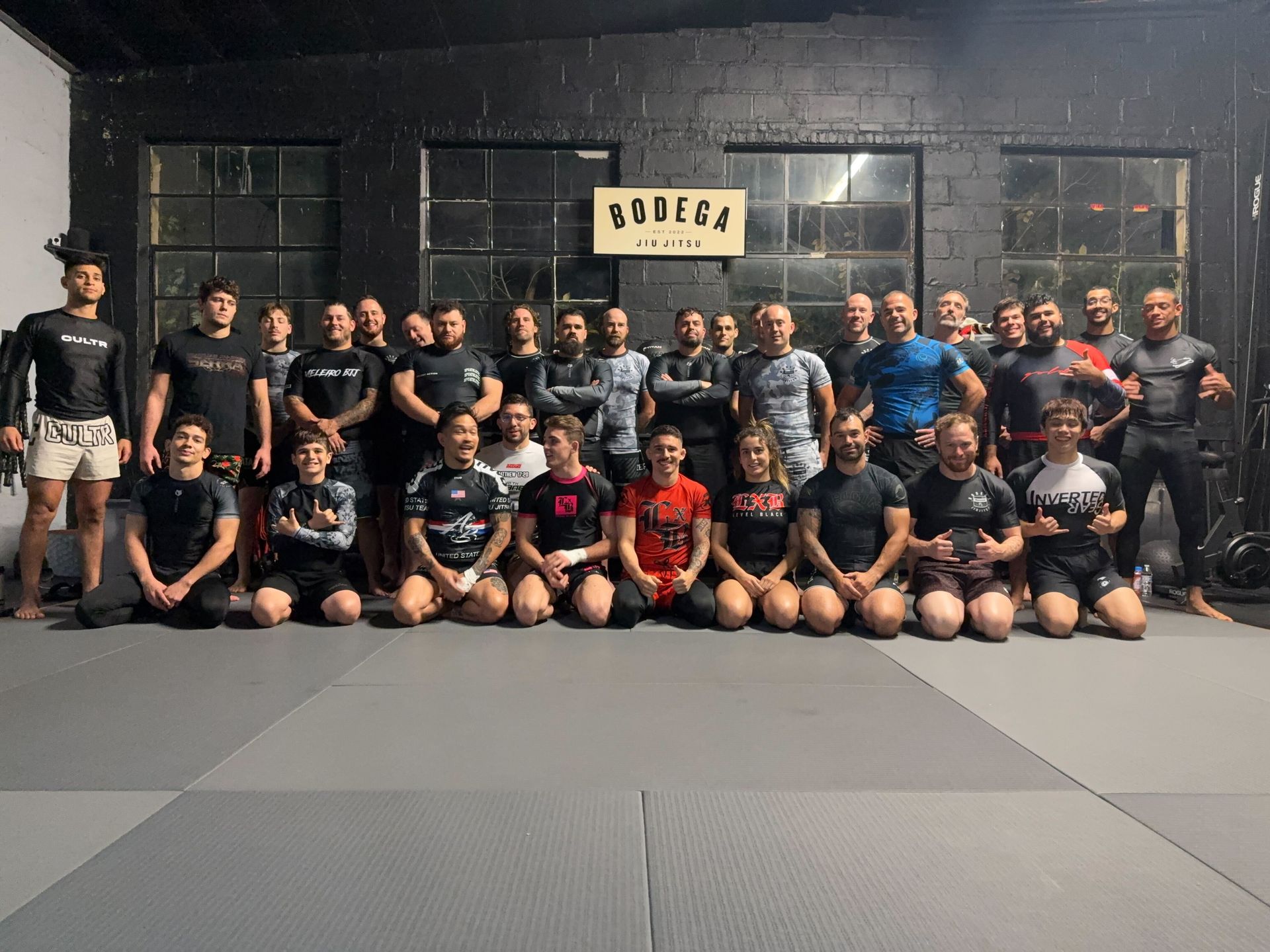
At Bodega Jiu-Jitsu, we built our adult program around beginner friendly structure, no gi focused progress, and a class schedule that works for real life in Maplewood, NJ, so you can start confidently and keep showing up.
Begin your grappling journey in a supportive environment at Bodega Jiu-Jitsu.