Grappling looks like a sport, but the real payoff is how much calmer, stronger, and more capable you feel the other six days of the week.
Most people first think of grappling as something you watch on weekends or try once for fitness. But in our classes, we see a different story play out: the skills you build on the mats show up in your workday, your parenting, your sleep, and even how you move through a crowded train station after a long commute.
We teach grappling as a practical, progressive practice you can start at any level. You do not need to be tough, flexible, or athletic on day one. You just need a willingness to learn, a little patience, and a sense of humor about being new at something.
In Maplewood, where a lot of people balance demanding jobs, family schedules, and that familiar North Jersey pace, grappling can become a surprisingly reliable reset button. It is physical, yes. But it is also one of the most effective ways we know to train focus, resilience, and problem-solving under pressure.
Why grappling transfers so well to real life
Grappling forces you to solve problems in real time. You are not memorizing techniques in a vacuum. You are learning how to stay composed, feel what is happening, and choose a smart response even when your heart rate spikes.
Research backs up what we see in class: practitioners report very high rates of life-skill transference, including discipline, focus, respect, and resilience, with community and connection showing up as a consistent benefit for adults. That matters because everyday life is basically a stream of small stress tests, and grappling gives you a safe place to practice meeting those moments with more control.
A “pressure practice” you can actually use on Monday
On the mats, pressure is literal: body weight, frames, grips, and tight spaces. Off the mats, pressure becomes deadlines, meetings, parenting decisions, and unpredictable days. When you learn to breathe and think while someone is trying to pin you, it gets easier to breathe and think when your phone will not stop buzzing at 4:45 pm.
We coach you to slow the moment down. You learn to find structure, then options. That same rhythm applies when your day starts spinning.
Physical upgrades you notice outside the gym
Grappling is often described as a full-body workout, but that phrase can sound vague until you feel the changes. What tends to improve first is not just “strength,” but usable strength: the kind that makes carrying groceries, picking up your kid, or moving furniture less annoying.
Studies on Brazilian Jiu-Jitsu and related training show improvements in cardiovascular health, muscular strength, flexibility, and endurance. Those are the basics. The surprise is how quickly those basics translate into daily energy and fewer aches from being sedentary at a desk.
Stronger grip, stronger posture, fewer little pains
Grip strength is a big deal in grappling, and evidence supports measurable improvements. In everyday terms, stronger hands and forearms often pair with better shoulder positioning and more awareness of how you hold tension. A lot of adults do not realize how much stress lives in the shoulders and jaw until training teaches you to let go, repeatedly, on purpose.
You also develop a more athletic posture without obsessing over it. You learn to stack your joints, stay balanced, and move your hips with intention. It is functional and, frankly, convenient.
Safer falls and better body awareness
One of the most underrated benefits of grappling is learning how to fall and how to get up. We spend time on movement skills that teach you to protect your head and manage impact. That can matter for anyone, but especially for adults over 30 who do not bounce the way we used to.
Better movement competence also shows up in small moments: stepping off a curb in the rain, slipping slightly on a stair, catching yourself without panic. Those moments are not dramatic, but avoiding injury is its own form of freedom.
Mental health benefits that do not feel like “therapy talk”
A good training session clears mental clutter. Not because you forget your responsibilities, but because your attention has somewhere specific to go. You cannot answer emails while you are trying to escape side control. Your brain gets a break from multitasking.
Research trends from recent years emphasize grappling arts and BJJ for psychological well-being, reduced stress, and emotional resilience. We also see confidence grow in a grounded way, not as bravado. You know what you can handle because you practice handling it.
Stress regulation and the post-class “quiet”
After class, many students describe a calm, almost quiet feeling. There is a physiological reason: hard training can help regulate stress hormones, and the combination of exertion plus focused problem-solving is a powerful mood stabilizer.
In Maplewood, with plenty of commuters and busy professionals, that matters. Grappling becomes a structured way to discharge tension so it does not spill into your evening at home.
Confidence that comes from competence
Confidence is often marketed as a mindset. We treat it as a skill. When you learn how to frame, hip escape, and recover position, you feel competence growing. And competence is sticky. It follows you into presentations, hard conversations, and moments where you used to second-guess yourself.
Everyday conflict skills without relying on striking
A lot of people are drawn to grappling because it offers self-defense value without making the training feel like constant hitting. You learn clinch control, balance disruption, positional escapes, and how to use leverage. That is practical, and it is also safer for many adults who prefer lower impact.
We also emphasize control, including how to match intensity and how to disengage when appropriate. Real life is messy. The goal is not to “win a fight.” The goal is to be harder to hurt, better at staying calm, and more capable of making good choices under stress.
Controlled force and injury reduction mindset
There is data in related tactical contexts showing significant injury reductions when grappling-based control skills are used appropriately. The bigger point for everyday people is this: grappling trains precision. You learn that technique matters more than aggression, and that the safest outcome is often the one where nobody gets hurt.
That mindset changes how you carry yourself. You tend to walk around less reactive.
Community: the benefit most adults do not expect
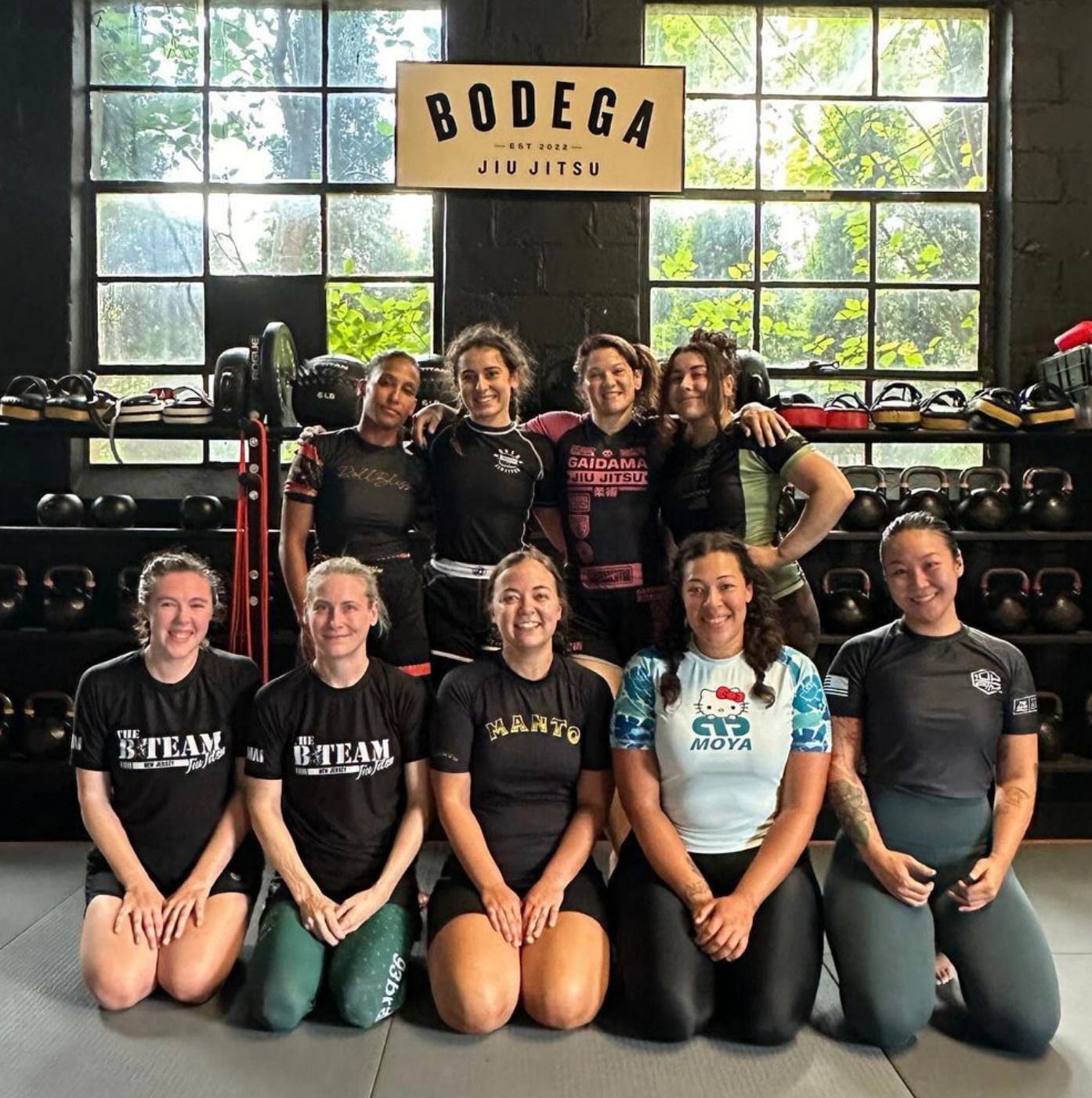
Adults often underestimate how much a consistent community impacts health. In grappling, you work with partners. You learn names. You share progress. You get humbled, then you get better, then you help the next new person. That cycle builds real belonging.
In surveys of practitioners, community bonding is frequently reported as a universal benefit among adults. We work hard to keep our room welcoming, structured, and respectful, because a positive training culture is not an accessory. It is the thing that makes consistency possible.
A social outlet that still feels productive
If you are busy, socializing can feel like another task. Training is different. You show up, you learn, you sweat, you laugh a little, and you leave better than you arrived. That is a high-quality use of time.
And yes, you will probably talk about grips and guard passes at first. It happens.
How adult grappling fits real Maplewood schedules
When people ask about adult grappling in Maplewood, the real question is usually, “Can I stick with this?” We design our programs around repeatable progress, not heroic bursts of motivation.
If you train two to three times per week, you give your body enough stimulus to adapt and your mind enough repetition to remember. More is not always better, especially if you are juggling work, kids, and the occasional attempt at downtime.
What a realistic training week can look like
Here is a simple approach we often recommend for beginners:
1. Start with two classes per week for the first month so your body can adjust.
2. Add a third session when soreness becomes manageable and sleep stays solid.
3. Keep one day as pure rest or light movement like walking.
4. Track small wins: better breathing, improved balance, fewer panic moments.
5. Reassess every four weeks and adjust based on energy and schedule.
That is not flashy, but it works. Consistency builds the engine.
What you will actually learn in a beginner-friendly grappling program
People sometimes worry they will be thrown into deep waters right away. We teach progressively. You build fundamentals first, then add complexity once you have real footing.
In practical terms, our beginner path focuses on:
• Base and balance so you feel stable under pressure and during transitions
• Escapes and recoveries so you can reset positions instead of freezing
• Positional control so you can hold, stabilize, and slow the pace when needed
• Submissions taught with safety and tapping fundamentals so learning stays sustainable
• Live training scaled to your experience so you can apply skills without chaos
This structure is why grappling becomes useful outside class. You are not collecting random moves. You are building a system.
Families and kids: benefits that spill into the whole household
Even if you are reading this for yourself, it is worth mentioning how often grappling turns into a family lifestyle. Data in youth contexts points to improvements in confidence and self-discipline, plus social benefits like reduced bullying risk. Parents also tend to notice better coordination and body awareness.
For adults, the big family benefit is simple: you feel better, you move better, and you handle stress better. That changes the temperature of the whole home. And when families train in parallel, it becomes shared language: effort, respect, patience, practice.
Safety and injury concerns: what we do to keep training sustainable
Every physical practice has risk, and we do not pretend otherwise. But grappling can be trained in a controlled, low-impact way, especially when the room culture prioritizes tapping early, technical progression, and smart intensity.
We coach you on how to choose partners, how to communicate, and how to recognize fatigue. We also encourage pacing that matches your life. If you are sore from yardwork or you had a brutal week at the office, you can still train, but you should train intelligently.
Take the Next Step with Bodega Jiu-Jitsu in Maplewood
If you want a practice that strengthens your body, steadies your mind, and gives you real skills you can feel in daily life, grappling is hard to beat. At Bodega Jiu-Jitsu, we keep training progressive and practical, so you can build confidence without burning out or feeling like you have to be “a certain type” of person to belong here.
Our goal is simple: help you leave class more capable than you walked in, then watch that capability show up in the rest of your week. When you are ready, we would love to see you on the mats at Bodega Jiu-Jitsu.
Turn what you learned here into hands-on training by joining a grappling class at Bodega Jiu-Jitsu.