Adult grappling builds real, usable flexibility by teaching your body to move, resist, and recover in every direction.
Adult grappling has a funny way of exposing tight hips, stiff shoulders, and the kind of limited mobility you do not notice until you are trying to move around another person on the mat. We see it all the time in Maplewood: adults who feel strong in the gym but still move cautiously, or adults who stretch regularly but cannot quite translate that flexibility into confident, athletic movement. Grappling changes that because it is not just stretching, it is movement with purpose.
Our focus is helping you build flexibility you can actually use. That means improving how your joints move under control, how your breathing stays steady when positions get uncomfortable, and how your body learns to relax instead of fighting itself. If you have been looking for a fitness routine that feels more engaging than another round of machines or another set of static stretches, adult grappling offers a different kind of progress you can feel week to week.
In this guide, we will break down how adult grappling transforms mobility and fitness, what makes it different from typical flexibility work, and how to start safely, especially if you are over 30 or coming back from a long stretch of not training.
Why Adult Grappling Creates Flexibility That Transfers to Real Life
Flexibility is not only about how far you can stretch a muscle. It is also about whether you can access that range of motion while staying stable, balanced, and calm. In adult grappling, you constantly shift between positions that require hip rotation, spinal mobility, shoulder control, and active legs. You are not holding a pose and hoping it sticks. You are learning how to move through positions while another person is giving you feedback in the most honest way possible: resistance.
A big part of the flexibility you gain comes from repeated positional patterns. Shrimping out to create space, bridging to off-balance someone, turning your hips to recover guard, or standing up from the ground under control all build mobility that shows up outside the gym too. Getting off the floor becomes easier. Knees and hips feel less creaky after long workdays. Even basic balance tends to improve because your body is practicing coordination, not just range.
This is also why many adults who feel stiff do well in a grappling environment. You do not need to arrive flexible. You build it by showing up and moving through realistic patterns, with coaching that helps you do it safely.
The Fitness Side of Grappling: Strength, Cardio, and Mobility in One Hour
One reason adult grappling classes work for busy schedules is that the training blends multiple fitness qualities without you having to piece them together across different workouts. You are building strength through pushing, pulling, framing, and holding posture. You are building cardio through rounds that spike your heart rate, then teach you to recover. And you are building mobility because every technique asks your body to rotate, fold, extend, and stabilize.
We also like how measurable the progress feels. Sometimes the first “fitness win” is not a number on a scale. It is noticing you can sit into a deeper squat during warm-ups, or you can turn your hips without your lower back complaining, or you can breathe steadily while pinned instead of panicking and tensing up. Those are real fitness markers, even if they do not show up on a smartwatch.
For Maplewood adults balancing commutes, work stress, and family responsibilities, that efficiency matters. When you can get stronger, more mobile, and more resilient in a single session, consistency becomes more realistic.
What Makes Grappling Mobility Different From Yoga or Weight Training
Yoga can improve flexibility, and strength training can build joint stability, but adult grappling combines those qualities while adding timing, reaction, and problem-solving. The positions are dynamic, and your body learns to find range of motion when it is not perfectly set up. That is where flexibility becomes functional.
In grappling, your hips open because you are constantly pummeling, turning, and re-guarding. Your thoracic spine rotates because you are framing, posting, and angling off. Your shoulders learn to move while staying safe because you are taught proper structure and positioning. Even your ankles and feet get stronger and more mobile because standing entries and base-building matter more than many people expect.
At high levels of competition, chokes dominate a large share of finishes, and modern no-gi events still hover around a roughly one-third submission rate overall. We do not train you like you are preparing for a world title, but those trends matter because they shape what works: efficient positioning, smart control, and technique that does not rely on being the most flexible person in the room. Ironically, that approach is what helps flexibility grow in a sustainable way.
Adult Grappling and the Maplewood Lifestyle: Why It Fits Right Now
Maplewood sits close to a major Northeast training corridor, and adult participation in Jiu-Jitsu across the U.S. has grown substantially over the past decade. That growth is not only about competition. It is also about adults wanting something that feels real, social, and skill-based, especially after years when many fitness routines became isolated or repetitive.
Adult grappling fits that shift because it is community-based and low-equipment. You show up, you train, you learn, and you leave feeling like you practiced a craft. We see working professionals who want stress relief without high-impact pounding. We see parents who want energy and confidence. We see adults who want to move better, not just “work out.”
And yes, it is challenging, but it is not mindless. That is the hook for many adults: you are too engaged to ruminate about your day, yet you are not just burning calories, you are developing skill.
What You Will Do in Our Adult Grappling Classes
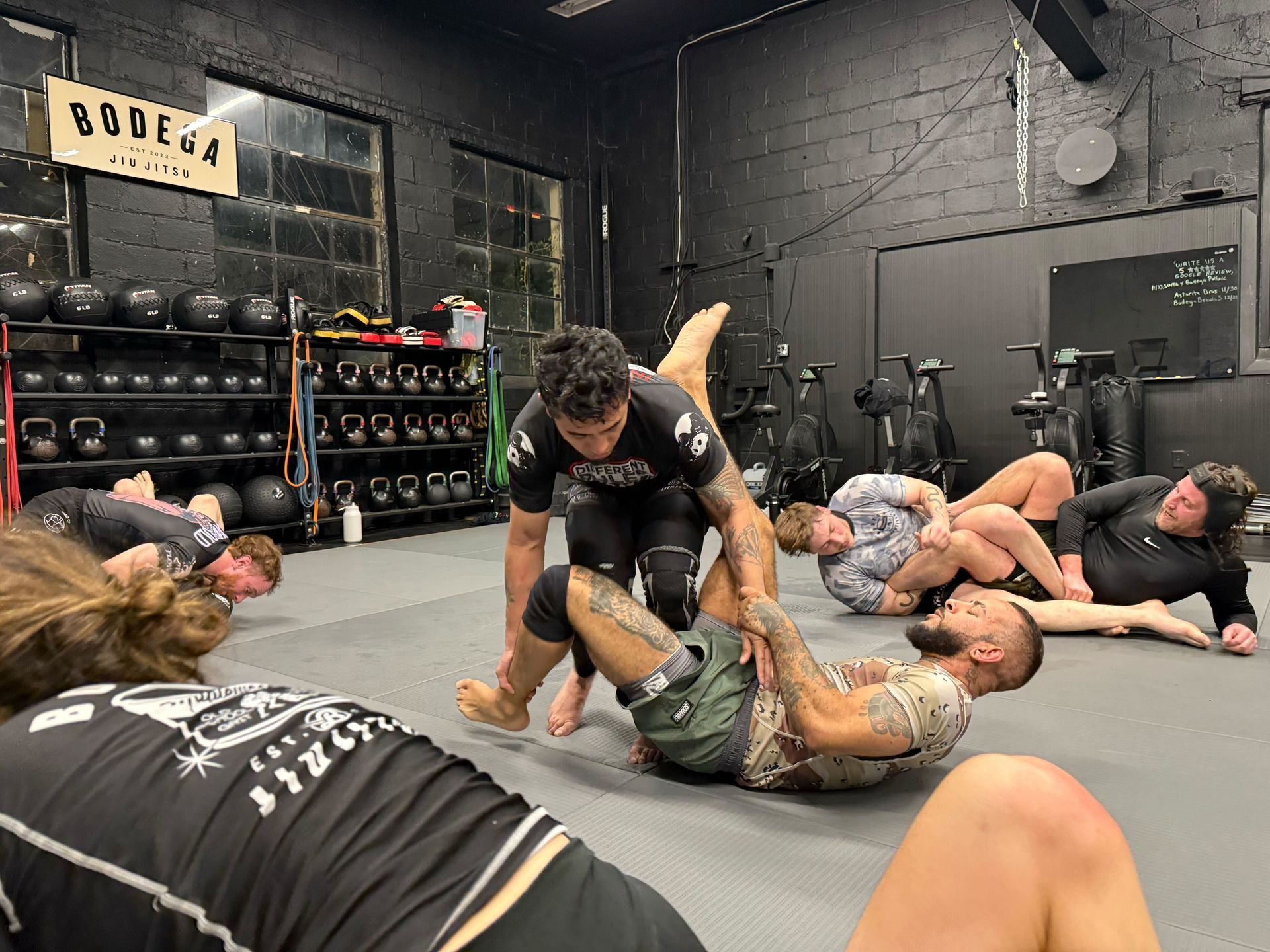
Our adult grappling classes are structured to build flexibility and fitness without throwing you into chaos. A typical session balances movement prep, technical learning, and controlled sparring so you can apply what you learn without feeling overwhelmed.
Here is what a 60-minute class often looks like:
- Warm-up and mobility (about 10 minutes) focused on hips, spine, shoulders, and safe mat movement you will actually use
- Technique and drilling (about 30 minutes) where we teach a small set of connected skills, then repeat them enough for your body to absorb the patterns
- Live training (about 20 minutes) with guidance on intensity, goals for the round, and how to stay safe while you build timing and comfort
If you are brand new, we keep the focus on fundamentals: base, posture, frames, hip movement, safe gripping, and positional escapes. Over time, you will notice your mobility improving because you are no longer forcing movement. You are learning leverage, angles, and how to let your skeleton do more of the work.
Safety for Beginners Over 30: How We Reduce Injury Risk From Day One
A fair question we hear is whether adult grappling is safe for beginners, especially if you are over 30. The honest answer is that it can be very safe when training is structured well, but beginners do have higher injury risk in training than experienced athletes. That is not meant to scare you, it is meant to highlight why fundamentals-first coaching and smart intensity matter.
We reduce risk by coaching you to tap early, move with control, and prioritize position before submission. We also use positional sparring so you can train realistic scenarios without the unpredictability of full-speed scrambling right away. When you are learning how to fall, how to base, how to frame, and how to breathe under pressure, your body adapts faster and your training stays consistent.
A few habits that make a big difference:
1. Start with a sustainable schedule, then build up as your recovery improves
2. Choose controlled rounds early on, not “win at all costs” rounds
3. Tap early to joint locks and tight chokes, then ask questions after
4. Focus on exits and escapes before you chase submissions
5. Tell us about old injuries so we can help you modify positions and pacing
Consistency beats intensity. If you can train regularly without getting banged up, your flexibility and fitness improve steadily, and that is the point.
Why Chokes, Control, and Wrestling Trends Matter for Flexibility
Modern grappling trends have shifted toward more wrestling integration, more standing engagement, and less reliance on long, static guard exchanges at elite levels. Even if you never compete, this matters because the training environment evolves. More standing work means more emphasis on footwork, level changes, hip hinges, and posture, all of which build athletic mobility.
We also teach submissions with an emphasis on control and safety. Chokes remain a common finishing mechanism in high-level competition because they can be applied efficiently when position is correct. In training, that translates to learning how to control someone safely, understand pressure, and apply technique without cranking. That approach supports flexibility because you are not forcing awkward positions. You are learning alignment.
Standing-to-ground transitions also improve your ability to move fluidly through ranges of motion. You learn to sprawl, recover your stance, pummel for inside control, and move your hips under you. It is not flashy, but it is the kind of movement that keeps adults feeling athletic.
Progress You Can Expect: A Realistic Timeline for Mobility and Fitness
Adults often want to know how long it takes to feel results. We like to frame it in milestones rather than promises. Most adults notice early changes in how their body feels, then deeper changes in performance and conditioning.
A realistic progression often looks like this:
- Weeks 1 to 4: You feel sore in new places, but you also feel looser in hips and shoulders, and your breathing improves once you stop tensing up
- Months 2 to 3: Your movement becomes smoother, your balance improves, and you start escaping bad positions without burning out
- Months 4 to 6: You can train multiple rounds with steadier cardio, your flexibility becomes more controlled, and technique starts showing up without constant thinking
If you train three to five times per week, progress tends to come faster, but even two consistent sessions weekly can reshape how you move. The key is showing up regularly and keeping intensity at a level your recovery can handle.
Getting the Most Out of Adult Grappling Classes in Maplewood
To make adult grappling work as a flexibility tool, it helps to approach training with a fitness mindset, not just a technique checklist. We want you to move better, feel better, and stay healthy enough to keep training.
A few practical tips we recommend:
- Arrive a little early so your warm-up is not rushed, especially on cold days when joints feel stiff
- Hydrate and eat in a way that supports recovery, because grappling taxes muscles and nervous system
- Ask for a clear goal each round, like “recover guard” or “stay calm under pressure,” so sparring stays productive
- Track small wins like deeper squats, smoother hip escapes, or fewer breath-holding moments
- Use the class schedule consistently, because scattered training makes mobility gains harder to lock in
This is also where the community matters. When you train with partners who respect control and learning, you can push yourself without feeling like every round is a fight. That environment is what lets adults stay in the game long enough to see real transformation.
Ready to Transform Your Flexibility and Fitness in Maplewood
If you want flexibility that shows up in daily life, adult grappling is one of the most practical paths we know, and we have built our programs to make that progress approachable, safe, and genuinely fun to stick with. At Bodega Jiu Jitsu, we guide you through positions, movement patterns, and controlled live training that steadily unlock mobility while improving strength and conditioning.
When you are ready, we will help you choose a pace that fits your body and your schedule, whether you are brand new or returning after time away. Our adult grappling classes are designed to meet you where you are, then build from there.
Train in a focused, supportive environment by joining a grappling class at Bodega Jiu Jitsu.