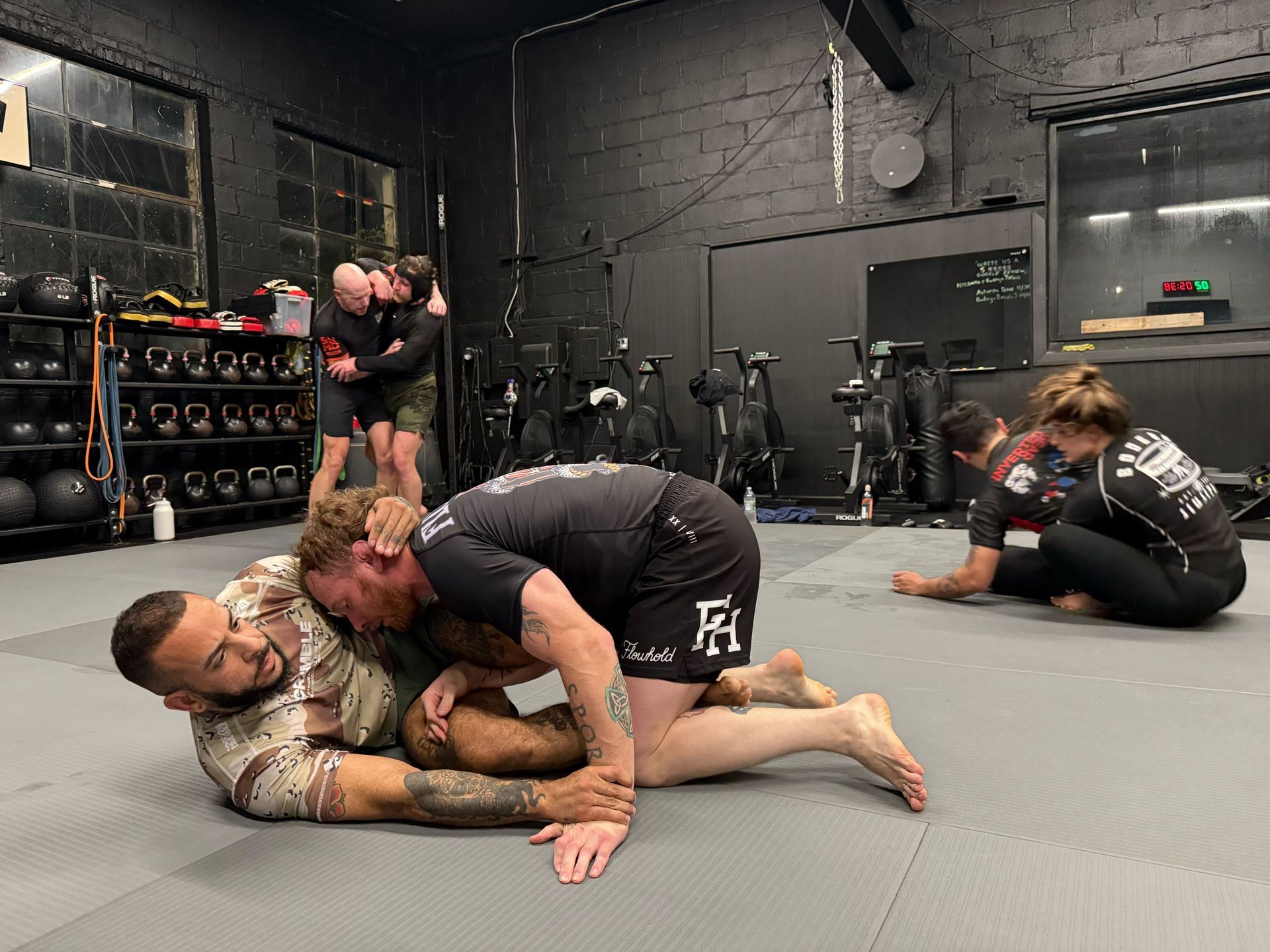
Better adult grappling isn’t about collecting more moves, it’s about building a game that holds up when things get fast.
Adult grappling is growing quickly across the U.S., and we feel that momentum right here in Maplewood. More adults are stepping onto the mats for fitness, self defense, stress relief, and competition goals, and the questions we hear are surprisingly consistent: What should I focus on first, and how do I get better without feeling like I’m spinning my wheels?
Our answer is practical. We coach you to prioritize the pieces of grappling that show up most often under pressure: strong standing skills, reliable submissions, and the ability to scramble and recover when your first plan doesn’t work. High level no gi trends back this up too, with chokes dominating elite finishes and wrestling style exchanges shaping how matches unfold.
Below are five essential tips we use to help adults progress faster and feel more confident in every round, whether you train once a week or you’re building toward a tournament.
Tip 1: Build your adult grappling around standing skills first
If you want your adult grappling to feel smoother fast, start by taking the standing phase seriously. Standing grappling sets the tone. It decides who gets top position, who has to defend first, and who burns energy scrambling back from a bad start.
In modern no gi competition, we’re seeing more wrestling integration and more urgency in the opening exchange. That’s not just for high level athletes. For adults with jobs, families, and limited training time, a simple, repeatable standing plan saves you rounds of frustration.
What we mean by “standing plan”
We’re not asking you to become a full time wrestler. We’re looking for a small toolkit you can actually remember when your heart rate spikes:
- A stance you can hold without standing tall
- One or two entries you can hit safely against resistance
- A basic finish and a basic reset when it stalls
- A clear idea of what to do if you get grabbed first
When we teach takedowns and entries in class, we keep the learning curve realistic. You’ll drill the mechanics, then connect them to the next phase (passing, front headlock, or getting to your feet again). That connection is where adult grappling in Maplewood really starts to click.
A useful checkpoint
If your rounds always begin with you backing up, reaching, or pulling in a panic, your standing fundamentals are asking for attention. A little structure here changes everything downstream.
Tip 2: Prioritize chokes, because they’re the most reliable finish
Not all submissions are equal in live rounds. If you look at elite no gi results, chokes account for the majority of finishes (including a large share at ADCC 2024), while arm attacks come in far behind. There’s a reason: when position is tight and people are sweaty and stubborn, chokes tend to stay available.
For adult grappling, we treat chokes as core skills, not “advanced stuff.” You can learn them safely, apply them with control, and build a finish system that doesn’t rely on perfect flexibility or explosiveness.
How we coach chokes for adults
We focus on clean mechanics and safety:
- Position first, then pressure
- Hands and wrists aligned, no cranking
- Clear taps, quick releases, good communication
- Building the choke from a stable pin or back control
You’ll also learn how to recognize when a choke is close versus when it’s wasting energy. That awareness is a skill on its own, and it’s one of the fastest ways to level up your decision making.
Beginner friendly choke pathways
If you’re newer, you’ll usually progress fastest by building toward a few high percentage options: rear naked choke mechanics, guillotine concepts from front headlock, and collar tie to head and arm style controls (even in no gi). The specific variations matter less than learning how to control the head and shoulders and close space.
Tip 3: Stop relying on guard as your main plan and start winning the scramble
Guard is still important, and we teach it. But in modern grappling, high level matches often avoid extended, static guard situations because scrambles happen fast and athletes are quick to stand back up. If you only feel “safe” when you’re settled in guard, you’ll hit a ceiling once partners learn to disengage and force transitions.
A better adult grappling approach is to treat guard as a moment in the exchange, not the destination. Your goal is to use it to off balance, stand, or attack quickly, then move on.
What “scramble ready” feels like
Scramble readiness is not chaos. It’s knowing your next two actions. For example:
- If your guard opens, you frame and recover inside position
- If your opponent stands, you follow to a technical stand up
- If you lose an underhook, you pummel immediately instead of waiting
- If you get flattened, you build to your side and re establish frames
We build these habits through specific rounds and constraints, because adults learn faster when the problem is clear. When you practice the scramble intentionally, you stop getting surprised by it.
A small mindset shift that helps
Instead of asking, “How do I hold guard longer?” try, “How do I create a transition I can win?” That question produces better adult grappling results, especially in no gi.
Tip 4: Add a little wrestling every training week (even if you’re not “a wrestler”)
The fastest improvement often comes from small, consistent additions. Wrestling style movement and controls show up everywhere: in takedowns, in standing hand fighting, in front headlock, and in the way you hold top position. The best part is you don’t need to train it for hours to benefit.
We like simple, repeatable wrestling elements that fit adult bodies and adult schedules. Think posture, head position, and using your legs to drive, not just your arms to pull.
A weekly mini plan that works
Here’s a realistic structure we recommend for adult grappling in Maplewood, especially if you train two to four times per week:
1. One day focused on standing entries and hand fighting basics
2. One day focused on front headlock, snap downs, and go behinds
3. One day focused on top pressure and getting back to your feet
4. Optional extra rounds where you start standing and reset often
This kind of repetition builds comfort. And comfort is what lets you stay calm enough to apply technique when a round gets messy.
What to avoid
Adults sometimes go too hard too soon standing up, which is where awkward collisions happen. We keep the pace controlled in drilling, emphasize safe breakfalls and positioning, and gradually add resistance as you improve.
Tip 5: Track progress with simple metrics, not vibes
One reason adult grappling can feel confusing is that improvement is real, but it’s not always obvious. You might defend better for three weeks and still “lose” rounds, because your partners are also improving or because you’re taking more risks.
Competition organizations track performance with divisions, medals, and even rating systems like ELO in some contexts. You don’t need a formal rating to benefit from that idea. You just need a few metrics that tell you the truth.
The progress markers we like
Pick a few that match your current level and write them down somewhere you’ll actually look:
- How often you get to top position from standing or scrambles
- How many clean escapes you hit per round (not just surviving)
- Whether you can hold back control long enough to threaten a choke
- How often you finish a round without feeling gassed from panic
- How quickly you recover after a failed shot or a failed guard attack
These are “quiet wins,” and they add up. When you track them, you stop chasing random techniques and start building a game.
Use your training partners as feedback, not a scoreboard
In our adult classes, we encourage you to rotate partners and notice patterns. If the same position keeps showing up, that’s not bad luck. That’s your curriculum revealing itself. We’ll help you turn that pattern into a plan.
Common sticking points we fix in adult grappling (and how you can fix them too)
Most adults don’t need more toughness. You already show up, you train after work, you keep going when you’re tired. The real upgrades are usually technical and tactical.
Here are a few common issues we address, along with the adjustment that tends to help:
- You hold your breath while passing or escaping - practice exhaling during effort and resetting your frames
- You chase submissions from bad positions - make position the requirement before attacking
- You get stuck underneath after failed shots - learn to build to an elbow and recover to your knees
- You play the same guard no matter what - add one stand up option and one off balance option
- You “win” drills but struggle in sparring - increase resistance gradually and start from realistic setups
Adult grappling in Maplewood works best when your training looks like the situations you actually end up in, not just ideal demonstrations.
Take the Next Step
If you want your training to feel more focused, these five tips give you a blueprint: get comfortable standing, build choke mechanics, become scramble ready, layer in wrestling consistently, and track progress with simple metrics. When you do that, your adult grappling stops feeling random and starts feeling like a skill you’re deliberately sharpening.
We apply this approach every day at Bodega Jiu Jitsu, and our goal is to make sure you leave class knowing exactly what you’re improving and why. If you’re ready to train in Maplewood with a plan that fits real adult life, we’d love to have you on the mats at Bodega Jiu Jitsu.
New to grappling? Start your journey with a class at Bodega Jiu Jitsu.