Grappling is one of the few workouts that trains your body and your decision-making at the same time.
If you are an adult in Maplewood balancing work, family, and the mental load that comes with both, it makes sense to want training that actually does something for you. We see it every week: people walk in wanting to get stronger, move better, and feel more confident in their own skin, not just “get a sweat in” and call it a day. Grappling fits that goal because it is physical, technical, and honest about progress.
Our adult classes are built around Brazilian Jiu-Jitsu style training that teaches you how to control positions, escape, and build practical skills through smart repetition. The best part is that you do not need to already be “in shape” to start. You build the engine as you go, and you build confidence the same way: one round, one class, one small win at a time.
Research on adult BJJ training lines up with what we notice on the mats: adults report major improvements in confidence (87.6 percent), reduced anxiety (87.5 percent), and a strong sense of community (100 percent). Those numbers are reassuring, but the day-to-day experience is what really sticks: you leave class feeling clearer, steadier, and more capable than when you arrived.
Why grappling works so well for adult strength
Strength in grappling is not just about lifting heavy. It is about creating pressure, keeping balance, and staying connected to your base while you move. That kind of strength shows up in real life: carrying groceries without tweaking your back, feeling stable on stairs, sitting at your desk with better posture, even sleeping a little deeper because your body actually worked.
Because you use your whole body, our training naturally develops:
• Muscular strength through pushing, pulling, bridging, and controlled tension
• Endurance from repeated rounds that mix aerobic and anaerobic effort
• Mobility and flexibility through positions that open hips, shoulders, and spine
• Coordination and balance from constantly adjusting to a partner’s movement
• Joint stability from learning how to align your knees, hips, shoulders, and neck safely
Adults over 30 and 40 often tell us they feel “put back together” over time. That is not magic. It is consistent full-body training with good coaching, a warm-up that respects your joints, and technique that helps you move efficiently instead of muscling everything.
Strength you can feel: posture, core, and connective tissue
A lot of adults come in with the same modern issue: long hours sitting, stiff hips, tight shoulders, and a core that has not had to do much besides hold you upright in a chair. Grappling changes that quickly because it demands rotation, bracing, and controlled breathing.
We spend time teaching posture in a very practical way: how to keep a strong spine while you move, how to frame with your arms without collapsing, and how to use your legs and hips (your real power source) instead of just gripping and yanking. Over weeks and months, those patterns add up. People notice their shoulders sit better, their neck feels less cranky, and their general “sturdiness” improves.
This is also why grappling can be so helpful for skeletal health and circulation. You are moving, squeezing, relaxing, and moving again, which supports blood flow and the kind of loading that keeps tissues resilient as you age.
Confidence is built, not hyped
Confidence in adulthood is rarely about loud motivation. It is quieter. It is the feeling that you can handle a hard moment without panicking. Grappling builds that because you practice solving problems under pressure, safely, with partners who want you to learn.
In class, you get used to being uncomfortable in a controlled way: someone is holding you down, you find your frame, you make space, you escape. You do not need to “win.” You need to stay composed and work the steps. That skill transfers directly into daily life, whether it is a tense meeting, a tough conversation, or a stressful week that stacks up fast.
Studies also show that the psychological benefits increase with experience. The longer you train, the more improvements you tend to see in resilience, grit, self-efficacy, and even life satisfaction, with advanced practitioners reporting higher levels than beginners. That makes sense to us. You are collecting proof that you can learn hard things.
The mental reset: stress relief, focus, and better sleep
People often underestimate how much mental noise they carry until they feel it switch off. Grappling demands attention. You cannot half-focus while someone is trying to pass your guard. For many adults, that becomes a form of moving mindfulness.
Here is what tends to happen when you train consistently:
• Your mind locks into the present because technique requires it
• Your body releases endorphins, which can improve mood and reduce tension
• Your breathing gets trained under pressure, which helps calm the nervous system
• You finish class tired in a good way, which can support better sleep
Recent trends from 2023 and 2024 show growing interest in BJJ among adults over 40 for holistic health, including cognitive sharpness, better sleep, and even improved libido and circulation. It is not a weird promise. It is what happens when you combine intense full-body movement, community, and the satisfaction of measurable skill growth.
Adult grappling in Maplewood: why the local fit matters
Maplewood has a lot of driven adults. Commutes, deadlines, parenting logistics, and the general pace of life in Essex County can feel like a constant hum. Our adult classes are designed to meet that reality, not pretend it does not exist.
We keep training structured and progressive so you can show up even when you are tired and still know what to do. We also build a room culture where you can train hard without feeling like you need to prove something. That is a big deal when you are starting adult grappling in Maplewood and you are not interested in ego or injuries, just real progress.
When people look for grappling arts Maplewood residents can stick with long term, the difference is rarely talent. It is sustainability: coaching that prioritizes technique, training partners who look out for you, and a schedule that makes consistency possible.
What you actually do in class (and why it feels doable)
We like clarity. When you walk in, you should know what you are working on and why. A typical class includes a warm-up that builds movement skill, technique instruction with clear details, drilling that turns ideas into habits, and live rounds that help you apply what you learned.
For beginners, we focus on fundamentals that create immediate traction:
• How to fall and move safely so you can train with confidence
• Escapes from common bad positions, because feeling trapped is the fastest way to quit
• Guard fundamentals, including frames and hip movement, so you can protect yourself and attack
• Top control basics, so you learn pressure and balance without forcing it
• Simple submissions taught with safety and control, not speed
That blend helps you feel progress early. You start recognizing positions, making better choices, and staying calmer. And yes, you get stronger along the way, but it is strength with a purpose.
Safety, intensity, and being “too old” to start
We hear the question constantly: am I too old to start grappling? No. Adults from their 30s through 50s and beyond train successfully, and studies show significant participation in the 38 to 42 range, with many continuing well past that. The key is how you train.
We coach you to scale intensity. That means learning technique before trying to explode out of everything, tapping early, and choosing rounds that match your goals that day. Some days you will push it. Other days you will flow and focus on movement quality. Both are valid, and both help you stay healthy.
If you have old injuries or you are just stiff, we can help you adapt positions. Grappling is surprisingly customizable when the room culture supports learning over winning.
The quiet community effect (it matters more than people expect)
A big reason adults stick with training is that it becomes a reliable social anchor. You see the same faces. You learn each other’s games. You notice when someone has been out and you check in. That sense of belonging is not incidental. In surveys, 100 percent of adult practitioners reported a strong sense of community, and we understand why.
In suburban life, it is easy to feel isolated even when you are surrounded by people. Training gives you a place where conversations are simple and real. You do hard things together, you laugh between rounds, and you leave feeling more connected than when you walked in.
How often should you train to see real results?
Adults commonly train three to five times per week, but there is no single perfect number. Consistency matters more than intensity. If you can train twice a week reliably, you will improve. If you can add a third day, progress accelerates.
We recommend starting with a schedule you can keep for months, not a burst you can only handle for two weeks. Strength and confidence are built through repetition. The good news is that grappling makes repetition interesting because every partner and every round is a little different.
Take the Next Step
If you want training that builds real strength, sharper focus, and confidence you can feel in everyday situations, our grappling program is designed for exactly that. We keep the process structured, safe, and welcoming for adults who are brand new, returning after time off, or finally ready to prioritize themselves.
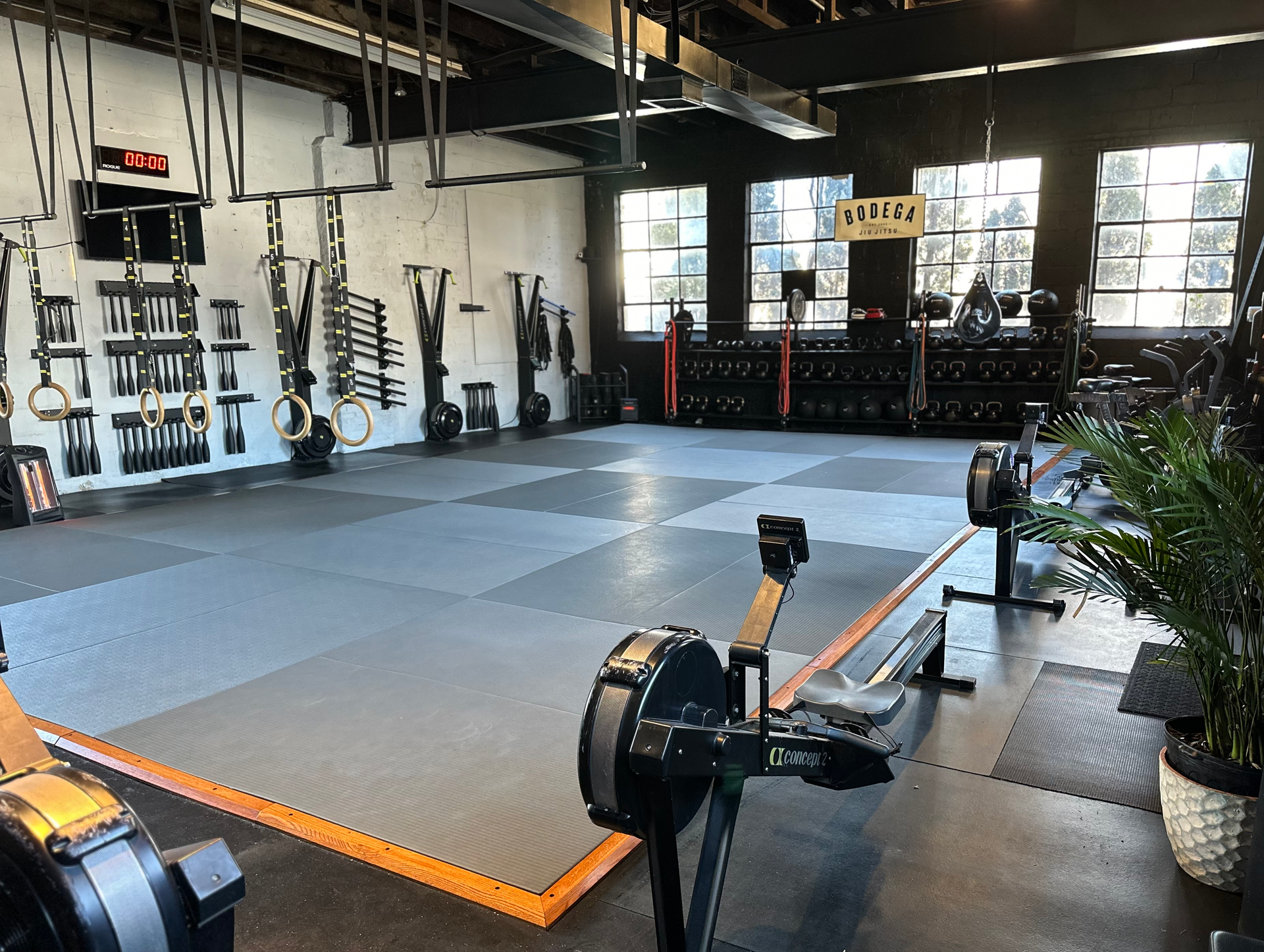
When you are ready to experience it in person, Bodega Jiu-Jitsu in Maplewood, NJ is here with classes that fit busy lives and coaching that meets you where you are, then helps you level up one session at a time.
Build stronger grappling skills and refine your technique by joining a grappling program at Bodega Jiu-Jitsu.