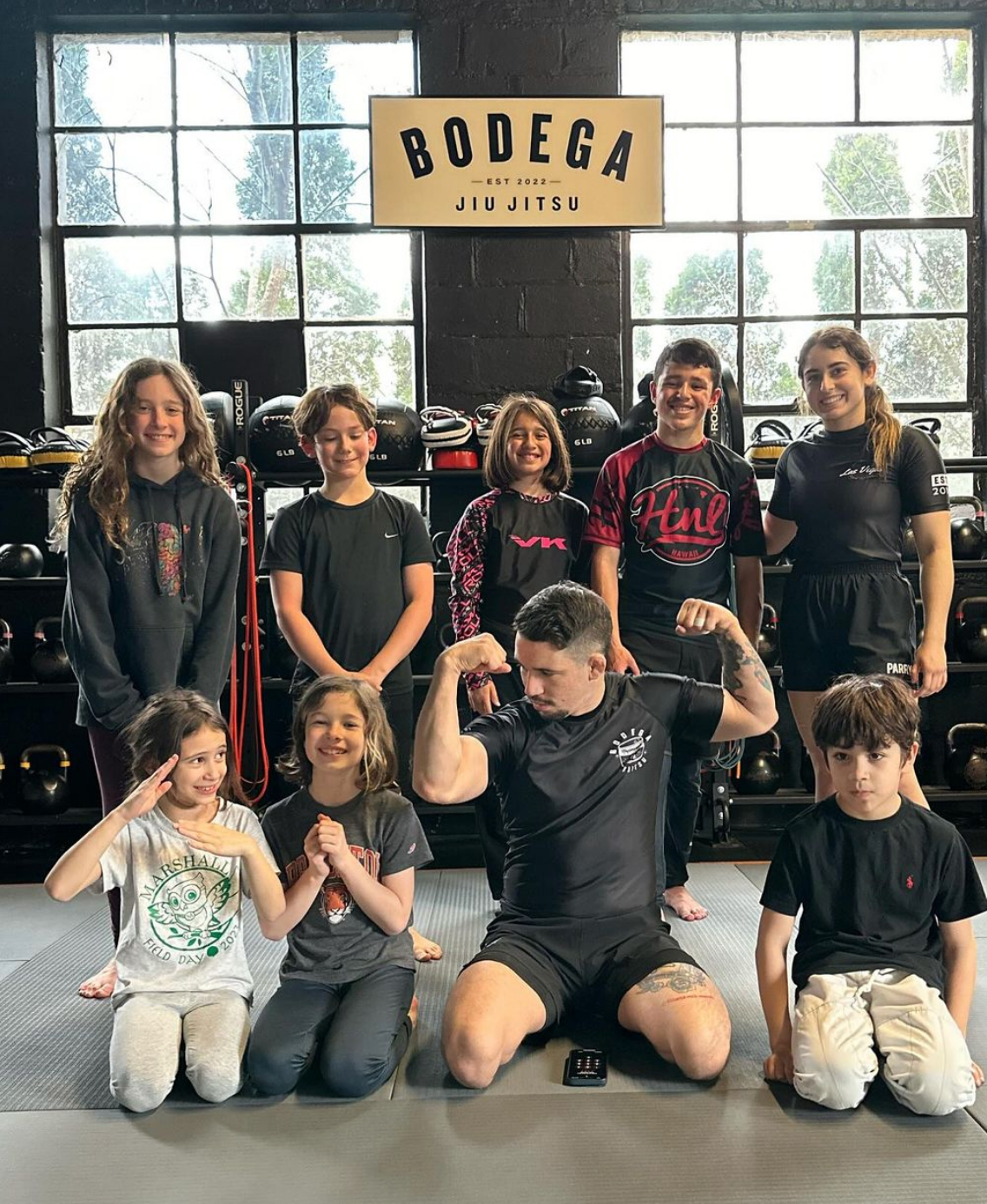
A good kids program builds more than toughness, it builds calm decision-making, healthier habits, and real confidence.
If you are looking for an activity that helps your child burn energy and build skills that actually transfer into daily life, grappling is one of the most complete options we teach. It is physical, yes, but it is also a thinking sport: kids learn how to solve problems with their bodies while staying safe and respectful with partners.
In Maplewood, families often tell us they want something that supports school, friendships, and confidence without turning practice into pressure. Our approach to No-Gi Brazilian Jiu-Jitsu is designed for that. We keep training structured, scalable, and clear, so beginners can jump in, understand what is happening, and start improving right away.
Why grappling works so well for kids in Maplewood
Grappling gives kids a rare mix of movement and decision-making. Because it is partner-based, your child learns timing, balance, and control rather than just repeating patterns in the air. That difference matters, especially for kids who need something engaging, not another routine that feels like homework.
No-Gi training also has a practical, modern feel. Without a gi, kids focus on body position, posture, and grips like overhooks and underhooks, plus real escapes and resets. The result is training that feels straightforward and useful, while still being fun.
We see the benefits show up in small moments: a kid who used to freeze when something gets hard starts trying again, adjusting, and asking better questions. That is thriving in real time.
The physical benefits: strength, stamina, coordination, and better sleep
Kids do not need a weight room to get strong. In grappling, strength comes from learning how to move their body efficiently, keep posture under pressure, and use their legs and hips correctly. Over time, those mechanics add up to noticeable improvements in everyday athleticism.
Our classes build a broad base of fitness that supports growing bodies:
• Strength and core stability from controlling positions like mount and side control
• Stamina from rounds that alternate effort and recovery, similar to interval training
• Coordination and agility from movement drills, rolls, and quick direction changes
• Cardiovascular fitness from consistent, high-energy practice
• Flexibility and balance from learning safe ranges of motion and stable base positions
Parents commonly notice that kids sleep better after training days. It makes sense: focused physical work paired with a mentally engaging activity often leads to deeper rest, and better rest supports mood and school performance.
The mental benefits: focus, resilience, and calmer choices under pressure
One of the most underrated parts of grappling is how quickly it teaches kids to stay calm in uncomfortable situations. Not panic-calm like nothing is happening, but capable-calm: breathing, listening, and taking the next best step.
In class, your child practices what to do when someone is on top, when a grip is tight, or when an escape is not working yet. That creates resilience in a very teachable way. Kids learn that discomfort does not mean danger, and difficulty does not mean failure.
We also emphasize decision-making. Instead of “just go harder,” we coach simple problem-solving: improve posture, frame, create space, move the hips, reset. Those are skills that map well to school challenges, social pressure, and sports nerves.
Confidence without cockiness: the culture we build on the mats
Confidence is not just feeling bold. Real confidence is knowing what you can do, what you cannot do yet, and how to keep improving. Our training environment supports that kind of confidence by keeping expectations clear and rewarding effort, not ego.
We teach kids to work with partners, communicate, and respect taps. When kids understand that tapping is a smart signal, not a loss, the whole experience becomes safer and more constructive. That is when confidence grows in a healthy way, because your child learns boundaries, self-control, and how to handle wins and losses without spiraling.
Safety first: what makes our kids grappling approach beginner-friendly
Safety is not an add-on. It is built into how we structure every class. We start with movement fundamentals and basic positions, then gradually add resistance and live training in a controlled way. That “progressive load” approach helps kids learn skills while reducing injury risk.
Our coaches are hands-on and active during class, correcting posture, stopping unsafe scrambles, and keeping intensity appropriate. We also teach early tapping and clear communication from day one, which is one of the biggest safety tools in any grappling room.
What a typical kids class includes
A kids session is varied on purpose, because variety keeps attention high and learning stickier. You can expect a mix of:
• Warmups that build coordination and body awareness, not just random running
• Movement drills like shrimping and technical stand-ups, taught step by step
• Technique of the day from common positions, with plenty of partner reps
• Games that reinforce teamwork, reaction time, and spatial awareness
• Controlled sparring formats where kids practice with guardrails and guidance
That structure keeps class lively, but still organized. Kids usually leave feeling tired, proud, and surprisingly upbeat.
How our structured progression helps kids improve fast
A common concern is whether a beginner will feel lost. We avoid that by teaching in layers, returning to the same core positions often enough for kids to recognize them. When a child can name a position, understand the goal, and know one safe escape, confidence rises quickly.
By the end of month one, kids tend to feel like they belong. That “home” feeling matters, especially for families who want a consistent, positive routine in Maplewood.
Real-world self-defense skills, taught in a kid-appropriate way
We keep self-defense practical and age-appropriate. For kids, that means learning how to escape holds, create space, and get to safety, not encouraging reckless behavior. Our No-Gi focus is useful here because kids practice dealing with common grips and body contact without relying on clothing.
We also teach situational awareness and boundaries as part of the culture. A child who learns to stay calm, speak up, and move effectively is gaining self-defense that shows up long before any physical technique is needed.
Social skills and community: why partner training matters
Because grappling is partner-based, kids practice cooperation every single class. They learn how to be a good teammate, how to give effort without being rough, and how to adapt to different sizes and personalities. Over time, this builds social confidence in a grounded way.
We also see kids who are shy at first start making friends naturally. When two kids drill together, struggle together, and celebrate small improvements, rapport builds fast. It is not forced. It just happens, week after week.
For parents too: adult grappling in Maplewood and family routines
Many Maplewood parents ask if training can become a shared routine. The answer is yes. Our schedule supports families who want kids training and adult training to fit into the same week without chaos.
If you are interested in adult grappling in Maplewood, our all-level approach makes it realistic to start even if you are brand new. Adult classes follow the same principle we use for kids: clear structure, safe scaling, and progression from fundamentals into controlled live rounds.
When parents train, kids notice. It quietly reinforces discipline, health habits, and the idea that learning does not stop after school.
What to expect when your child starts
Starting something new can feel like a big leap, but the first day is usually simpler than families expect. We guide new students through basic movement, explain tapping and safety signals, and help them partner up in a way that feels comfortable.
To make the first month smoother, we recommend a few practical steps.
1. Check the class schedule page and pick consistent days your child can attend.
2. Arrive a little early so your child can settle in and meet the coach.
3. Encourage your child to focus on one win per class, like remembering a position name.
4. Let soreness happen, but keep it light and normal, it passes as their body adapts.
5. Ask your child what felt confusing, then share it with us so we can coach it directly.
Consistency beats intensity every time in grappling, especially for kids.
Why Maplewood families choose grappling arts Maplewood style training
Families here tend to value activities that build character without burning kids out. Our training fits that. It is challenging, but it is also playful. It is structured, but not rigid. Kids learn discipline in a way that feels earned, not imposed.
We also make it easy to get started. Our location at 6 W. Parker Ave in Maplewood is accessible for families coming from nearby areas like South Orange, Millburn, and Montclair, and our free trial option lets you see how a class actually runs before making decisions.
Take the Next Step
If you want a kids program that builds fitness, focus, and confidence in a way your child can feel week by week, we built our approach to deliver exactly that. Our coaches bring serious experience and keep training safe, structured, and welcoming, so your child can grow without feeling thrown into the deep end.
At Bodega Jiu-Jitsu, we see kids thrive when grappling is taught with clear progressions, patient coaching, and a positive room culture. When you are ready, we would love to help your family build a routine that supports school, friendships, and long-term health.
No experience is needed to begin. Join a grappling class at Bodega Jiu-Jitsu today.