
This is a subtitle for your new post
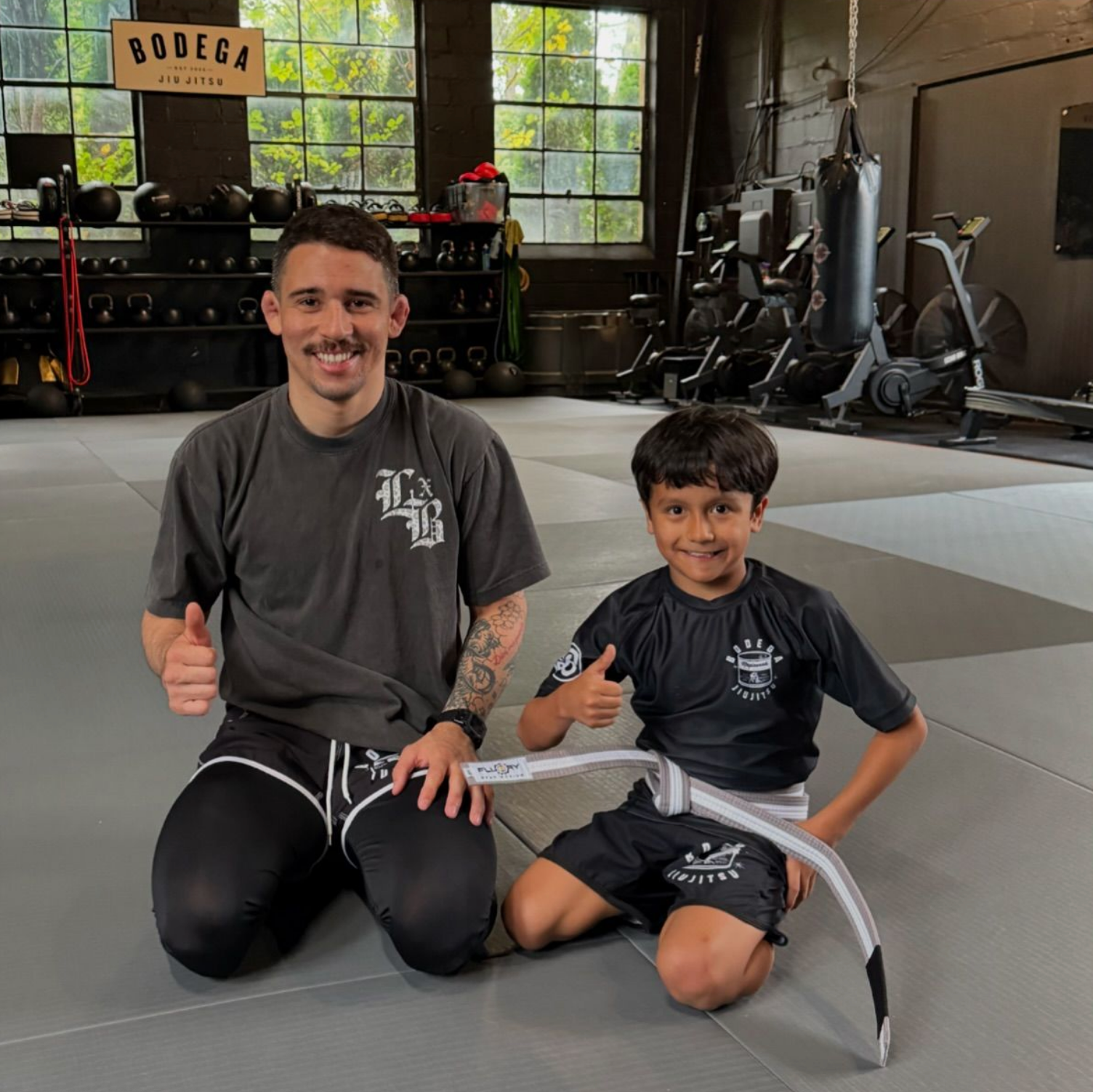
Grappling turns nervous energy into calm, capable confidence your child can carry into school, friendships, and everyday challenges.
Parents around Maplewood often ask us the same thing in different ways: Will this help my kid come out of their shell, stand up for themselves, and connect with other kids without feeling awkward? Grappling does that in a uniquely practical way because progress is visible, repeatable, and earned through steady effort, not personality type.
In our kids program, grappling is not about teaching children to be aggressive. It is about giving them a toolkit for balance, problem-solving, and composure under pressure. When a child learns how to move safely with another person, listen closely, and make quick decisions, you start noticing changes outside the gym, too.
Just as important, classes create a built-in social environment. Your child has partners, shared goals, and structure, which is a big deal in a time when many kids are still rebuilding confidence after years of disrupted routines and social isolation.
Why Grappling Builds Confidence Faster Than Most Activities
Confidence usually grows from proof, not pep talks. Grappling gives kids proof in small, frequent doses: a clean technique, a better round, a successful escape, a moment of good decision-making. Those little wins stack up.
Because grappling is skill-based, kids do not need to be the biggest, fastest, or loudest to improve. They learn that leverage and timing matter. When a smaller child realizes a technique works on a larger partner in a controlled drill, something clicks. You can see posture change and eye contact improve.
We also use clear milestones so your child can measure progress without guessing. Structured curriculum, consistent feedback, and the ability to track growth over time (including promotions) help kids connect effort with results. That connection is a confidence engine.
Skill Mastery: The Quiet Confidence That Shows Up at School
A lot of “confidence” talk stays vague. In grappling, it is concrete: show the technique, remember the steps, apply it calmly with a partner. That kind of mastery teaches kids how to learn, not just what to learn.
When children practice a movement pattern repeatedly, their focus improves. They get used to listening to coaching cues, trying again, and staying patient when something feels difficult. Over time, that patience tends to spill into homework, group projects, and even simple things like raising a hand in class.
We also see kids become more comfortable being a beginner. That matters more than it sounds. A child who can say, “I do not have it yet, but I can work on it,” is building a durable self-esteem that is not fragile when they hit a challenge.
Social Skills Grow Naturally When Training Is Partner-Based
Many youth activities involve waiting turns or playing near other kids. Grappling is different because interaction is the training. Your child works with partners in nearly every class, which gently forces social repetition in a safe, structured way.
Partner drills teach cooperation without requiring kids to be instantly outgoing. We guide students through simple communication: confirming starting positions, checking intensity, and giving space when a partner needs a reset. Those habits become social skills: awareness, respect, and clear signals.
Over time, kids start greeting partners more confidently, handling small misunderstandings better, and learning that “we are on the same team” can still be true while practicing challenging positions. That is a powerful lesson for friendships.
What Kids Practice Socially in Our Grappling Classes
• Taking turns with real responsibility, because each partner’s safety and learning matters
• Respectful physical boundaries, including how to start, stop, and reset without drama
• Listening and responding to coaching, then applying it while working with a peer
• Calm communication under pressure, especially when something feels frustrating
• Problem-solving with others, where success depends on teamwork and control
Resilience Under Pressure: A Skill Kids Can Actually Train
Kids feel pressure in plenty of places: tests, social situations, tryouts, presentations. Grappling gives a controlled way to experience stress and learn how to regulate it. We do this through progressive training, with coaching that keeps the environment safe and supportive.
When a child is briefly “stuck” in a position, the goal is not panic. The goal is breathing, framing, and making one good decision at a time. That experience teaches emotional control in a way talking about it cannot.
We also normalize mistakes. Everyone taps. Everyone forgets steps. Everyone has an off day. Because the room is built around learning, kids learn to bounce back quickly rather than spiral into embarrassment.
Anti-Bullying Benefits Without Teaching Aggression
Parents often want to know how grappling relates to bullying. Our approach starts with awareness and de-escalation: confidence changes body language, and body language alone can reduce the likelihood of being targeted. A child who stands tall, makes eye contact, and sets boundaries clearly sends a different signal.
Grappling also teaches practical self-defense awareness. Kids learn how to control distance, how to regain footing, and how to stay calm when someone grabs or crowds them. This is not about “winning a fight.” It is about staying safe, getting help, and having options.
Another underrated piece is assertiveness. When kids practice saying “stop,” resetting, and following rules under supervision, they gain comfort using their voice. That matters in hallways, on buses, and in any setting where a child needs to advocate for themselves.
Why Grappling Works Especially Well for Shy or Anxious Kids
Shy kids often do better in structured environments where expectations are clear. Grappling classes provide predictable routines: warm-up, technique, partner practice, and guided live rounds. Your child knows what is coming, which helps anxiety settle.
Physical activity also gives kids a “job” during social time. Instead of making conversation from scratch, they are focused on a shared task. Many friendships form because kids see the same partners week after week and gradually feel comfortable.
We keep coaching cues simple and actionable. When a student feels overwhelmed, we bring the focus back to one step, one breath, one decision. That approach tends to build trust fast, which is exactly what anxious kids need.
What a Typical Kids Class Looks Like (So You Can Picture It)
Parents appreciate knowing what is actually happening on the mat, especially the first few times. While specific drills vary, our classes follow a steady rhythm designed for safety, learning, and fun that does not get chaotic.
We start with movement patterns that build coordination: breakfalls, hip movement, and balance drills. Then we teach a small slice of technique, usually connected to a common position kids can understand quickly. After that, partners practice with clear instructions on pace and control.
Live training is introduced gradually and supervised closely. The goal is always controlled grappling where kids learn to think, not just scramble. We match partners thoughtfully and keep the culture respectful, because a supportive room is where confidence grows.
Progress You Can See: Belts, Milestones, and Small Wins
Kids thrive on visible progress. Grappling makes progress measurable, and not just through belt promotions. Parents often notice their child using better posture, speaking up more clearly, and handling frustration better long before a promotion happens.
We celebrate small wins on purpose: remembering a sequence, staying calm during a tough round, showing good sportsmanship, helping a newer student. Those moments teach kids what we value, and most parents like that the values are practical.
If you want a timeline, many families notice changes within a few weeks: improved focus, less hesitation with peers, and a little more confidence walking into unfamiliar situations. The biggest changes come with consistency, which is why a regular class routine matters.
A Note for Parents: How to Support Your Child’s Confidence Between Classes
What happens at home can reinforce what happens on the mat. You do not need to coach techniques. In fact, it is better if you do not. But you can support the mindset.
Here are a few simple ways to help:
1. Ask what your child learned, not whether your child “won”
2. Praise effort and consistency, especially after a hard class
3. Keep routines steady so attendance feels normal, not optional
4. Encourage hydration, sleep, and a good snack before training
5. Let your child talk through frustrations without rushing to fix them
These small supports keep grappling as a positive challenge rather than a pressure cooker.
A Family-Friendly Community: Kids and Adult Options in Maplewood
Many Maplewood families like training in a place where everyone understands the “family calendar shuffle.” We keep our program structured so kids can make steady progress, and we also offer adult training so parents can participate in the same culture of learning.
If you have been curious about adult grappling in Maplewood, training alongside a community that values control, technique, and respectful intensity can be a refreshing change from typical workouts. And for kids, seeing a parent commit to learning sends a strong message: growth is for everyone.
When families train in the same environment, conversations about effort, resilience, and calm under pressure become normal. That is one of the most practical long-term benefits we see.
Ready to Begin at Bodega Jiu-Jitsu
If your goal is a child who walks into school with steadier confidence, communicates more comfortably, and handles challenges without melting down, our kids grappling program is built for exactly that kind of growth. We keep training structured, supportive, and skill-focused, so your child can improve week by week in a way you can actually see.
Bodega Jiu-Jitsu in Maplewood, NJ is also a place where the whole family can plug in, including options for adults who want to train, learn, and build real resilience through grappling arts Maplewood families can feel good about.
Put these techniques into practice by joining a grappling class at Bodega Jiu-Jitsu.