Real confidence shows up when you can stay calm, think clearly, and keep moving forward under pressure.
Jiu-Jitsu looks like a sport, but most adults who walk through our doors in Maplewood are really chasing something broader: confidence that feels earned. Not hype, not motivation that fades by Wednesday, but the kind of steady self-trust you build when you practice hard things in a safe, structured way.
Modern grappling is also having a moment. Participation continues to grow globally, with current estimates placing training numbers in the millions and ongoing year-over-year growth. Tournament entries remain strong and women’s divisions are growing fast, which matters because it reflects a healthier, more welcoming culture. Even if you never compete, you benefit from that evolution: better coaching methods, more thoughtful training, and clearer pathways for beginners.
In this guide, we’ll break down how our no-gi approach in Maplewood helps you build real-world life skills: composure, resilience, boundary-setting, and the ability to solve problems while your heart rate is high. That might sound intense, but it’s also practical, and honestly, it’s pretty fun once you get past the first-day nerves.
Why Jiu-Jitsu confidence feels different than “gym confidence”
Plenty of workouts make you tired. Fewer make you capable. Jiu-Jitsu builds confidence because it gives you immediate feedback in a controlled environment: if you lose balance, you learn to base out; if you panic, you learn to breathe and reset; if you rush, you learn to slow down and make better decisions.
That process transfers. When you train consistently, you start noticing subtle changes outside the gym. You sit a little taller. You handle awkward conversations with more calm. You don’t spiral as quickly when something goes wrong at work or at home, because you’ve practiced staying present while someone is actively trying to off-balance you.
We also keep confidence grounded in skill, not ego. In training, everyone taps. Everyone learns. You don’t need to “win” practice to improve. You just need to show up, stay curious, and keep collecting small upgrades each week.
Modern grappling is evolving, and adults are jumping in
If you’ve watched clips online, you’ve probably noticed how fast the sport is changing. No-gi formats are booming, submission-only events are popular, and takedowns are getting more wrestling influence than in past eras. Leg locks and heel hooks, once treated like secret knowledge, are now part of mainstream advanced awareness, which improves safety when taught responsibly. Even recovery has become more tech-driven, with athletes tracking sleep, workload, and soreness to stay consistent.
All of that matters for everyday adults because it pushes the art toward efficiency. Modern Jiu-Jitsu is less about collecting a giant encyclopedia of techniques and more about learning high-percentage skills you can actually apply. For busy Maplewood parents, commuters, and professionals, that’s a big deal. You want training that respects your time and your body.
Just as important, the culture is maturing. More people stay in the sport longer, and the adult community includes beginners starting in their 30s, 40s, and beyond. The goal is not to be indestructible. The goal is to become more capable, more mobile, and more resilient year after year.
Why no-gi matters right now
No-gi training strips things down. Without grips on the gi, you learn to manage distance, control, and pressure using underhooks, head position, frames, and body mechanics. That tends to feel intuitive for beginners, especially if you’ve played other sports or you simply prefer training in athletic wear.
No-gi also aligns with where grappling is heading. The rise of ADCC-style rule sets and faster-paced exchanges has made movement, wrestling entries, and transitions more central. We lean into that modern reality while keeping classes approachable, progressive, and safe.
If your main goal is confidence, no-gi is a great teacher. It forces honesty. You can’t rely on fabric grips to slow things down, so you learn to stay balanced, make smart choices, and solve problems with timing and positioning. Those are life skills dressed up as sport.
What you’ll learn beyond submissions
Submissions are exciting, but most of the real growth happens in the parts between them: the transitions, the escapes, the moments when you feel stuck and learn you’re not actually stuck. Over time, that becomes a quiet kind of confidence you can feel in your chest.
Here are a few life skills we deliberately build through training:
• Composure under stress, because you practice breathing, framing, and thinking while fatigued
• Boundary-setting, because you learn when to resist, when to concede, and when to reset safely
• Communication, because training partners need clear feedback and respectful intensity
• Problem-solving, because every position is a puzzle with real consequences and quick adjustments
• Resilience, because tapping isn’t failure, it’s how you learn without getting hurt
• Body awareness, because you start noticing posture, alignment, and tension you ignored for years
Adults often tell us this is the biggest surprise. They came for fitness or self-defense, and they stayed because training made them steadier in everyday life.
Adult Jiu-Jitsu in Maplewood: what we see adults actually want
When adults look for Adult Jiu-Jitsu in Maplewood, most aren’t trying to relive a high school sports career. You want a strong workout, yes, but you also want a structured practice that feels meaningful. You want to learn practical skills, train with good people, and go home feeling better, not broken.
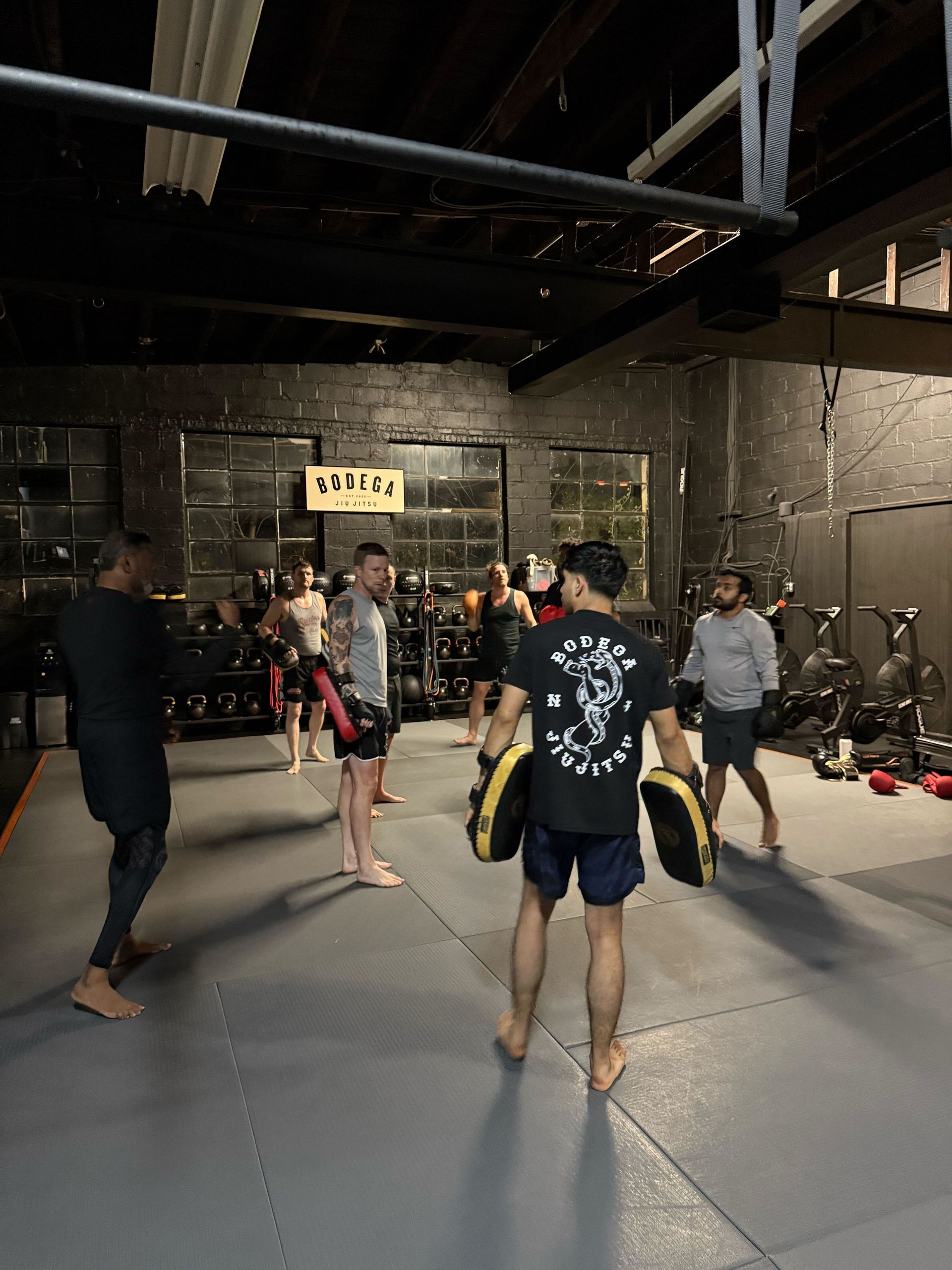
We design our classes around that reality. That means a clear class structure, progressive skill-building, and partners who understand control. It also means an environment where you can train hard without feeling like you have to prove something every round.
A lot of Maplewood schedules are packed. We make it realistic to train around work, family, and commuting, with evening and weekend options reflected on the class schedule page. Consistency beats intensity in the long run, and we’d rather see you training two or three times a week for a year than going all-in for a month and disappearing.
What to expect in your first no-gi class
First-day nerves are normal. Most adults worry about being out of shape, not knowing what to do, or slowing everyone down. Our job is to remove that pressure and give you a clear on-ramp.
A typical first class includes a warm-up that prepares your joints and raises your heart rate, technique instruction with plenty of repetition, and controlled partner work. If there’s sparring, we keep it guided and appropriate to your level. You’ll learn how to tap, how to stay safe, and how to choose partners who match your pace.
What should you bring? Athletic clothes you can move in, a water bottle, and a willingness to laugh at yourself a little. You don’t need fancy gear on day one. We’ll help you understand what matters and what can wait.
Is Jiu-Jitsu safe for adult beginners?
Jiu-Jitsu is a contact sport, so pretending there’s zero risk would be dishonest. But adult beginners can train safely when the culture and coaching emphasize control, progressive intensity, and smart partner selection.
We prioritize clean technique and responsible pacing. You’ll learn positions that protect your neck and spine, how to fall and base, and how to recognize when a scramble is turning into something risky. Tapping early is encouraged. So is asking questions. The goal is to leave training feeling stronger and more confident, not limping through the next day.
Recovery matters too. Many serious athletes now track sleep, soreness, and workload, and we support that mindset. Hydration, mobility work, and rest days are not “soft.” They’re how you train for years instead of weeks.
Fitness, weight loss, and training frequency for real progress
You don’t need to be fit before starting. Jiu-Jitsu is how you get fit. It builds strength through grappling-specific movement, improves conditioning without feeling like endless treadmill time, and develops mobility in places most adults forget exist until they’re suddenly using them again.
For most adults, a realistic progression looks like this:
1. Train 2 days per week for the first month to build familiarity and manage soreness
2. Add a third day once your recovery improves and you feel more comfortable sparring
3. Keep one day lighter, focused on technique and movement quality
4. Track small wins, like escaping side control more often or staying calm in bad spots
5. Reassess every 8 to 12 weeks and adjust based on energy, schedule, and goals
If your goal is weight loss, the consistency piece matters most. Grappling burns energy, but it also builds the kind of muscle and posture that changes how you carry yourself. Many adults notice their shoulders sit back, their core feels “on,” and everyday tasks get easier.
Self-defense and the confidence to handle pressure
A big reason adults seek Adult Grappling in Maplewood is self-defense. We take that seriously, and we keep it practical. Jiu-Jitsu teaches you how to manage distance, control someone who is stronger, and escape from positions that show up in real life. You learn leverage, balance, and how to stay functional when things get messy.
But the biggest self-defense benefit is often psychological. When you’ve practiced handling pressure on the mats, everyday stress feels less overpowering. Your nervous system learns that you can be uncomfortable and still make good choices. That carries into crowded commutes, tense meetings, and the moments parenting throws at you with zero warning.
Confidence is not a magical feeling that appears one day. It’s a skill you train, and grappling gives you a structured way to train it.
Women in Jiu-Jitsu and why participation is rising
Women’s participation is one of the clearest growth signals in the sport, including strong representation in adult divisions at major events. That trend matters locally because it creates more training partners, better coaching awareness, and a more balanced room culture.
We work to make training welcoming and challenging for women from day one. That includes respectful partner expectations, technical instruction that favors leverage over strength, and an environment where you can train seriously without feeling singled out. Whether your goal is fitness, self-defense, stress relief, or competition, you deserve training that meets you where you are and still helps you grow.
Can adults over 40 train Jiu-Jitsu?
Yes, and more adults over 40 are starting now because they want strength, mobility, and mental resilience without the monotony of traditional workouts. The key is training smart: good warm-ups, controlled rounds, and a focus on longevity.
We coach you to build a game that fits your body. That might mean prioritizing top pressure and positional control, choosing lower-risk entries, or emphasizing escapes and defense first. Over time, you learn to move efficiently instead of muscling through everything, and that efficiency is exactly what keeps you improving.
Age can actually be an advantage here. Adults who bring patience, consistency, and emotional control often progress quickly because they don’t chase chaos. They learn to make each round purposeful.
Take the Next Step
If you’re looking for Jiu-Jitsu in Maplewood that builds more than technique, we’ve built our no-gi program around modern grappling, progressive coaching, and a community that takes training seriously without making it weird. That combination is what turns a new hobby into a long-term practice that strengthens your body and steadies your mind.
When you’re ready, Bodega Jiu-Jitsu is here to help you start at your level, train at a pace that makes sense, and develop confidence you can feel in everyday life, not just on the mats.
Take your first step onto the mats and begin training at Bodega Jiu Jitsu today.