Adult grappling works best when you train with a plan, a pace you can sustain, and partners who want you to improve.
Starting adult grappling can feel oddly intimidating and totally practical at the same time. You might be excited by the idea of learning real control, escapes, and submissions, but unsure what a first class actually looks like or whether you will be the only beginner in the room. We get it, and we built our beginner pathway to make that first step feel clear, not mysterious.
In Maplewood, busy schedules are the norm, and most adults are juggling work, family, and a body that does not always feel like it did at 20. The good news is that adult grappling is one of the most scalable ways to build athletic skill: you can train hard, or you can train smart and steady, and still make progress. Our job is to help you do it safely, consistently, and with enough structure that you can measure improvement.
This guide breaks down what to expect, what matters most early on, and how we help you build skills that hold up under pressure, not just techniques you remember during drills.
What Adult Grappling Actually Is (And Why Adults Love It)
Adult grappling is close contact training where you learn to control another person using leverage, positioning, grips, and timing. The goal depends on the round and the ruleset, but the foundation stays the same: manage distance, establish control, improve position, and finish when the opportunity is real.
A lot of adults stick with grappling because it scratches a few itches at once. It is physical, but it is also problem-solving. It can be intense, but it does not require getting hit in the head. And it gives you a skill you can feel, because the feedback is immediate: if your base is off, you get swept. If your posture collapses, you get pulled into a submission. It is honest that way.
Our approach emphasizes repeatable fundamentals. Flashy techniques can be fun later, but beginners improve faster when they learn how to move their hips, use frames, and understand positional goals. The confidence boost is real, and there is data behind it too: a large share of practitioners report increased confidence after a year of training, which tracks with what we see on the mats week after week.
Why Grappling Is Surging Right Now
Brazilian Jiu-Jitsu interest has climbed dramatically over the last two decades, with search interest up more than 100 percent in that timeframe. Participation estimates commonly cite millions of practitioners worldwide and a substantial base in the United States, plus rapid growth in academies over the last decade. You do not need to be a trend-chaser to benefit from that, but it does matter: more people train now, which means better coaching models, better beginner curriculums, and more training partners who are also adults starting from scratch.
In our room, that growth shows up as variety. People come in for fitness, stress relief, self-defense, competition goals, or just a hobby that is not another screen. And because women’s participation has grown significantly over the last decade, we see more balanced mats and a stronger culture of technical training instead of ego training.
Adult Grappling in Maplewood: What Beginners Usually Worry About
Most beginners have the same few questions, and we like answering them directly.
Will I be “too out of shape” to start?
You do not need to be in shape to begin adult grappling. You get in shape by training, and we scale the intensity so you can build capacity without burning out. We would rather you train two to three times a week for months than go all-in for two weeks and disappear because everything hurts.
Am I going to get hurt?
No contact sport is zero-risk, but we manage risk with structure. We teach tapping early, we match partners thoughtfully, and we keep the room focused on control. Most beginner injuries come from moving unpredictably or resisting in the wrong direction, so we spend time on safe movement patterns and clear expectations.
Will I slow everyone down?
Beginners are part of our ecosystem. We expect new people, we plan for new people, and we coach for new people. You are not interrupting training, you are training.
Your First Class: What It Typically Feels Like
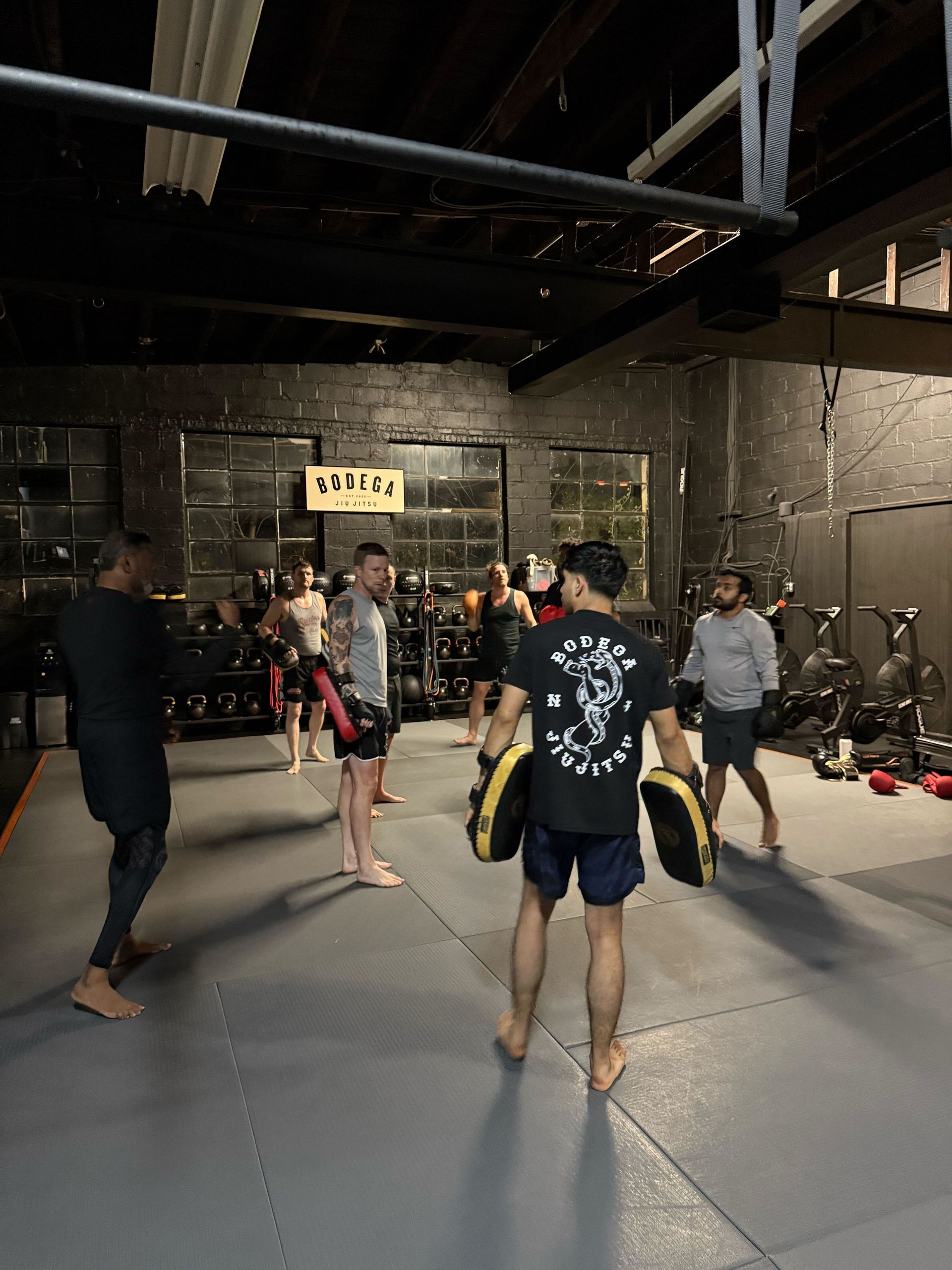
Your first day is usually a mix of nerves and relief. You will probably feel clumsy, then you will realize everybody does at first. We start with a warm-up that is designed to teach movement, not just gas you out. Then we introduce a technique with a specific purpose, usually tied to a common position you will see a lot.
You will drill with a partner, and we coach the details: where your hips go, what your hands should do, how to keep your posture. If there is sparring, we keep it controlled and appropriate to your experience level. The goal is not to “win” your first day. The goal is to leave knowing what you learned and why it matters.
One small thing people notice: grappling has a sound and rhythm. The slap of feet on mats, controlled breathing, the quick reset between rounds. It is intense, but in a focused way that tends to quiet your mind.
The Core Skills We Build First
Adult grappling gets easier when you stop thinking in random techniques and start thinking in priorities. Early on, we want you to develop skills that show up everywhere.
Position before submission
We teach you how to earn control positions and keep them. If you skip this, you end up chasing submissions from bad spots and getting reversed. When you learn to stabilize, you start feeling calm even when the round is fast.
Frames, posture, and hip movement
Frames are how you create space and protect yourself. Posture is how you avoid being folded and controlled. Hip movement is how you escape, recover guard, and generate power without muscling.
Escapes as a lifestyle
Beginners often ask about submissions first, but escapes are what keep you training. When you can get out of bad positions, you relax, you breathe, and you learn faster. We spend real time here because it is the difference between surviving and improving.
Tapping, pacing, and awareness
Knowing when to tap is not weakness, it is skill. We also teach pacing: when to explode, when to settle, and when to conserve energy. This is a big part of why adult grappling can work for adults with jobs, families, and sore shoulders.
What You Learn in Our Beginner Pathway
We keep the early curriculum tight and practical so you can build a base that supports everything later. Expect concepts and positions that repeat constantly, because repetition is how you get real.
• Fundamental positions like closed guard, half guard, side control, mount, and back control, including what each position is trying to accomplish
• High-percentage escapes using frames, bridges, hip escapes, and proper angles so you do not rely on strength
• Guard retention basics, including how to recover your legs and re-establish distance when someone is passing
• Takedown and stand-up awareness, with a focus on balance, safe falling, and entering the ground without chaos
• Beginner-friendly submissions and defenses that teach mechanics, not just steps, so you learn how pressure and leverage actually work
How We Keep Training Safe and Productive
Safety is not just “be careful.” It is a system. We create a training environment where people can train hard without feeling like every round is a gamble.
Coaching and clear structure
We teach in layers. You learn the core movement first, then we add details, then we add resistance. That progression matters because beginners do not need more moves, you need the right moves with the right timing.
Partner selection and mat culture
We pay attention to pairing, especially early on. Training partners should challenge you without overwhelming you. We also reinforce a simple rule: control your body, respect the tap, and keep learning.
Smart intensity
Not every round has to be a war. We coach you to vary effort levels and choose goals for rounds. One day you might focus on escaping side control. Another day you might focus on staying calm in guard. That is how you build skill without frying your nervous system.
Building Real Skills: A Simple Progression That Works
Adult grappling improves fastest when you know what you are training for each phase. Here is the progression we like for beginners, because it is realistic and it keeps you motivated.
1. Learn the positions and survival skills so you can stay safe and keep breathing under pressure
2. Add reliable escapes and guard recovery so you can reset bad situations without panic
3. Develop one or two go-to attacks from your best positions so you stop feeling random
4. Start linking sequences, like escape to guard to sweep to top control, so the round becomes a story instead of a scramble
5. Refine timing and decision-making through controlled sparring, where you test skills with increasing resistance
This is also where adult grappling in Maplewood starts to feel like a craft. You notice small wins: you held posture longer, you escaped faster, you got swept less. Those add up.
Gear, Hygiene, and Small Details That Make a Big Difference
A few practical habits can make your first month smoother.
Wear clean training clothes every session, and bring a towel if you tend to sweat a lot. Keep nails trimmed, remove jewelry, and wash your gear promptly. Grappling is close-contact, and good hygiene is part of respect for your partners.
If you are unsure what to wear or bring, we can guide you. The point is not to show up looking perfect. The point is to show up prepared enough that you can focus on learning.
Training Frequency: What We Recommend for Busy Adults
Consistency beats intensity. Most beginners do well with two to three classes per week, especially in the first few months. That schedule gives you enough repetition to remember what you learned, and enough recovery to avoid feeling beaten up.
If you can only make it once a week at first, start there. Adult grappling is not an all-or-nothing hobby. It is a practice, and practices grow when you keep them sustainable.
How Grappling Changes You Outside the Gym
People usually come in for the physical benefits, but many stay for the mental ones. Grappling teaches you to stay calm in uncomfortable positions, to solve problems with limited time, and to accept that improvement is incremental. That mindset tends to leak into everyday life in a good way.
You also start to feel your body differently. You learn where your balance actually is. You develop stronger hips and core control. You move with more intention, which is a nice perk whether you sit at a desk all day or chase kids around the house.
And yes, adult grappling can be a stress reset. You cannot multitask while someone is trying to pass your guard. For an hour, your brain gets to focus on one thing.
Take the Next Step
If you are looking for adult grappling in Maplewood that focuses on fundamentals, safety, and real progress, we would love to show you what training can look like in person. At Bodega Jiu-Jitsu, we build skill through structured coaching, supportive partners, and a pace that helps you stay consistent.
Whether your goal is fitness, self-defense, competition, or simply learning a new craft, our classes are designed to meet you where you are and help you get measurably better over time. When you are ready, we will help you take that first step and keep building from there at Bodega Jiu-Jitsu.
New to grappling? Start your journey by joining a free adult grappling class at Bodega Jiu Jitsu.