
Adult grappling turns stress into skill by teaching you how to stay calm, think clearly, and keep going when it gets hard.
Adult grappling is one of the rare workouts that trains your body and your decision-making at the same time. In a single round you might solve balance, timing, breathing, and composure, all while someone is trying to off-balance you. That mix is exactly why so many Maplewood adults stick with it: it feels practical, it feels real, and it changes how you respond to pressure.
We build our adult program around that idea. Our classes are challenging, but they are also structured, coached, and progressive so you can learn without feeling thrown into the deep end. And in a town where schedules are tight and stress runs high, training becomes a weekly reset that actually teaches you something, not just another repetitive routine.
Brazilian Jiu-Jitsu has grown into a worldwide movement with over 5 million practitioners, and it is widely recognized as the fastest-growing martial art in America. Search interest has more than doubled since 2004, and adults over 40 are a big reason why. Many people want joint-friendly strength, real skill, and a community that feels grounded, and that is exactly the lane our adult grappling classes are built for.
Why Adult Grappling Builds Discipline in a Way Most Fitness Never Touches
Discipline is not just motivation. In grappling, discipline looks like showing up when you feel busy, drilling the same movement until it becomes clean, and choosing technique when your instincts say “panic and squeeze.” We coach that process every day because it is the difference between random effort and real progress.
The mats give you immediate feedback. If your posture collapses, you feel it. If you hold your breath, you gas out. If you rush a move, you get off-balanced. That feedback loop rewards consistency, and over time it teaches you to trust patient reps more than quick fixes. That is discipline you can carry into work, parenting, and relationships.
A lot of adults are surprised by how mentally engaging adult grappling is. You are not just working hard, you are making decisions under pressure. Post-2024 conversations in the sport have leaned into the neuroscience angle: complex, live problem-solving helps reinforce focus and resilience. You do not need to be a scientist to notice it, but after a few months, many students tell us they feel sharper and more deliberate off the mats too.
Resilience Is Practiced, Not Wished For
Resilience is the skill of staying effective when things do not go your way. Grappling gives you dozens of small “hard moments” every class: getting pinned, losing position, missing a sweep, or getting caught in a submission. The point is not to avoid those moments. The point is to learn how to respond.
Research trends line up with what we see in the room. Higher belt levels correlate with higher resilience, mental strength, and life satisfaction, and training experience tends to show a small but meaningful positive relationship with grit and self-control. The deeper message for beginners is simple: resilience is trainable, and you can start building it right away, one round at a time.
Our coaching focuses on controllable actions when you feel stuck. We cue breathing, posture, frames, and small positional wins. That approach keeps the room safer and also builds confidence because you learn that you always have options, even when you are “losing.” That is one of the most practical lessons adult grappling offers.
The Confidence Effect: Why So Many Adults Change After a Year
Confidence in grappling does not come from hype. It comes from evidence. You feel yourself move better, think faster, and stay calmer under pressure. In survey data, practitioners report major jumps: about 85 percent increased confidence after one year, and 87.6 percent improved confidence overall. Some reporting also suggests a significantly larger confidence boost compared to more traditional training formats, likely because you can measure progress in real-time against resisting partners.
In our adult grappling classes, we see that confidence grow in layers. First you learn how to survive uncomfortable positions without panicking. Then you learn how to escape. Then you start choosing positions on purpose. Somewhere in that progression, people begin to carry themselves differently, not in an aggressive way, but in a steadier way.
We also notice that confidence is not just about physical capability. It is about self-efficacy: the belief that you can learn hard things through effort. Grappling hands you a steady stream of small wins if you stay consistent, and those wins add up.
What Training Does for Your Body: Stronger, Looser, Less Stressed
Adult grappling is a full-body practice. You build pulling strength, hip mobility, trunk stability, and grip endurance, and you do it through varied movement rather than repeated machine patterns. Many students notice better circulation, improved flexibility, and more usable mobility, especially through the hips and spine.
Stress reduction is one of the most immediate benefits. Sparring demands presence. If your mind wanders, you get swept. If you spiral, you tense up and fatigue. That forced focus creates a kind of moving mindfulness, and combined with endorphins it can reduce stress by around 35 percent in some reports. You step off the mat tired, yes, but usually lighter.
Maplewood life can be fast, and commuting into the city or managing remote work with family responsibilities stacks stress in a sneaky way. We see adult grappling become a boundary in the week: a place where you practice being focused, physically challenged, and socially connected, all at once.
What to Expect in Our Adult Grappling Classes
Most adults worry about two things before starting: “Will I be totally lost?” and “Will I get hurt?” We answer the first with structure. We answer the second with coaching and pacing.
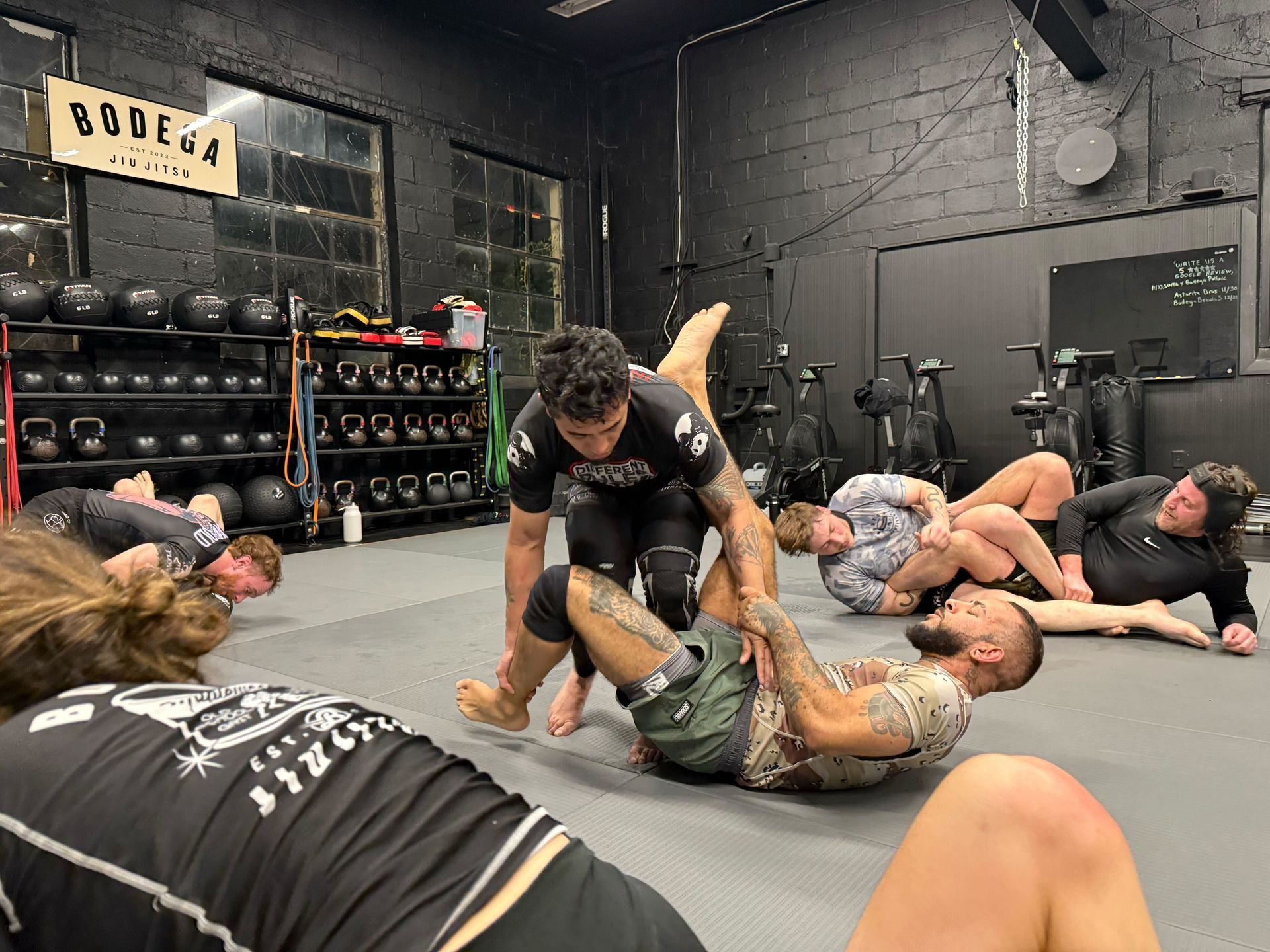
Our classes are designed so you learn fundamentals in a way that stays relevant as you improve. We teach you how to move safely, how to tap early, and how to communicate with training partners. We also scale intensity. Some days are more technical and controlled, and other days include more live rounds, but we keep it progressive.
Here is what a typical class experience often includes:
• A guided warm-up focused on mobility, balance, and safe movement patterns for grappling
• Technique instruction with clear “why it works” details, not just steps to memorize
• Partner drilling where we help you adjust angles, grips, and timing in real time
• Positional sparring that limits variables so you can build confidence without chaos
• Live rounds with supervision and an emphasis on control, not ego
This format matters. Adult grappling gets addictive when you can actually feel yourself learning, and we want you to leave class with at least one takeaway you can use next time.
Safety, Injuries, and Smart Progress for Adults Over 40
Yes, grappling is a contact sport, and honesty is important here. Injury risk can rise with experience and intensity. In one data set, 59.2 percent of athletes reported an injury in the prior six months, and rates can increase with belt level because people roll more, move faster, and explore more complex positions. The encouraging piece is that experienced athletes can also show lower injury rates because timing, control, and body awareness improve.
Our approach to adult grappling training is to make safety part of the skill set. We coach you to tap early and often, to avoid “stubborn positions,” and to prioritize control. We also match partners thoughtfully and encourage you to speak up about old injuries or tight areas. That is especially important for adults over 40 who want long-term training, not a short burst followed by a break.
If you are returning to fitness, we recommend starting with consistency over intensity. Two to three classes per week is a sweet spot for most adults, and it gives your body time to adapt. Progress in grappling is a marathon, and that is not a bad thing. Average time between early belt milestones is often measured in years, not weeks, and many students find that pace oddly refreshing.
The Real Discipline Tool: A Simple Timeline You Can Follow
Motivation comes and goes. A plan you can repeat is more reliable. Here is the rhythm we suggest for most new students who want adult grappling to improve discipline and resilience without burning out:
1. Weeks 1 to 2: Learn the room, focus on breathing, and treat every round as information
2. Weeks 3 to 8: Pick two core positions and track small improvements, not “winning”
3. Months 3 to 6: Train two to three times per week and add one focused goal per month
4. Months 6 to 12: Start linking techniques and notice the confidence shift in daily life
5. Year 1 and beyond: Refine timing, build resilience through challenge, and keep training sustainable
This kind of progression also supports retention, which is strong in grappling gyms overall at around 60 percent after 12 months. People stay when training feels purposeful, social, and realistic for adult schedules, and that is what we aim for.
Why Community Matters More Than People Expect
One of the underrated benefits of adult grappling is that it gives you a community that is built on shared practice, not small talk. You learn names, you learn styles, and you learn how to cooperate while doing something difficult. That combination tends to create real friendships over time.
Our room is also supportive for women and beginners. Women’s participation in BJJ has risen about 70 percent in the last decade, and we take that seriously by maintaining a respectful culture, coaching clean technique, and keeping training partner selection thoughtful. You should feel challenged here, not singled out.
A surprising statistic that shows up in modern surveys is that around 75 percent of practitioners report improved off-mat problem-solving. That makes sense: grappling is essentially problem-solving with consequences. You learn to slow down, build frames, create angles, and escape step-by-step. Those are the same skills you use when work gets messy or life throws curveballs.
The Discipline You Build Shows Up Off the Mats
Adult grappling teaches you to manage adrenaline, to stay patient, and to keep working even when the outcome is uncertain. That is discipline. It is also resilience. And it does not require a special personality type. It requires a willingness to be a beginner, to be coached, and to show up consistently.
We keep our instruction practical and progressive because adults need training that fits real bodies and real schedules. You can train hard, but you can also train smart. Over time, that balance becomes part of your identity: you become the person who follows through.
Ready to Train at Bodega Jiu-Jitsu in Maplewood
If you want adult grappling to make you more disciplined and more resilient, the key is a safe, structured place to train consistently. At Bodega Jiu-Jitsu, we keep the learning process clear, the coaching hands-on, and the room welcoming for beginners, busy professionals, and adults over 40 who want a sustainable practice.
When you are ready, we will help you start with fundamentals, build confidence through controlled sparring, and develop the kind of calm problem-solving that carries into the rest of your week. This is training you can feel, class by class, and it adds up faster than you might expect.
Develop stronger fundamentals and control by joining a free adult grappling class at Bodega Jiu Jitsu.