Adult grappling is one of the few fitness habits that can change your body, your confidence, and your composure under pressure at the same time.
If you’ve been curious about Adult Grappling but unsure how to start, you’re in the right place. In Maplewood, we see adults walk in with every kind of background: former athletes, total beginners, busy parents, commuters, and professionals who just want a training routine that actually sticks.
What surprises most people is how quickly grappling becomes practical. Elite matches end by submission a lot, not because athletes are reckless, but because good positioning creates real control. In fact, submissions decided 37.29 percent of matches from quarterfinals to finals at a major 2023 championship, which tells you something important: the art works when the details are trained.
This guide breaks down what adult grappling in Maplewood looks like, how to start safely, what progress really takes, and how to choose a training rhythm that fits your life.
What Adult Grappling Really Is (And Why Adults Love It)
Adult Grappling usually means Brazilian Jiu-Jitsu and submission grappling, where you learn to control, escape, and submit through leverage rather than brute force. Yes, it’s a combat sport, but day-to-day training feels more like problem-solving with your whole body. You’re learning how to stay balanced, how to breathe under pressure, and how to make small adjustments that change everything.
Adults tend to love grappling because it scales. If you’re strong, you’ll learn technique so you don’t rely on strength. If you’re not strong yet, you’ll build strength while learning technique. Either way, you’re progressing.
And it’s growing fast. Search interest in BJJ has risen dramatically over the last two decades, outpacing many traditional martial arts. That growth shows up locally too, especially in a place like Maplewood where people want training that’s effective, time-efficient, and not just another treadmill routine.
Why Maplewood Is a Great Place to Start
Maplewood sits in a sweet spot: suburban life with a strong connection to the New York metro area. That matters because grappling culture is active here. Seminars, local tournaments, and major events in the region make it easy to set goals beyond “get in shape” if you want them.
It also means the market is premium. In New Jersey, monthly dues average around 170 dollars, near the highest metro rates in the country. For you, that’s not just a price tag. It’s a reminder to look for a program that takes coaching, safety, and structure seriously so your time and money are well spent.
When you commit to Adult Grappling, consistency is your biggest advantage. A well-run program makes it easier to show up even on the days you’re tired, because you know exactly what you’re working on.
What to Expect in Your First Adult Grappling Class
First class nerves are normal. Most adults worry about two things: “Am I in shape enough?” and “Am I going to get hurt?” We design first experiences to answer both with calm, hands-on guidance.
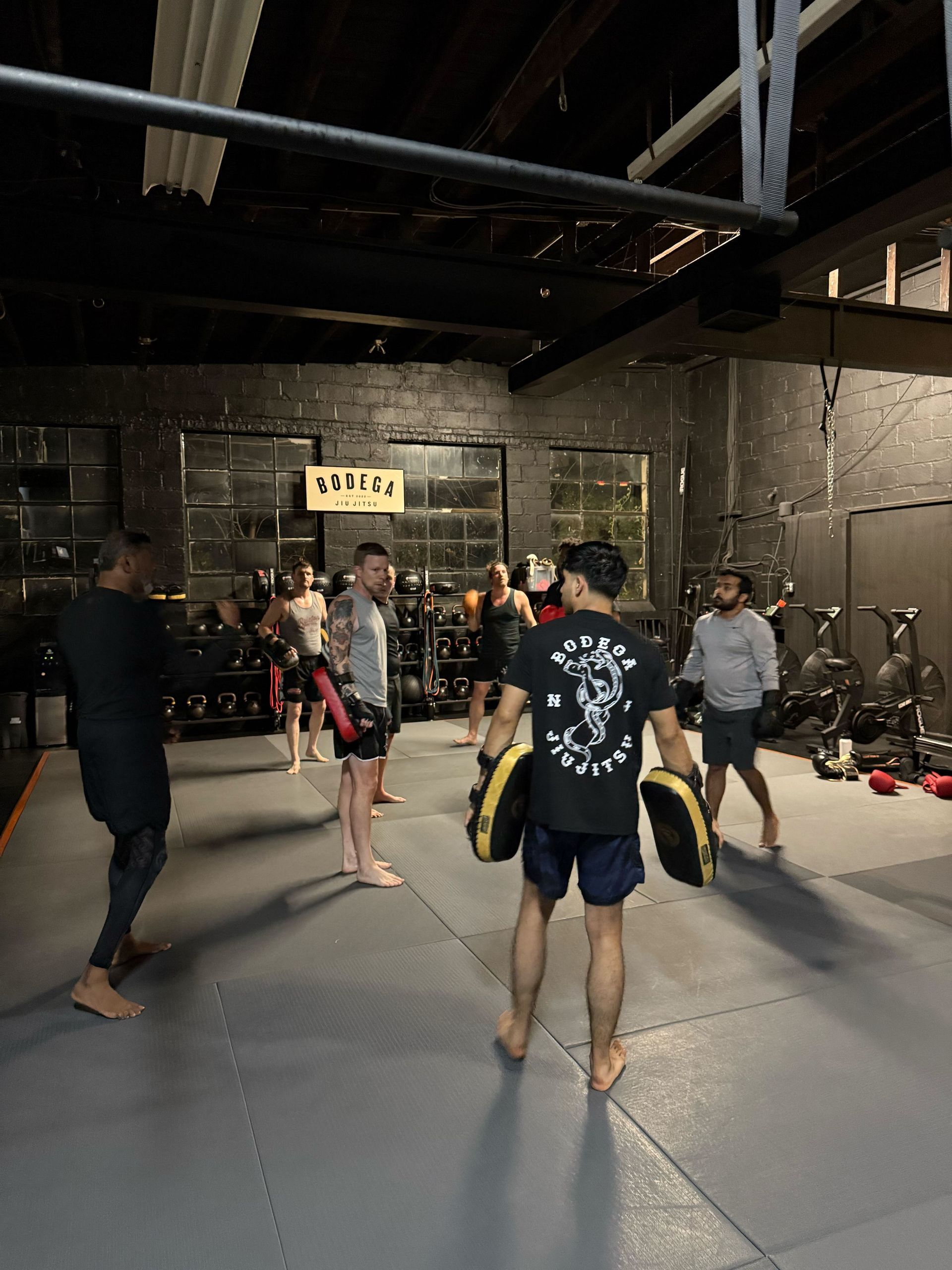
A typical beginner-friendly class includes a warmup that prepares joints and movement patterns, technique instruction with drilling, and a controlled practice segment where you apply what you learned. You won’t be thrown into hard sparring without context. You’ll learn how to move safely first, then how to add resistance gradually.
Here’s what you’ll notice quickly:
- Grappling is close-range, so control matters more than speed.
- Small details like hand placement and hip angle are huge.
- You’ll sweat, but you’ll also think a lot, which is kind of the point.
If you’ve never trained before, that’s fine. Adult Grappling is one of the rare sports where beginners can make meaningful progress without needing prior experience.
The Skills That Matter Most in the First 90 Days
Early progress is less about collecting submissions and more about building survival skills. When you can stay calm and safe, you can learn faster. We focus on a foundation that keeps beginners from feeling lost.
In your first 90 days, we prioritize:
- How to fall, frame, and protect your joints
- Positional awareness: top, bottom, guard, side control, mount, back control
- Escapes that work under pressure, not just in theory
- Guard retention basics so you don’t feel stuck underneath
- Simple takedown and clinch entries appropriate for adults
You’ll also start learning the “why” behind grappling. Why a crossface changes a pass. Why inside position matters. Why your breathing is part of your technique. Those lessons carry you for years.
Adult Grappling Progress: Belts, Timelines, and What “Good” Looks Like
Adults often ask how long it takes to improve, and we appreciate the honesty. You’re busy, and you want to know what you’re getting into.
On average, people spend about 2.3 years at white belt and about 2.3 years at blue belt. After that, timelines widen because life happens and training becomes more individualized. Broadly, many practitioners reach purple around 5 to 6 years total, and brown can be closer to 8 to 10 years or more depending on consistency.
The bigger point is this: progress is not linear, but it is reliable when your schedule is reliable. If you train two to three times per week, you’ll build skill steadily without burning out.
And “good” in Adult Grappling isn’t one look. For some students, good means feeling safer walking to the car at night. For others, it means rolling five rounds without gassing out. For others, it’s competing. We help you define the target and then build the steps toward it.
Safety and Injuries: How We Keep Training Sustainable
Let’s be direct: grappling is physical, and injuries are a real topic. Research shows 59.2 percent of athletes reported an injury over six months, with elbows commonly affected. For newer students, many issues happen in training, not competition, which tells us something useful: good coaching and smart intensity management matter.
We treat safety as a skill. You learn how to tap early, how to apply pressure without cranking, and how to choose training rounds that match your experience level. We also teach you how to protect your training partners, because the room works better when everyone takes responsibility for each other.
A few practical habits reduce risk a lot:
- Warm up your neck, shoulders, hips, and knees with intention
- Tap early on joint locks and unfamiliar positions
- Avoid “winning the drill” by exploding out of bad mechanics
- Ask questions when something feels off, not after
- Build consistency before you build intensity
Adult Grappling should make you feel more capable, not beat up. Sustainable training is the goal.
Fitness Benefits Without the Boredom Factor
People come to adult grappling classes for many reasons, but fitness is always part of the conversation. Grappling builds strength endurance, grip strength, core stability, and mobility in a way that feels earned. You’re not just doing reps, you’re solving problems while your heart rate climbs.
Because rounds vary, your conditioning improves in a realistic way. You learn how to recover while still moving, how to breathe under pressure, and how to stay composed when tired. That’s a rare combination.
There’s also a mental reset that adults don’t always expect. A focused hour on the mat has a way of clearing out the noise from the day. It’s not magic, but it is noticeable.
Confidence, Community, and Why More Women Are Training
Confidence is one of the most reported outcomes in grappling. Data suggests 85 percent of practitioners feel more confident after one year of training, and we see that play out in everyday ways: better posture, clearer boundaries, and a calmer response to stressful situations.
Female participation has grown around 70 percent over the last decade, and the technical side of grappling is a big reason why. You can train with structure, control intensity, and build real capability without needing to be the biggest person in the room. Competition stats also show strong submission rates for women at high levels, which reinforces that technical training translates.
In Maplewood, that matters. Adults want an environment where they can train seriously and still feel comfortable learning, asking questions, and taking their time. We put a lot of care into that experience because it’s what keeps people training for years.
Competition: Optional, But a Great Way to Focus Your Training
You do not need to compete to get value from Adult Grappling. Still, competition can be a helpful milestone if you like clear goals. Adult tournament matches often run around seven minutes, which is long enough to test your conditioning and decision-making but short enough to be approachable.
If you’re interested in competing, we prepare you in a structured way: rules awareness, pacing, scoring strategy, and a game plan built around your best positions. Submissions are common even at elite levels, with roughly 37 percent of high-level matches ending that way in one major 2023 dataset, so we teach you to respect both sides of the equation: how to attack and how to defend without panic.
Competition training should sharpen your skills, not make training feel like a fight every day. We keep it purposeful.
How to Start Strong: A Simple Weekly Plan That Works
Most adults do best with a plan that fits real life. Consistency beats intensity. If you’re starting adult grappling in Maplewood, here’s a straightforward path we recommend.
1. Train two days per week for the first month to build the habit and reduce soreness spikes
2. Add a third day once you feel your recovery improving and techniques sticking
3. Prioritize fundamentals: escapes, guard, passing, and top control before fancy submissions
4. Keep a simple notebook note after class: what clicked, what confused you, what to ask next time
5. Add light mobility work at home for hips, hamstrings, shoulders, and neck two to three days per week
This approach keeps Adult Grappling enjoyable and sustainable. You’ll improve faster than you think, mostly because you’ll still be training three months from now.
Ready to Begin
If you want a clear path into Adult Grappling, we keep the process simple: show up, learn fundamentals the right way, and build momentum with a schedule you can maintain. When training is structured and supportive, your progress feels less like guesswork and more like a steady climb.
At Bodega Jiu-Jitsu, we’ve built our adult grappling classes to meet you where you are, whether your goal is fitness, self-defense, competition, or just learning something that challenges you in a good way.
Join the Bodega Jiu-Jitsu community and grow stronger—physically, mentally, and socially—by signing up for a free trial class. Bodega Jiu Jitsu