
Real confidence is what shows up when your heart rate spikes, your balance breaks, and you still know what to do next.
If you live or work around Maplewood, you have probably noticed a shift in how adults think about training: it is less about collecting flashy techniques and more about building calm, capable habits. That is one reason Jiu Jitsu has grown so quickly in recent years, especially among professionals and parents who want something practical, time-efficient, and honestly pretty grounding after a long day.
In our adult grappling in Maplewood classes, we focus on moves you can pressure-test safely, then repeat until they feel automatic. You do not need to be athletic, flexible, or fearless to start. You just need a plan for what to do when someone is close, heavy, and not cooperating.
This guide breaks down a handful of high-value Jiu Jitsu moves we teach for real-world confidence, plus how we train them in a way that makes sense for beginners and still challenges experienced students.
Why Jiu Jitsu builds real-world confidence (not just gym confidence)
Confidence is not a pep talk. It is competence you can feel in your body.
Jiu Jitsu is built around leverage, positioning, and control, which is why it works for smaller people against larger people when the technique is right. A good position can make strength matter less, and that is a big deal in any real-world self-defense conversation. The goal is not to “win a fight” in your head. The goal is to build the ability to stay safer, create space, and regain control when something goes wrong.
We also train in a way that is progressive. You learn a movement, then you drill it, then you try it with resistance. That last part is where confidence gets real. Your timing improves, your breathing changes, and you start to recognize that pressure is just information.
On top of that, the physical benefits stack up fast: better coordination, stamina, agility, and overall cardiovascular health. The mental side is just as noticeable: focus, resilience, and the ability to stay patient while you solve problems with a partner right in front of you.
The 3 core moves we start with for fast confidence gains
If we had to pick three “confidence first” movements, we would start with these. They show up everywhere, they scale from beginner to advanced, and they translate into the kind of control that helps you feel less rattled in close-range situations.
1. The hip escape (shrimp)
The hip escape is the engine behind a lot of escapes in Jiu Jitsu. It is how you make space when someone is pinning you, and it is how you recover guard when things start going sideways.
In real-world terms, it teaches you that being underneath does not mean being helpless. You learn to move your hips, frame with your arms, and reset the distance so you can stand up or re-guard. That ability to create space under pressure is a major confidence-builder, even for people who never plan to compete.
We drill hip escapes in warmups and in positional rounds because the movement has to become second nature. When you are tired, you do not rise to the occasion. You fall to your habits.
2. Closed guard control
Closed guard is one of the first positions where beginners can feel real control quickly. From your back, you can use your legs to manage posture, break balance, and slow everything down. It is also a position where “bigger and stronger” gets neutralized more often than people expect.
For confidence, closed guard teaches you to stay composed while someone is in your space. You learn grips, posture control, and how to off-balance a partner so you can attack or improve position.
In class, we keep this practical: we focus on posture breaking, angle changes, and simple progressions. You are not memorizing 12 steps. You are learning what matters and repeating it until it sticks.
3. The rear naked choke mechanics (control first)
The rear naked choke is a classic for a reason: it is efficient when applied correctly, and it forces you to understand control. The confidence lesson here is not “choke everyone.” The lesson is “position before submission.”
We teach you to secure the back with hooks, manage the hands, and apply the finish with clean mechanics rather than squeezing like your life depends on it. That detail matters for safety in training and effectiveness in application.
More importantly, back control teaches you how to stay attached to someone who is trying to escape, without panicking and without burning out your arms.
A practical sequence we train: escape, stabilize, then decide
When people say they want “real-world” training, what they usually mean is that they want options. Not one technique. Options.
A simple framework we use is:
1. Escape the worst position
2. Stabilize in a safer position
3. Decide whether to disengage, stand up, or continue controlling
That framework is why we spend so much time on pin escapes, guard recovery, and stand-ups. A lot of confidence comes from knowing you are not trapped in one outcome.
The positions that matter most for everyday self-defense
Sport Jiu Jitsu can get very technical, but confidence for everyday life is often about a smaller set of positions and the ability to survive them.
Side control: staying calm under pressure
Side control is where many beginners feel the most “stuck.” We break it down into frames, hip movement, and getting your knees back into the fight. This is where the hip escape shows up again, but now it has context.
We also teach you how to avoid giving up your back while escaping. That is one of those details that sounds small until you feel the difference in live rounds.
Mount: bridging with purpose
Mount is a pressure position and, for self-defense, it is one you want to understand deeply. We teach bridging and elbow-knee escapes with a focus on timing. If you bridge at the wrong time, you waste energy. If you bridge with a setup, you move your partner’s weight and create an opening you can actually use.
It is a good reminder that Jiu Jitsu is not about thrashing. It is about solving.
Standing up safely: the underrated skill
A lot of real-world confidence comes from being able to get up without giving your back or standing into someone’s pressure. Technical stand-ups, distance management, and base are not glamorous, but they are practical.
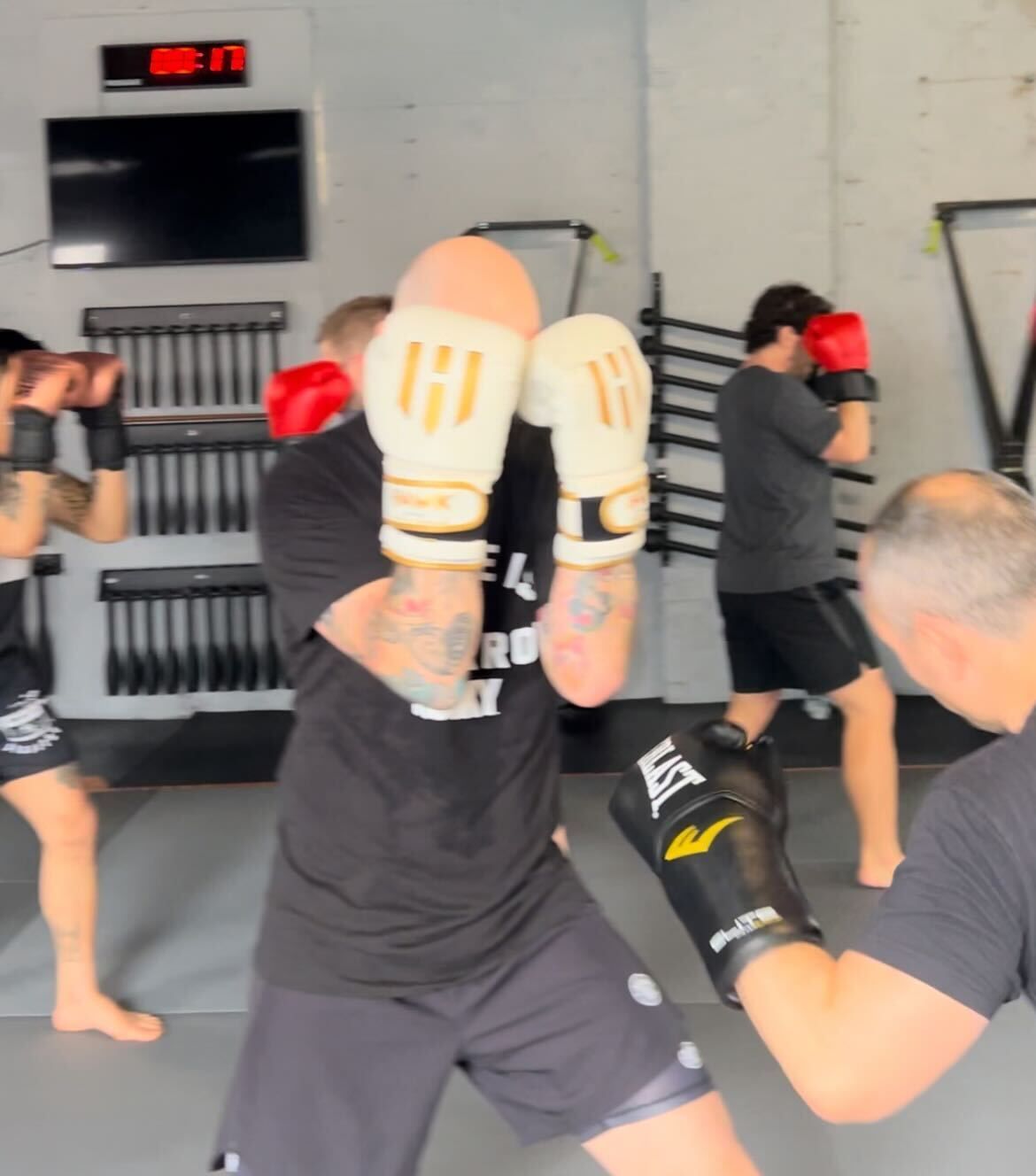
This is also where adding striking awareness changes the feel of training. Even light striking integration can teach you to respect space, protect your head, and move with intention.
What our all-levels training looks like (and why it feels doable)
Beginners often worry that they will spend most of class lost while advanced students fly around. We structure training so you always have something clear to work on.
Most sessions include:
- A short warmup focused on movements you will actually use, like hip escapes, bridges, and technical stand-ups
- Technique taught in a progressive way, usually from a common position you will see often
- Drilling with coaching so you get real feedback, not just reps
- Live rounds that match intensity to experience, so you can build confidence safely
We keep the pace active. Modern adults are busy, and we respect that. You will train, sweat, and learn by doing, with enough explanation to understand the “why” without turning class into a lecture.
Grappling plus striking: why the blend helps beginners
A growing trend in 2024 to 2026 has been blending grappling with striking fundamentals, especially for adults who want functional confidence. We see the appeal: it makes training feel more complete without turning every session into chaos.
When we mix in striking concepts, the goal is awareness and structure:
- Protecting your head while closing distance
- Understanding clinch entries and ties
- Learning when to create space versus stay connected
- Staying composed when the pace changes
That blend can be a big confidence multiplier because it reduces the “what if” feeling. You start to understand range, contact, and control as parts of one system.
How confidence changes after a few months of consistent training
The first shift is physical. You notice balance, grip endurance, and the ability to stay calm while breathing hard. Then the mental shift kicks in. You stop treating discomfort like an emergency.
A lot of students also notice social confidence improvements, which surprises people at first. Partner training requires communication, respect, and boundaries. You learn to be direct, to listen, and to keep things friendly even when you are both working hard.
Over time, the confidence becomes quieter. You stand differently. You handle stress differently. You make decisions faster because you are used to problem-solving with real resistance.
Quick benefits snapshot for Maplewood adults
Here is a simple way to connect training benefits to everyday life:
Benefit | Real-World Application | How we build it in class |
- Strength and stamina | You feel capable during physically demanding moments | Full-body drilling and controlled rounds
- Focus under pressure | You keep thinking when things get chaotic | Positional sparring with coaching
- Coordination and agility | You move better in daily life, not just the gym | Movement-based warmups and footwork
- Social confidence | You get comfortable with respectful contact and communication | Partner work with clear expectations
- Realistic self-defense | You know how to escape and control, not just “fight” | Escapes, pins, back control, and stand-ups
Common questions we hear from Maplewood beginners
Is Jiu Jitsu good for real-world confidence?
Yes. The biggest reason is that you practice staying calm while someone is actively resisting. That pressure-testing, done safely and progressively, turns techniques into habits. Confidence comes from knowing you have repeatable answers: frames, escapes, control positions, and the ability to stand up when it is smart.
Are your adult classes beginner-friendly?
Yes. Our all-levels format is designed so beginners learn fundamentals without being thrown into the deep end. You will work with partners who understand how to train safely, and our coaching helps you make small adjustments that add up quickly.
What should you wear and bring to your first class?
Wear comfortable athletic clothing you can move in. Bring water. If you have gear, great, but you do not need to overthink it. We will walk you through what matters, including safety basics and how to train with a partner respectfully.
How do you check schedule and pricing?
Our class schedule and current options are posted on the website, and our team can help you choose a starting point that matches your experience and goals.
Take the Next Step
If you want real-world confidence, the fastest route is consistent practice of high-percentage fundamentals: escapes, guard control, and simple finishing mechanics that depend on position, not brute force. That is the core of what we teach, and it is why our training stays practical, beginner-friendly, and still challenging as you grow.
Our home base is in Maplewood, and we love helping adults build skill in a way that fits real life. When you are ready, you can train with us at Bodega Jiu Jitsu and experience how focused Jiu Jitsu practice changes not just your fitness, but how steady you feel under pressure.
Turn these techniques into live reps by joining a grappling class at Bodega Jiu Jitsu.