
Jiu Jitsu gives kids a simple, repeatable way to practice attention and good choices under pressure.
If you are looking for a kids activity in Maplewood that actually changes day to day behavior, Jiu Jitsu is one of the fastest paths we see. Not because it is loud or intense, but because it demands something kids do not get much practice with anymore: steady attention, clear listening, and calm follow through.
In our kids classes, focus and respect are not abstract values we talk about once and hope you remember. We build them into the structure of every round. Your child learns how to watch, copy, try again, and work with a partner safely, even when the skill feels new or frustrating.
Parents also appreciate that progress can show up quickly. We often hear that within a few weeks, kids start responding faster to instructions, handling corrections better, and showing more self control at home and school. That is the real win.
Why kids learn focus faster on the mat than in many activities
Focus improves when your child has to notice details and gets immediate feedback. On the mat, that feedback is built in. If your child forgets where to place a hand, shifts weight the wrong direction, or rushes a step, the technique stops working. That sounds strict, but it is actually a gift. It keeps attention anchored to something real.
We also keep instruction tight and consistent. A typical class includes short demonstrations, guided drilling, and structured partner work. Kids do not have to guess what to do next. That reduces distraction and gives them a clear target: listen, try, adjust, repeat.
Another important piece is that attention is not just mental. Jiu Jitsu teaches body awareness. When kids learn to feel balance, pressure, posture, and breathing, focus becomes physical. That is often easier for kids than sitting still and forcing concentration.
The hidden advantage: kids can reset quickly
One of the best things we see is how quickly kids learn to reset after a mistake. When a drill does not work, we do not treat it like failure. We treat it like information. Kids get used to hearing a correction, nodding, and trying again without spiraling. Over time, that becomes a habit your child can use in school, sports, and friendships.
How respect is trained, not preached
Respect is a behavior, not a speech. We train it through rules that matter and partner work that requires cooperation. Kids learn early that we cannot train well without taking care of each other.
That respect shows up in small moments that add up:
- Waiting for a partner and starting together
- Keeping hands and feet controlled during drills
- Stopping immediately when we call time
- Listening when a partner says something is uncomfortable
- Helping newer kids find their place in the room
Because Jiu Jitsu is interactive, kids get constant practice being a good teammate. It is not a solo activity where you can drift off in your own world. You have to pay attention to another person. That naturally builds empathy and patience.
What respect looks like for different ages
Younger kids often start with simple wins: making eye contact, keeping a safe distance, using a calm voice, and following the class routine. As kids get older, respect becomes more nuanced. It looks like controlling intensity, choosing the right pace for a smaller partner, and staying composed even when things get competitive.
We coach that maturity step by step. Nobody has to show up perfect. We just ask kids to keep improving.
Why No Gi Jiu Jitsu works especially well for beginners and kids
We focus on No Gi training because it is fluid, athletic, and straightforward for newcomers. Without needing to manage a gi and grips right away, kids can put more attention into movement basics like posture, base, and balance. That usually means faster early progress and fewer distractions.
No Gi also teaches adaptability. Kids learn to solve problems with positioning and timing, not just holding on. When a technique depends on body mechanics, your child has to stay present. That is focus training in real time.
And yes, it is a workout. Kids build coordination, mobility, and stamina while learning skills that make them feel capable. When confidence rises, respectful behavior often rises with it, because kids do not feel like they need to prove something every minute.
A realistic timeline: when you can expect to notice changes
Every child is different, but we can give you a practical expectation based on how our classes are structured.
In many cases, you will notice early changes in 2 to 4 weeks, especially if your child attends consistently. The first improvements tend to be:
- Faster response to coaching cues
- Better ability to wait for turns and follow sequences
- More comfort with mild frustration and trying again
- More awareness of personal space and safe movement
By 4 to 6 weeks, kids often show clearer social growth. You may hear your child talk about training partners by name, mention what it felt like to get something right, or describe a respectful moment without prompting. That is when parents tell us school focus and home routines start feeling smoother.
Long term, the biggest gains come from consistency. Jiu Jitsu rewards steady effort. Kids learn that you do not have to be perfect, but you do have to show up and pay attention.
What happens in a typical kids class
A well run kids class should feel organized, active, and safe. We keep the pace moving, but we do not rush learning. Your child gets a mix of structure and play, because kids need both.
Most classes include:
1. A brief warm up that builds coordination and safe movement patterns
2. A skill of the day taught in small, repeatable steps
3. Partner drills where kids practice with guidance and clear boundaries
4. A controlled game or light sparring format, depending on age and readiness
5. A short wrap up where we reinforce the main lesson and expectations
That format is not accidental. It gives kids predictable transitions, which supports attention. It also gives them frequent chances to succeed, which is a big part of building confidence without ego.
Safety and emotional comfort matter here
Kids learn faster when they feel safe. We create a culture where kids can ask questions, make mistakes, and learn at their own pace. If a child is nervous about partner work at first, we ease that in. The goal is progress, not pressure.
We also teach kids to communicate. A respectful training partner knows how to pause, adjust, and keep going without making it weird. Those are real social skills.
How Jiu Jitsu supports school performance without trying to be school
We are not a tutoring program, but the habits transfer. Jiu Jitsu strengthens attention, memory, and follow through because kids must remember sequences and apply them under light stress. That is similar to taking a test, speaking in front of class, or dealing with a tough assignment.
Here are a few school related skills we see improve as kids train:
- Listening to multi step instructions without checking out halfway through
- Staying engaged even when a task feels hard at first
- Managing impulses and keeping hands to yourself
- Working with peers respectfully, even when personalities clash
- Accepting feedback without melting down
One subtle improvement is posture and presence. When kids learn to stand balanced and move with purpose, adults notice. Teachers notice too.
Respect at home: what parents tend to notice first
Parents often tell us the first noticeable shift is not athletic. It is attitude. Kids start responding with a little more calm. They interrupt less. They recover faster after being told no. These are small things, but they change the tone in a household.
We do not pretend training fixes everything overnight. Kids are still kids. But we do give your child a place to practice self control every week, with clear rules and positive reinforcement. That is why improvements can feel fast compared to activities that are less interactive.
Adult training matters too, especially for family consistency
Many parents start by signing up a child and then realize they want to train as well. We offer adult grappling in Maplewood for fitness, self defense, and stress relief, and it fits well alongside a kids program because the mindset is similar: show up, learn, and stay consistent.
Our adult grappling classes are beginner friendly and technical, with a supportive training environment that makes it easier to start even if you have not trained before. If you want a shared routine with your child, adult grappling classes can create that. When kids see you practice discipline too, the message lands differently.
Getting started without overthinking it
You do not need fancy gear to begin. For No Gi classes, comfortable athletic wear is usually enough for a first session, and we will guide you on what to bring as you continue.
A few tips that make the first day smoother:
- Arrive 10 to 15 minutes early so your child can settle in
- Complete the online waiver ahead of time through the website
- Bring water and a small towel, because training is active
- Encourage your child to listen first, then try, then ask questions
- Plan on your child being pleasantly tired afterward
We also offer free trials, and our kids program has limited spots at times, so it helps to check the class schedule page and reach out early.
Take the Next Step
If you want your child to build focus and respect quickly, consistency and the right training structure matter more than hype. Our approach to Jiu Jitsu keeps kids engaged, teaches clear boundaries, and turns self control into a skill your child can practice, not just a goal adults talk about.
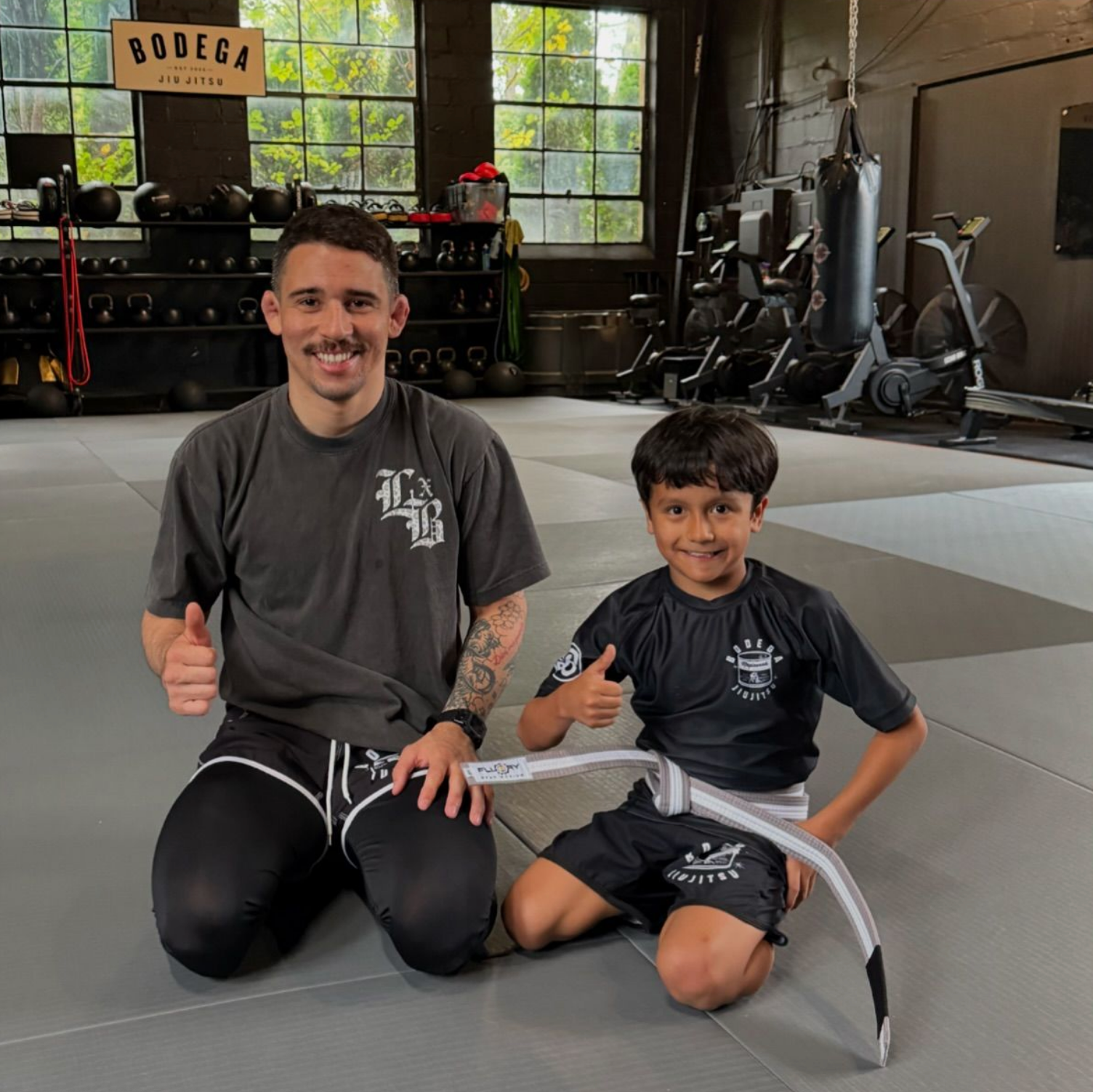
At Bodega Jiu Jitsu, we run kids classes in Maplewood, NJ with a beginner friendly No Gi format and a community focused culture that supports fast, real progress on and off the mat.
Build timing, control, and mat awareness by joining a grappling class at Bodega Jiu Jitsu.