
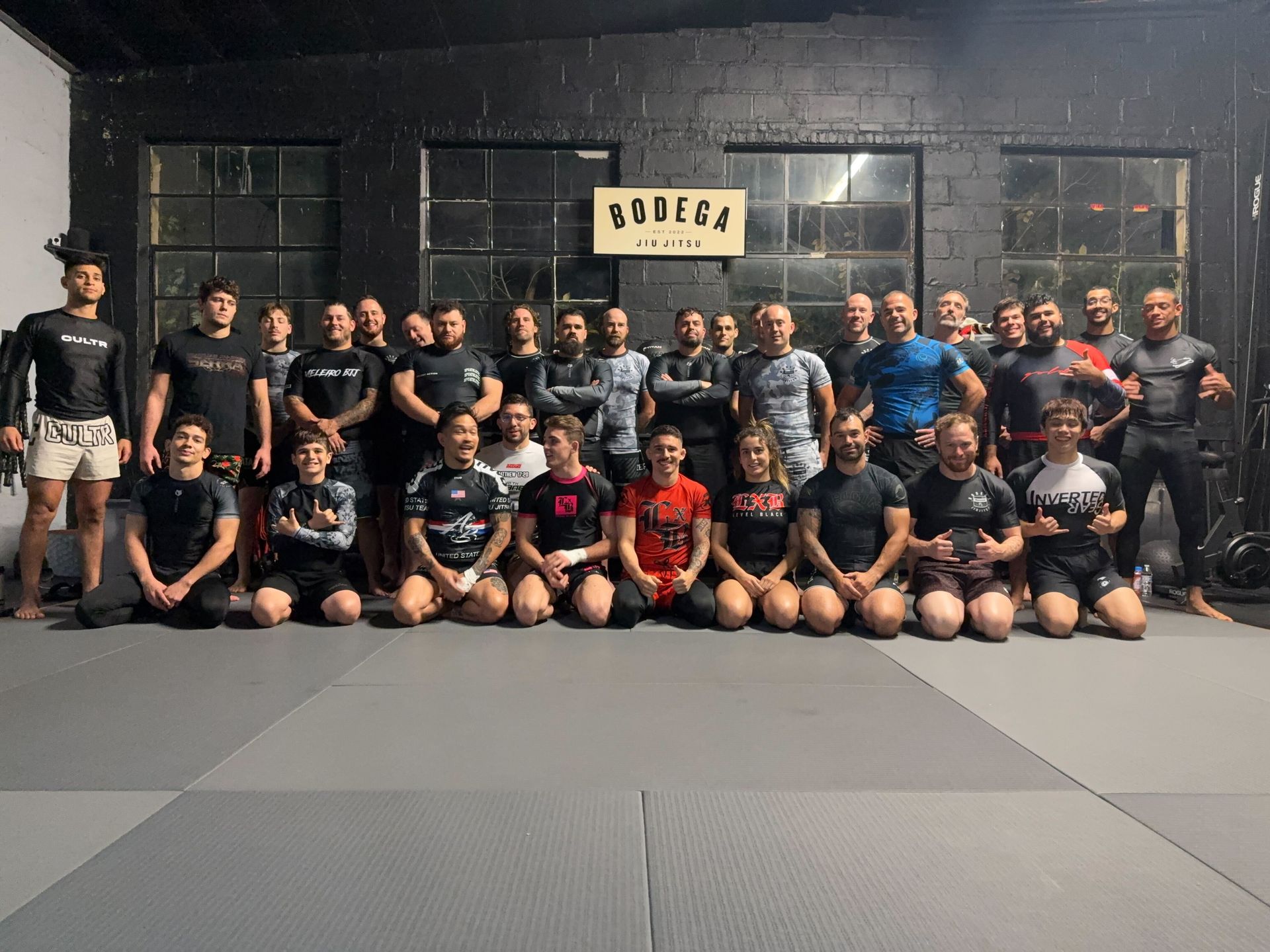
A shared practice on the mats can turn “one more activity” into the part of the week your family looks forward to most.
Families in Maplewood, NJ are busy in a very particular way: school drop offs, after school pickup, dinner, homework, and the constant question of what counts as quality time when everyone is tired. We meet a lot of parents who want something more than another screen break or seasonal sport, but also do not want an activity that splits the family into separate corners.
That is where Jiu-Jitsu fits beautifully. It is physical enough to feel like real exercise, skill based enough to keep kids engaged, and structured enough to build discipline without turning every class into a lecture. Best of all, it can be a shared routine: your child grows in confidence while you rebuild fitness and steady your stress, in the same supportive community.
In our Maplewood programs, we treat training like family development, not just “learning moves.” You will see kids working on listening and coordination, teens learning calm problem solving under pressure, and adults getting a full body workout that feels practical, not performative.
Why Jiu-Jitsu works so well for Maplewood families
Jiu-Jitsu is a grappling art, which means we teach control, balance, leverage, and positional strategy. That matters for families because it is not only about being tough. It is about learning how to stay composed, how to make smart choices, and how to use technique instead of panic. That is a life skill, whether you are eight or forty eight.
It also checks a lot of boxes at once. Parents usually have to choose between “fitness,” “character building,” and “self defense.” With Jiu-Jitsu, those are not separate goals. They are built into the same hour on the mat, week after week, with a clear structure and measurable progress.
And in Maplewood specifically, the all ages nature of training is a huge advantage. When a program supports kids, teens, and adults, it becomes easier to keep a routine. You do not have to reinvent the schedule every year as your child grows. Our class schedule is designed to make consistent training realistic, because consistency is where confidence actually comes from.
What kids gain from training, beyond “burning energy”
Yes, kids move a lot in class. That part is obvious five minutes in. But what surprises many parents is how quickly the “invisible skills” start to show up at home and at school.
Confidence you can see, and feel
We build confidence through small wins: learning how to fall safely, escaping a hold, remembering the steps of a technique, and staying focused during partner drills. Over time, kids start to trust their own ability to learn hard things. That is a different kind of confidence than hype or bravado. It is quieter, sturdier, and it tends to carry over into classrooms, friendships, and sports.
Coordination, agility, and body awareness
Our youth training emphasizes strength, stamina, coordination, and agility in a way that feels like play but is actually very intentional. Grappling requires kids to understand where their body is in space, how to balance, how to move their hips, and how to control distance. Those skills help in nearly every sport, and also help kids feel more comfortable in their own skin.
Discipline without harshness
We keep class structured: warm up, technique, drilling, and controlled rounds when appropriate for age and experience. Kids learn to line up, listen, take turns, and treat training partners respectfully. We are not trying to “break” kids into discipline. We are trying to build it, one repetition at a time, in a positive environment.
Youth Grappling in Maplewood: how we keep it safe and age appropriate
When parents hear “grappling,” safety is the first concern, and it should be. Our approach starts with the idea that safety is a skill that can be taught. We coach how to move responsibly, how to tap early, and how to be a good partner. We also match partners thoughtfully and keep the room supervised and structured.
We focus on control and technique rather than intensity. Kids learn to solve problems with leverage and positioning, not force. That makes Jiu-Jitsu a strong option for families who want practical self defense fundamentals and anti bullying confidence, without turning class into chaos.
Here is what you can expect our youth classes to consistently reinforce:
• Clear boundaries and respectful behavior, so kids learn when to engage and when to disengage
• Practical movement skills like base, balance, and safe falling, which reduce injury risk in everyday life
• Partner awareness and communication, including tapping and stopping immediately when needed
• Progressive learning, so beginners are not rushed into advanced situations
• Confidence through competence, so kids do not feel the need to prove anything the hard way
Teen benefits: composure, resilience, and a healthier outlet
Teens live with pressure. Sometimes it is obvious, sometimes it is not. Jiu-Jitsu gives teens a place to work hard, fail safely, and try again without being judged for it. That is powerful.
The training itself teaches composure. In grappling, rushing usually makes things worse. Teens learn to breathe, think, and make decisions under pressure. They also learn what real progress looks like: showing up, drilling basics, asking questions, and staying patient. It is not flashy, and that is kind of the point.
For many families, this becomes a healthier outlet than the usual stress loop. Instead of spiraling, teens get to move, focus, and reset. After class, the mood tends to be calmer. Not perfect, of course. Just calmer.
Adult Grappling in Maplewood: a realistic path back to fitness
A lot of adults want to get in shape, but do not want to do another round of “punish yourself cardio” that disappears after two weeks. Adult grappling is different because the workout is attached to a skill. You are learning, problem solving, and sweating, all at once. That makes it easier to stay consistent.
You do not need to be fit before you start. We build you up gradually. You can modify intensity, take breaks, and progress at a pace that makes sense. The goal is sustainable training, not surviving day one and then never coming back.
Jiu-Jitsu is also efficient. In one class you will work your grip strength, core, hips, and cardio, plus mobility and coordination. It is full body training in a practical format, which is why so many adults end up saying, “I did not expect to like this as much as I do.”
Stress relief that actually sticks
There is a specific kind of stress relief that happens when your brain has to focus completely on the present moment. Grappling does that. It forces you to pay attention to breathing, posture, pressure, and timing. The mental noise gets quieter because it has to.
We also see adults build confidence in a different way than kids. Adult confidence often comes from proving to yourself that you can learn something new, stay calm in uncomfortable positions, and keep showing up. You walk out feeling lighter, not because life got easier, but because you handled something hard and stayed steady.
How training becomes a family connection point
The real magic for Maplewood families is when training turns into shared language. Not just “How was class,” but actual details: what you practiced, what you are working on, what felt challenging, what finally clicked.
When parents and kids train in the same community, a few helpful things happen. Kids see adults learning too, which normalizes being a beginner. Adults see how much courage kids bring to the mat, which is honestly pretty motivating. And the family starts measuring progress the same way: effort, consistency, and good attitudes, not just “winning.”
We encourage families to treat training like a shared project. You do not have to train in the same class to benefit from the same culture. Just being part of the same place, seeing familiar faces, and building a routine together creates a steady kind of connection.
What to expect in your first class
Starting something new can feel awkward, especially if you have not done a sport in years or your child is nervous. We keep the first experience simple and welcoming. Our instructors guide you through the basics, and we make sure you understand the structure so you can relax and focus.
A typical first class includes:
1. A quick orientation so you know where to go, what to do, and how the class flows
2. A warm up focused on safe movement, balance, and basic coordination
3. Technique instruction with clear steps and plenty of repetition
4. Partner drills where we coach you closely and keep intensity appropriate
5. Time for questions, so you leave knowing what to do next and how to progress
You also do not need fancy gear on day one. Wear comfortable athletic clothing, bring water, and show up a bit early so you are not rushing. If you are unsure, the website has guidance, and we will help you get set.
How often should families train to see results?
Families often ask for the “perfect schedule,” but the best answer is the one you can maintain. We would rather see you train twice a week for six months than try five times a week for two weeks.
For most families, a strong starting point is two classes per week per person. That builds momentum, reinforces learning, and keeps the body adapting without feeling overwhelming. If you want faster progress, you can add a third day, but the baseline is consistency.
We also recommend giving it a real runway. Jiu-Jitsu is skill heavy, and the first month is about learning the language. Around weeks four to eight, many people notice big jumps in comfort and confidence. That is when the routine starts to feel like it belongs to you.
Ready to Begin
If you want an activity that builds fitness, self defense skill, and real confidence while strengthening family connection, our approach is designed for exactly that. We keep training structured, beginner friendly, and rooted in the idea that progress should feel steady and safe, not intimidating.
When you are ready, we will help you choose a realistic starting plan and plug into the class schedule in a way that fits your household. Bodega Jiu-Jitsu is here in Maplewood to give families a place to grow stronger together, on and off the mats.
Take what you learned here to the mats by joining a grappling class at Bodega Jiu Jitsu.