A focused hour of training can quiet your mind faster than most “relaxation” tips ever will.
Stress in Maplewood can feel oddly layered: work demands that follow you home, family schedules that stack up, and the constant hum of being close enough to NYC that the pace still rubs off on you. We see it every week. People walk in carrying tension in their shoulders and a busy mind that just will not power down. Then class starts, and something shifts.
That shift is one reason we talk so much about grappling as more than a workout. The mental reset comes from using your body, your attention, and your decision-making at the same time. Research on Brazilian Jiu-Jitsu and related training keeps pointing in the same direction: reductions in anxiety, depression, aggression, and even PTSD symptoms, plus gains in confidence, resilience, self-control, empathy, and mindfulness-like focus. Those are big claims, but the day-to-day experience on the mat makes them feel surprisingly practical.
In this guide, we will break down why training works as stress relief, what a class feels like for adults, and how Maplewood locals build a routine that supports real balance, not just a temporary “good mood” after exercise.
Why Grappling Works When Your Brain Will Not Shut Off
A lot of stress-management advice is passive: breathe, sit still, try to “clear your mind.” That can help, but it can also be frustrating when you are wired. Grappling is different because it gives your mind a job. Your attention has to land on something specific: posture, grips, frames, breathing, balance, timing. You cannot check email in the middle of a live round.
That forced focus is a major part of the mental benefit. Studies in the last several years describe a mindfulness-like effect in training, where sustained attention plus physical exertion supports long-term stress reduction. In other words, you are not “escaping” stress so much as practicing how to stay steady while pressure is real and immediate.
We also like how honest grappling is. If you tense up, you gas out. If you rush, you give up position. The mat becomes a mirror, but not in a harsh way. It just gives you clean feedback, and clean feedback is calming.
The Physiology of a Reset: Effort, Endorphins, and Better Sleep
Your body is built to process stress through movement. When you train hard, you get a controlled flood of endorphins, improved cardiovascular demand, and muscular engagement that tells your nervous system, “We used the energy.” That is why many adults report feeling lighter after class, even if the day before training felt heavy.
Over time, consistent training can improve conditioning, coordination, and overall physical confidence. Those changes matter for stress because a stronger body tends to interpret daily challenges as more manageable. And yes, sleep often improves, partly because your body has done real work and partly because your mind has had a break from spinning.
The Confidence Effect: What the Research Says and What We See in Class
Confidence is not just a personality trait. It is often a record of lived experiences where you handled something hard and did not fall apart. Grappling provides those experiences in small, repeatable doses.
Research reports high rates of improvement among practitioners: 87.6 percent report improved confidence, 87.5 percent report reduced anxiety, 96.9 percent report improved mood, and many report improved mental flexibility around 81.3 percent. Those numbers are striking, but what we like most is how they show up in real life: better boundaries at work, calmer conversations at home, and less “doom loop” thinking.
Training also reinforces self-control. In good practice, the goal is not to dominate. It is to learn control, timing, and decision-making. That is why adults often find the environment surprisingly grounding. You learn to stay composed while someone is actively trying to disrupt your balance, and then you stand up, shake hands, and keep going.
Maplewood Stress Has a Particular Flavor, and Training Meets It
Maplewood is full of people who do a lot. Professionals with long commutes. Parents shuttling between activities. Adults returning to fitness after years of sitting. We built our adult grappling classes with that reality in mind: you need training that works for your schedule and your body, not a program that assumes you are 22 and invincible.
We also see how social connection matters here. Suburban life can be friendly, but it can still be isolating. Grappling creates structured connection. You partner up, you learn names, you solve problems together, and you sweat a little doing it. That kind of community support is one of the reasons research points to training as a promising tool for resilience, including for veterans and first responders who often carry stress differently.
What a First Class Feels Like (And Why Beginners Usually Relax Faster Than Expected)
If you have never tried grappling arts Maplewood residents talk about, your first concern might be: “Do I have to be in shape?” No. You can start where you are. We coach technique first, because technique is what makes training feel safe and sustainable.
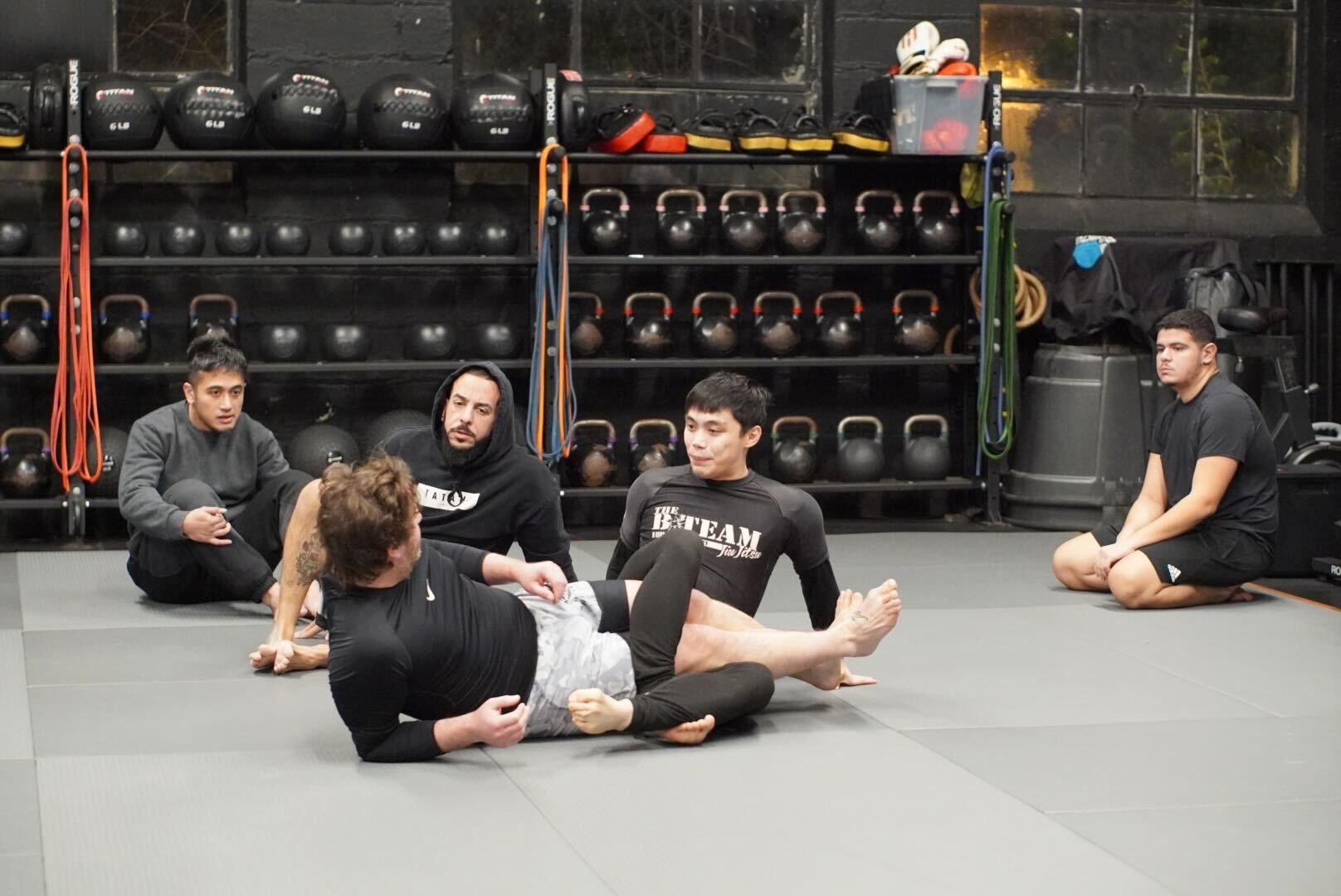
A typical first class is more structured than people expect. You will warm up, learn a small set of movements, drill them with a partner, and then, depending on the day, do controlled sparring. The key word is controlled. We want you learning, not surviving.
Beginners often feel awkward for about ten minutes, and then the thinking brain quiets down. You start focusing on simple tasks: where your hands go, how your hips move, how to breathe when you feel pressure. It is strangely soothing, even when it is challenging.
Safety and Longevity: Control Over Chaos
We take safety seriously because stress relief should not come with a side of “now my shoulder hurts for three weeks.” Our coaching emphasizes tapping early, using good mechanics, and choosing training intensity that fits your experience level.
If you are worried about injuries, it helps to know that a smart program prioritizes positional control and gradual exposure. You can train with purpose without treating every round like a championship match. In fact, staying relaxed is part of the skill.
The Hidden Skill: Learning to Breathe Under Pressure
One of the most valuable stress tools you can take off the mat is breath control under pressure. In grappling, breath is information. If you hold it, you panic. If you manage it, you think.
We coach breathing cues constantly, especially when you are pinned or working out of a tight position. Those moments translate directly to daily life: difficult meetings, tense family conversations, or that familiar late-night spiral where everything feels urgent. You learn, through practice, that pressure is not the same as danger, and you can still make decisions.
How Training Builds Mental Flexibility and Better Decision-Making
Mental flexibility is the ability to adapt when the plan stops working. On the mat, that happens every round. You try a guard pass, your partner counters, you switch angles, you change grips, you reset your posture. That is cognitive flexibility training in motion.
Research also connects Brazilian Jiu-Jitsu training to leadership traits such as emotional stability, stress management, and decision-making under pressure. You might not join to “build leadership,” but you may notice something: hard situations feel less personal. You get better at treating problems like problems, not like threats to your identity.
A Practical Routine for Maplewood Adults: What Consistency Looks Like
Stress relief is rarely about one heroic workout. It is about consistency that fits your life. Many adults do well with two to three sessions per week, especially when work and family calendars are full.
One study suggests measurable benefits after around 40 sessions over roughly five months. That does not mean you have to wait five months to feel better. Most people notice a mood lift sooner. The longer timeline is about deeper, steadier change.
Here is a simple way we suggest tracking progress without getting obsessive:
1. Before class, rate your stress from 1 to 10 and write one sentence about what is on your mind
2. After class, rate stress again and note what changed: energy, mood, sleepiness, calm
3. Each week, look for patterns: which days you train best, what intensity helps most
4. Adjust your routine using the class schedule so training supports your life instead of competing with it
You will start seeing something encouraging: even on “bad” days, you can walk out feeling more capable.
What You Actually Learn in Adult Grappling Classes
People sometimes assume adult grappling classes are only about fighting. In reality, most of your time is spent learning how to move, control distance, and solve physical puzzles with a partner. Those puzzles are part of the stress relief because your brain gets absorbed in the process.
Our adult program typically includes:
• Positional fundamentals like base, posture, and pressure that keep you safe and efficient
• Escapes and reversals that teach you how to stay calm when you feel stuck
• Control positions that reward patience and timing, not frantic effort
• Submissions taught with clear safety rules so you learn precision and respect
• Live rounds scaled to your level so you build confidence without overload
The common theme is skill over chaos. When skill improves, anxiety tends to drop because you feel less helpless, on and off the mat.
Grappling as a Social Practice, Not a Solo Grind
Gym routines can be lonely. Grappling is collaborative by nature. You need partners. You share small wins. You get humbled, then you learn, then you laugh about it, and you move on.
That camaraderie is not fluff. Social support is repeatedly mentioned in research as a factor in sustained mental health benefits, especially for people dealing with chronic stress or trauma-related symptoms. When you know people expect you to show up, you show up, and showing up is half the battle.
Take the Next Step
If you want a stress tool that feels active, practical, and surprisingly grounding, grappling is worth experiencing in person. We have built our environment around steady progress, safety, and a community that makes it easier to stay consistent when life gets busy.
When you are ready, Bodega Jiu-Jitsu is here in Maplewood with adult grappling classes that meet you where you are and help you leave the day behind on the mat, one focused round at a time.
Ready to train? Join the grappling program at Bodega Jiu-Jitsu and experience purposeful, high-level training on the mats.