Jiu-Jitsu is one of the rare workouts that trains your body, your mind, and your social life at the same time.
Maplewood is full of people who care about wellness, but we also know the reality: busy schedules, stress that stacks up fast, and workouts that start strong and fade out. That is why we teach Jiu-Jitsu as more than a set of techniques. Done the right way, it becomes a full body training method that keeps you showing up because it feels purposeful.
In our classes, you are not just moving. You are solving problems with your body, learning how to stay calm under pressure, and building consistency through coaching and partner work. Whether you want a better fitness routine, practical self defense skills, or a community that makes training feel like the best part of your day, Jiu-Jitsu tends to meet you where you are and grow with you.
Why Jiu-Jitsu works as full body strength training
Strength is not only about lifting heavier. Real life strength includes posture, balance, core control, grip endurance, mobility, and the ability to generate force while staying coordinated. Jiu-Jitsu brings all of that into one session because you are constantly learning how to control your own body and manage another person safely.
A typical class blends warm ups, technical instruction, drilling, and controlled live rounds. That mix matters. Research across sports medicine and public health repeatedly shows that combining skill practice with moderate to vigorous physical activity improves muscular fitness and cardiovascular health, especially when you stay consistent week to week. We structure training so you build capacity gradually, instead of trying to survive an intense workout that leaves you wiped out and sore for days.
Functional strength you can feel outside the gym
Jiu-Jitsu develops usable strength, the kind that shows up when you carry groceries, play with your kids, or sit at a desk all day without feeling stiff. You learn to connect your hips, core, and shoulders so your body works as a unit. Over time, many students notice better posture and fewer nagging aches, mostly because training encourages good movement patterns and active control.
We also emphasize leverage. That is one of the reasons Jiu-Jitsu is so accessible across ages and body types. Technique helps you apply strength efficiently, so you do not need to be the biggest person in the room to make progress.
What “strength” really means in our classes
Here is what we see people build when training becomes consistent:
• Core and hip strength that supports balance, posture, and safer movement in daily life
• Grip endurance and upper body pulling strength from clinches, holds, and positional control
• Leg drive and stability from standing entries, base building, and pressure passing mechanics
• Mobility and flexibility from moving through full ranges of motion under guidance
• Cardiovascular fitness from interval style rounds that challenge your recovery and pacing
• Coordination and body awareness that makes you feel more athletic even if you did not start that way
That mix is why Jiu-Jitsu often feels like strength training, cardio, and mobility work all at once, but without the boredom of repeating the same machine circuit.
How focus and mental toughness grow on the mat
Focus is a skill, not a personality trait you either have or do not have. In Jiu-Jitsu, attention is trained the same way a technique is trained: through repetition, feedback, and a clear goal in front of you. You cannot drift mentally and still learn. Your partner is right there, the situation changes constantly, and you have to stay present.
A growing body of research in youth development and sport psychology connects structured sports participation with improved self regulation, confidence, and resilience. We see that play out in a very practical way. Students learn to listen, try, adjust, and try again. That loop builds follow through, and follow through becomes a habit.
Learning to stay calm under pressure
Controlled sparring is where a lot of the mental training happens. You experience a little stress in a safe, coached environment, then learn how to breathe, think, and choose the next step instead of panicking. That is emotional control in action. It is also one of the reasons Jiu-Jitsu can feel like stress relief for adults. You leave class tired, but the mental noise is often quieter.
For beginners, it is normal to feel overloaded at first. New terms, new positions, new timing. We teach with that in mind. We would rather you understand one concept clearly than memorize ten moves and remember none of them.
Focus for kids and teens without the lecture
For younger students, focus and discipline are not taught as speeches. They are built into the structure: line up, listen, drill, take turns, and reset when something goes wrong. The mat gives immediate feedback. If you rush, you lose position. If you stay patient, you improve control. That cause and effect is simple, and it sticks.
Parents in Maplewood often want after school structure that does not feel like more school. Martial arts can do that when it is coached well. Our goal is to help kids build attention, resilience, and confidence while keeping training safe and age appropriate.
Why community is not a bonus, it is part of the training
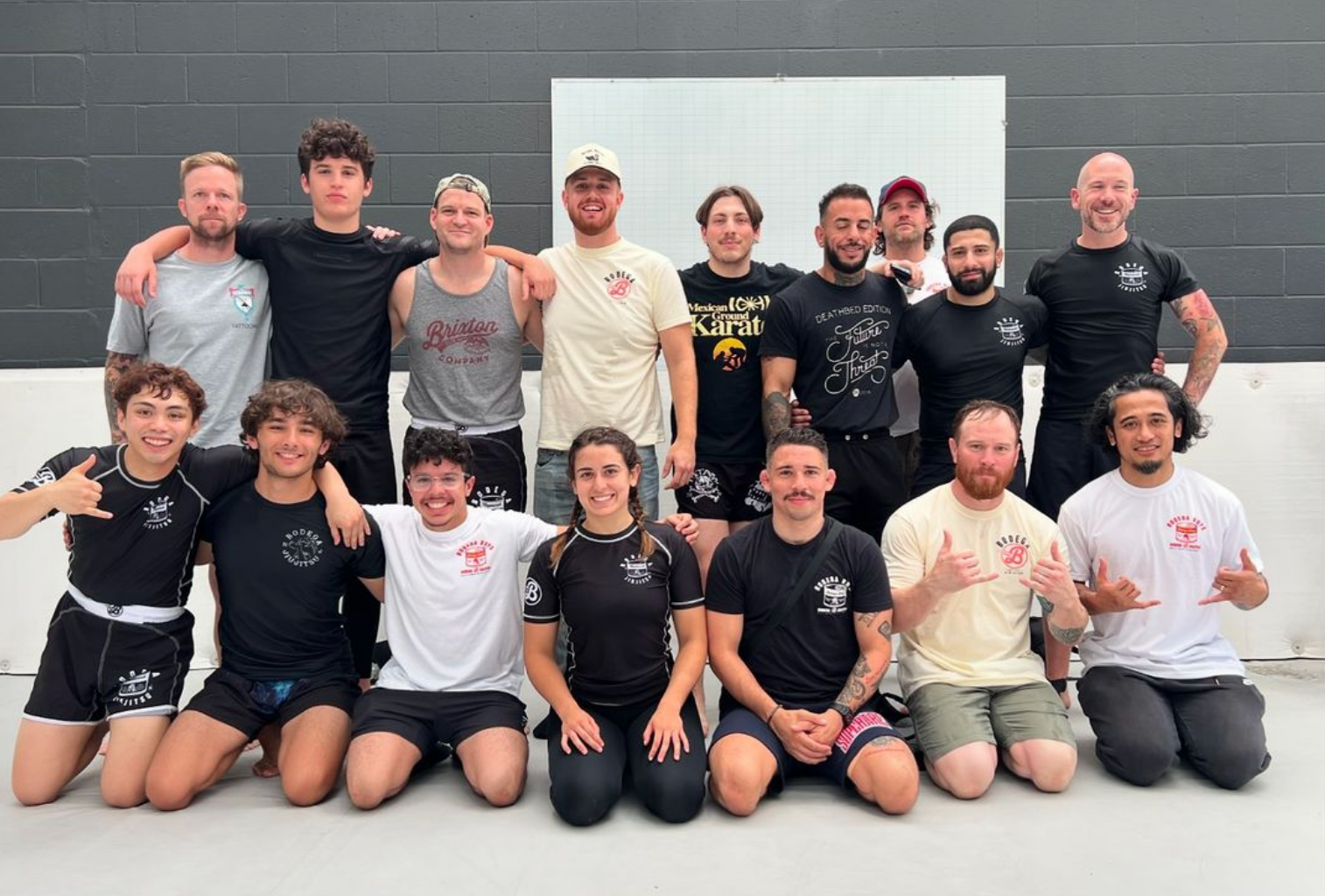
Jiu-Jitsu is partner based. You cannot do it alone, and that is the point. Training partners help you improve, and you help them improve. Over time, that creates a community that feels different from a solo gym routine where you put on headphones and disappear.
Community is also one of the strongest predictors of sticking with a fitness habit. Public health research on exercise adherence consistently shows that social support increases consistency. In our space, support is built into the format. You drill together, you ask questions, you laugh when a technique feels awkward, and you celebrate small wins that only other grapplers really understand.
A welcoming mat culture for beginners
We run beginner friendly sessions where you can learn at a pace that makes sense. You do not need to “prove” anything to belong here. We match partners thoughtfully, coach the room actively, and keep the environment respectful. That is how you learn faster and stay safer.
This matters even more for adults who are returning to training after years away from sports. You might be strong, you might be stiff, you might be nervous. All of that is normal. Our job is to help you build confidence through steady reps and clear feedback.
No Gi training in Maplewood: simple, practical, beginner friendly
Many new students ask about No Gi because it feels more straightforward. No Gi typically uses athletic wear instead of a traditional uniform, and gripping changes because you are not holding sleeves or collars. The result is a style that emphasizes body control, positioning, and adaptability.
We like No Gi for beginners because the gear is simple and the movement often feels more familiar, especially for people with a sports background. It also connects well to real world control and self defense concepts: distance management, clinching safely, getting back to your feet, and using leverage when things are messy.
What beginners should expect in the first few weeks
Starting anything new takes a little courage. The good news is that you do not have to be in amazing shape to begin. You get in shape by training, not before training. We keep the on ramp clear so you can focus on learning and building momentum.
Here is a realistic path we recommend for most new students:
1. Start with a beginner friendly class and aim to learn positions, not “all the moves”
2. Train 2 to 3 times per week so your body adapts and your memory builds naturally
3. Keep intensity moderate at first and prioritize clean technique and steady breathing
4. Ask questions after class and take one small takeaway into the next session
5. Track progress by comfort and control, not by “winning” rounds in the beginning
If you train twice a week for a couple of months, you will usually feel the difference in stamina, coordination, and confidence. It sneaks up on you, in a good way.
What to bring to your first class
You do not need much. Comfortable athletic clothing is a good start for No Gi. Bring water, arrive a little early, and expect to learn basic movement, safety rules, and a few foundational positions. If you have questions about gear, the website has guidance and our coaches can point you in the right direction.
Practical self defense: control, escapes, and smart choices
Self defense is not about being fearless. It is about having options and being able to manage a situation. Jiu-Jitsu focuses on controlling distance, off balancing, escaping pins, and getting to safer positions. Those skills are useful because they rely on leverage and timing, not just strength.
We also emphasize awareness and decision making. The best self defense is avoiding trouble when possible. When you cannot, training helps you stay composed enough to act, not freeze. That mental side is often just as valuable as the physical technique.
A Maplewood routine that fits real schedules
Most people in Maplewood are balancing work, family, commuting, and the occasional attempt at downtime. Our approach respects that. You do not need to train every day to get benefits. Consistency beats intensity, especially for adults.
Many students find that 2 to 3 classes per week is the sweet spot. It is enough to build skill and fitness without turning training into another source of stress. If you want to do more, great, we will guide that too. But if you need something sustainable, we build around sustainability.
Because we serve nearby communities like South Orange, Millburn, and Montclair, our schedule and class structure are designed for real life, not for a tiny group of people with endless free time. If you are searching for adult grappling in Maplewood that feels coached, welcoming, and still challenging, the details on the class schedule page can help you map out a routine that works.
Maplewood FAQ: quick answers to common questions
Where can adults train grappling in Maplewood?
We offer adult classes and beginner friendly sessions designed to help you learn safely and steadily, with partner work and active coaching every class.
Is Jiu-Jitsu good for kids in Maplewood?
Yes, when the program is structured and age appropriate. We focus on attention, follow through, emotional control, and confidence, with safety as the priority.
How is No Gi different from Gi?
No Gi uses athletic wear and changes how grips work, so training emphasizes body positioning, underhooks, control, and movement without fabric grips.
Can beginners join mid month?
Yes. Our beginner pathway is designed so you can start without waiting for a new cycle, and our coaches help you plug into the fundamentals.
What if I am not athletic?
You do not need to be. We coach technique first and build your fitness over time, and we match training partners to keep the experience safe and productive.
Take the Next Step
Training can be a workout, a skill, and a community, or it can be just another thing you try once and forget. Our goal is to make it the first kind: structured, beginner friendly, and worth building into your week because it keeps paying you back in strength, focus, and real connection.
When you are ready, we would love to welcome you at Bodega Jiu-Jitsu in Maplewood. Our classes are designed to meet you where you are, whether you are brand new, returning after time away, or looking for a consistent way to train Jiu-Jitsu without feeling overwhelmed.
Build stronger fundamentals and sharpen your technique by joining a grappling class at Bodega Jiu Jitsu.