Grappling looks physical from the outside, but the real change often shows up in your mind first.
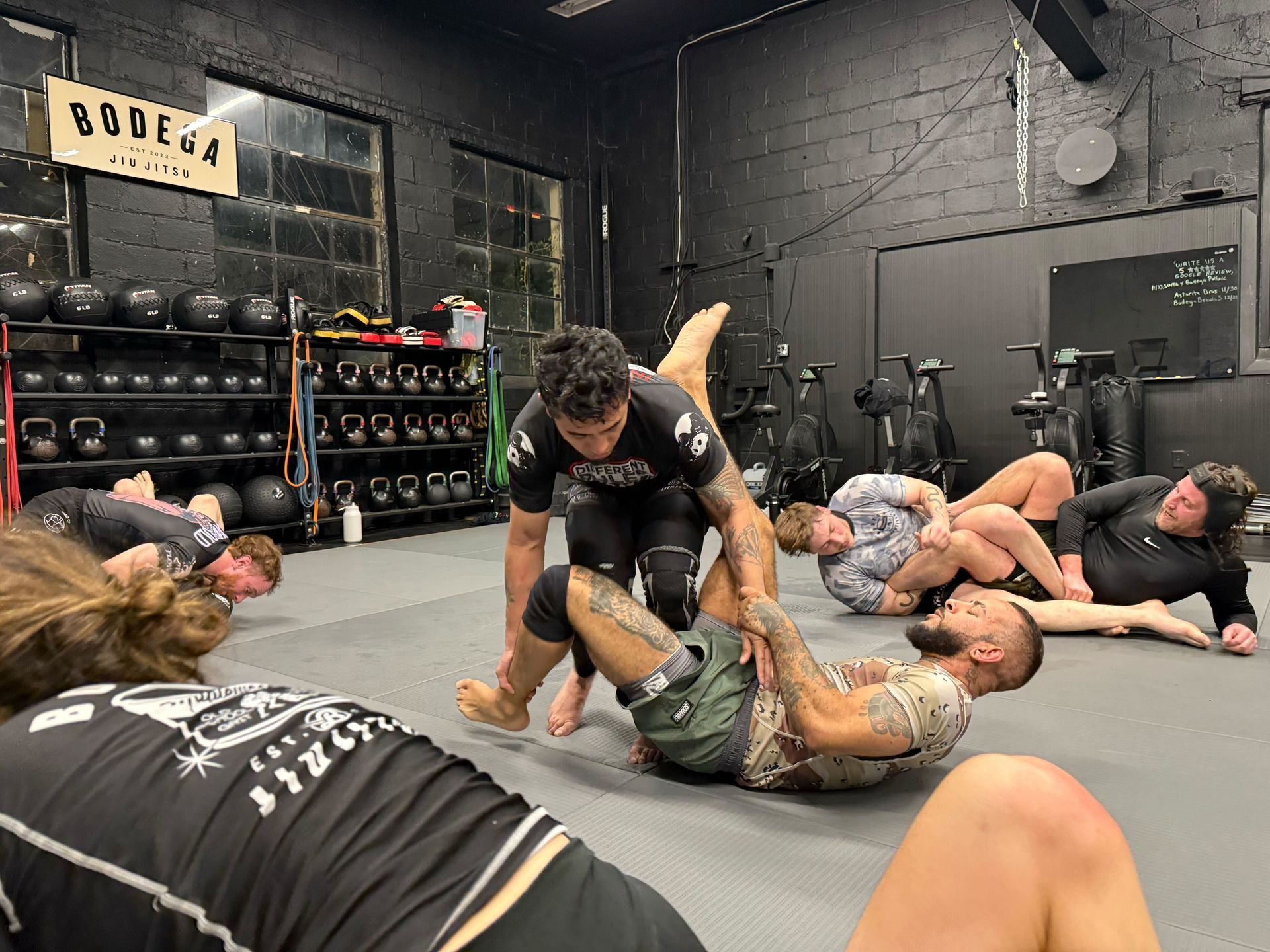
Grappling training is one of the few workouts where your brain cannot wander. When someone is trying to control your posture, your balance, and your breathing, you either get present or you get stuck. That is a big reason people in Maplewood tell us our classes feel like stress relief that actually lasts, not just a quick distraction.
We also see something that surprises beginners: you do not have to be aggressive to get the mental benefits. In fact, the biggest shifts usually come from learning composure, patience, and problem solving under pressure. Research on Brazilian Jiu-Jitsu continues to grow from 2021 to 2024, and the results match what we see on the mats: reduced anxiety, depression, and PTSD symptoms, plus improved resilience, self efficacy, and overall life satisfaction.
Maplewood is a high effort town in a good way. People commute, manage families, run businesses, and keep a lot moving. That pace is exactly why adult training that builds calm focus and social connection can matter as much as cardio or strength. Grappling gives you both.
Why Grappling changes your stress response, not just your fitness
A normal workout can leave you tired, but you might still carry the same mental tension afterward. Grappling is different because it repeatedly exposes you to controlled stress, then teaches you how to solve it. Over time, your nervous system starts recognizing pressure as something you can navigate.
In class, you practice breathing while pinned, framing and moving when the space is tight, and making decisions while your heart rate is up. Those moments are small, but they stack. The next time you hit traffic on the way to the Parkway or walk into a tense meeting, you have a familiar internal script: stay calm, find structure, take the next step.
This is part of what researchers describe as comfort in discomfort, and it is strongly linked to mental toughness and grit. Studies also show that more experienced practitioners report better psychological outcomes than new students, which makes sense. The longer you train, the more reps you have at staying steady.
The mental benefits we see most often in adult grappling classes
People show up for a lot of reasons: fitness, self defense, learning something new. The mental benefits usually sneak in. You notice your shoulders are not living up by your ears all day. You sleep deeper. You react less and choose more.
Here are the outcomes students commonly report after consistent training:
• Reduced daily anxiety through focused attention, controlled breathing, and the natural endorphin response to training
• Improved mood and lower depression symptoms, especially when training becomes a steady weekly routine
• Better emotional regulation, because you practice staying respectful and composed even in hard rounds
• Increased confidence from learning real positional skills, not just theory, so you feel capable instead of guessing
• A stronger sense of belonging, since training partners become familiar faces who notice when you improve
These benefits align with current research: measurable reductions in PTSD symptoms for certain populations, plus broad gains in resilience, self efficacy, and self control. The key is consistency, not intensity. You do not need to win every round. You need to keep showing up and learning.
Decision making under pressure is a skill you can train
One of the most underrated mental benefits of Grappling is how quickly it forces clear thinking. Every exchange has choices: where your hips are, where your head is, which grip matters, whether you should move now or wait half a beat. That constant decision loop becomes a kind of moving puzzle.
Our coaching emphasizes solving positions, not collecting random techniques. When you know what you are trying to accomplish in each position, your mind stops spinning. You learn to prioritize: posture first, frames second, escape path third. That structure helps in daily life too, because stress often feels like everything is urgent at once.
We also keep training progressive. Beginners get clear objectives and safe rounds that match their experience. More advanced students get layers: timing, set ups, counters, and strategy. That progression is important because research suggests belt level and training experience correlate with higher grit and mental toughness.
Why mindfulness is built into Grappling (even if you are not trying)
Mindfulness can feel abstract until you do something that demands it. Grappling demands it. You cannot replay yesterday while someone is passing your guard. You cannot plan dinner while you are working out of a pin. Your attention is right here, right now, because it has to be.
That mental presence has a spillover effect. Many students notice they get less reactive at home and at work. Not perfect, just better. You learn to feel tension early and reset: loosen your jaw, breathe lower, re frame the problem. It is practical mindfulness, earned through movement.
And because classes are structured, the mind gets a break from decision fatigue. You show up, warm up, learn, drill, and spar. The routine is steady, which matters in a busy Maplewood schedule where mental load can feel endless.
Social connection and community support, without forced small talk
Mental health is not just individual. It is social. Grappling creates a unique kind of connection because you are working together in a very real way. You protect your partner, your partner protects you, and both of you get better.
We keep the environment respectful and beginner friendly, so you can build trust at your own pace. Some people talk a lot. Some people just train and nod and head home. Both are fine. The point is you are not doing this alone, and you are not being judged for starting at zero.
This matters locally. Maplewood sits close to NYC energy, and that can be great, but it can also be isolating if your week is just commuting and screens. A consistent class schedule and familiar training partners can be a small anchor that makes a big difference.
PTSD, anxiety, and the role of controlled intensity
We are not a clinic, and Grappling is not a replacement for professional care. But the research is clear that Brazilian Jiu-Jitsu shows promise as a supportive intervention for mental well being, including sustained PTSD symptom reductions in certain groups like veterans and first responders. Essex County has plenty of people in high stress roles, and Maplewood is part of that larger reality.
What makes training helpful in that context is control. You choose when to ramp up. You tap to stop. You learn boundaries in a physical way, which can be surprisingly empowering. You also get repeated safe exposure to stress cues, and your body learns that pressure does not always equal danger.
We coach with that in mind. Technique comes first. Safety comes first. Respect is non negotiable.
A realistic timeline: when mental benefits usually show up
Most people want to know how fast this works. The truth is, you can feel better after one class, but lasting change comes from repetition. Studies suggest even short programs, around 12 weeks, can reduce emotional symptoms and improve behavior markers in both kids and adults. Long term training tends to correlate with stronger outcomes like grit, resilience, and lower rates of certain mental health disorders.
In real life, here is the pattern we usually see:
1. Weeks 1 to 2: You feel mentally lighter after class, mainly from exertion, focus, and social energy
2. Weeks 3 to 6: You start noticing better sleep, more patience, and less baseline stress during the day
3. Weeks 7 to 12: You feel more competent in positions, which boosts confidence and reduces anxiety during sparring
4. After 3 months: You handle pressure better, both on the mats and off, because your response is trained, not accidental
If your schedule is tight, two classes per week is often enough to see meaningful mental change. Consistency beats doing a lot once in a while.
Safety, beginner nerves, and why technique matters more than strength
Many adults hesitate because they picture chaos. Our approach is the opposite. Grappling is technical, and that is good news for beginners. You do not need to be strong or fast to learn the basics. You need coaching, structure, and partners who are there to improve, not prove something.
We spend time on fundamentals: posture, base, frames, and escapes. We teach you how to tap early and often, how to communicate during rounds, and how to train at an intensity that matches your goals. For many students, that alone reduces anxiety. Clear rules create calm.
If you are brand new, we also help with practical details: what to wear, how to pace yourself, and how to use the first month to build comfort. The goal is to make training feel challenging but manageable, not overwhelming.
How Grappling supports confidence outside the gym
Confidence is not hype. It is evidence. When you practice getting out of bad positions, you internalize a simple message: you can work through discomfort. That can change how you show up everywhere.
Self defense is part of that, but so is posture and presence. You stand differently when you know how to stay balanced. You speak differently when you trust your ability to stay composed. Many adults also report less fear of conflict, not because they want it, but because they feel less powerless.
Over time, that confidence often becomes quieter. You do not need to announce it. You just feel it.
Ready to experience these mental benefits in Maplewood
If you want a training routine that builds fitness and mental steadiness at the same time, our adult grappling classes are designed for exactly that. We keep coaching structured, progressive, and realistic for busy schedules, so you can train hard without burning out.
When you are ready, we can help you start in a way that feels comfortable and sustainable. At Bodega Jiu-Jitsu, we see Grappling as a long game that improves your decision making, stress response, and confidence one class at a time, and Maplewood is a great place to build that habit.
Step onto the mats and start grappling at Bodega Jiu-Jitsu.