
Grappling turns stressful moments into solvable problems, one safe round at a time.
Discipline is easy to admire and surprisingly hard to keep. Most adults in Maplewood are juggling work pressure, family schedules, and a nonstop stream of obligations, so consistency becomes the real challenge, not motivation. That is exactly why grappling works so well: it rewards steady effort, not hype.
In our adult No-Gi training, discipline is not a speech or a slogan. It is a skill you practice in real time. You learn how to show up even when you are tired, how to breathe when your heart rate spikes, and how to make calm decisions when a partner is applying real pressure.
Just as important, you do not need an athletic background to start. Our approach begins with foundations like positions, movement, and safe sparring habits, then builds week by week into escapes, control, and practical self-defense fundamentals that fit real life in Maplewood.
Why grappling builds discipline differently than typical fitness routines
Many workouts depend on willpower. You tell yourself to push harder, run longer, lift heavier, repeat. Grappling gives you something more reliable: immediate feedback. If your posture breaks, you feel it. If your timing is off, you notice it. If you stay patient and use the right frame or angle, you escape.
That feedback loop is a big reason adult grappling classes have surged in popularity, including here in Maplewood. Progress is tangible and specific. You can track it in small wins: recognizing a position before you panic, surviving a round with better pacing, or escaping a bad spot using technique instead of brute strength.
Discipline also becomes social in a healthy way. Because training is partner-based, your attendance matters. When you commit to a consistent schedule, you are not just exercising, you are practicing reliability with real people, in real time, without the performative pressure of “looking fit.”
The discipline engine: structure, repetition, and accountability
A well-run class gives you a container for growth. We keep our sessions predictable enough that you can relax and focus, but varied enough that you do not plateau. Most classes follow a clear rhythm: technique, drilling, positional practice, and controlled live rounds.
That structure matters because discipline is largely about removing friction. You do not have to guess what to do. You simply arrive, warm up, learn the day’s theme, and stack reps. Over time, that routine becomes a habit you can keep, even during hectic weeks.
The other key ingredient is pacing. In grappling, going too hard too soon usually backfires. You gas out, your movements get sloppy, and you start relying on strength. We coach you to slow down, breathe, and build rounds you can recover from. That mindset is discipline in action: control now, progress later.
What you actually do in adult No-Gi classes
No-Gi Brazilian Jiu-Jitsu focuses on body control without the traditional uniform grips, so you learn to manage distance, underhooks, head position, and pressure through smart connection. It is practical, athletic, and adaptable for different body types.
A typical class is designed to help you learn safely and apply what you learn right away:
• Technical instruction that centers on foundational positions like guard, side control, mount, and back control, so you always know where you are and what your goals are
• Drilling that builds coordination and timing, because consistent reps turn “ideas” into reliable movement
• Positional training that starts from a specific scenario, like escaping bottom side control, so you practice solutions without chaos
• Controlled live rounds matched to experience level, so you get real feedback without being thrown into the deep end
• Safety habits like early tapping, clear communication, and pace management, so you can train consistently and stay healthy
That last part is not a footnote. Consistency is the foundation of discipline, and safety is what makes consistency possible.
Safety and consistency: how we keep training sustainable
Adults have responsibilities. You cannot afford to be wrecked for days after training, and you should not have to choose between learning and staying healthy. In our grappling environment, we treat safety as a skill set, not just a rule.
We coach early tapping because it protects your joints and your long-term training. We also encourage talking during rounds. A quick “lighten up,” “my neck is tight,” or “can we reset?” is not weakness, it is maturity. That mindset keeps the room welcoming for beginners and still effective for experienced students.
We also teach you how to “lose well.” If you are caught, you tap, reset, and learn the pattern. That habit alone carries into daily life: you stop wasting energy on denial and start focusing on solutions.
The physical discipline you can feel: strength, breathing, and balance
Grappling conditions the entire body, but it does it through coordinated effort instead of repetitive motion. You build hips and core strength from bridging, framing, and maintaining posture under pressure. Your grip and forearms strengthen naturally through hand fighting and control, even without a gi.
Balance and coordination improve fast because your body is constantly learning how to create base, remove base, and move around another human. Breathing becomes a real metric, too. In the first month, many adults notice that they stop holding their breath during hard moments, and that changes everything. When you can breathe, you can think.
This is where discipline becomes physical: you learn to stay relaxed while working. That is a rare skill, and it translates to how you carry yourself outside the mats.
The mental side: calm problem-solving under pressure
In Maplewood, stress is not abstract. It shows up in commutes, deadlines, parenting logistics, and the mental load that never fully turns off. Grappling gives you a controlled place to practice pressure, and more importantly, to practice your response to pressure.
Every position presents a problem. Your job is to solve it with posture, leverage, timing, and smart decision-making. You start asking better questions: Where is the space? What is the immediate threat? What is the safest next step?
That is discipline: choosing the next right action instead of reacting emotionally. Over time, you build a kind of steady confidence. Not loud confidence. Practical confidence that comes from having navigated hard rounds and kept your composure.
A beginner timeline: what discipline looks like week by week
People often assume you need to “get in shape” before joining adult grappling classes. We see the opposite work better. Start now, learn the basics, and let the training shape your fitness and focus.
Here is a realistic progression we often see as you commit to steady attendance:
1. Week 1: You learn core safety rules, tapping, and basic positions so you understand what is happening and can train without panic
2. Week 2: You start recognizing patterns like framing, hip escaping, and maintaining posture, and you notice small wins in balance and timing
3. Week 3: You begin solving problems mid-round, not just surviving, and your breathing improves because you stop sprinting through every exchange
4. Week 4: You feel tougher in a grounded way, with better coordination and clearer decision-making, and you can measure progress by how calm you stay
That is the discipline payoff. It is not dramatic. It is repeatable, which is the point.
How discipline carries into Maplewood daily life
When you train consistently, your habits outside the academy start to shift. You become more aware of posture, because bad posture gets punished in grappling. You get better at planning your energy, because wasting it on the wrong move has consequences.
We also see adults carry over the communication habits. If you can communicate clearly in a hard round, you can usually communicate more clearly in a tense meeting or a stressful family moment. You learn to pause, breathe, and choose a response.
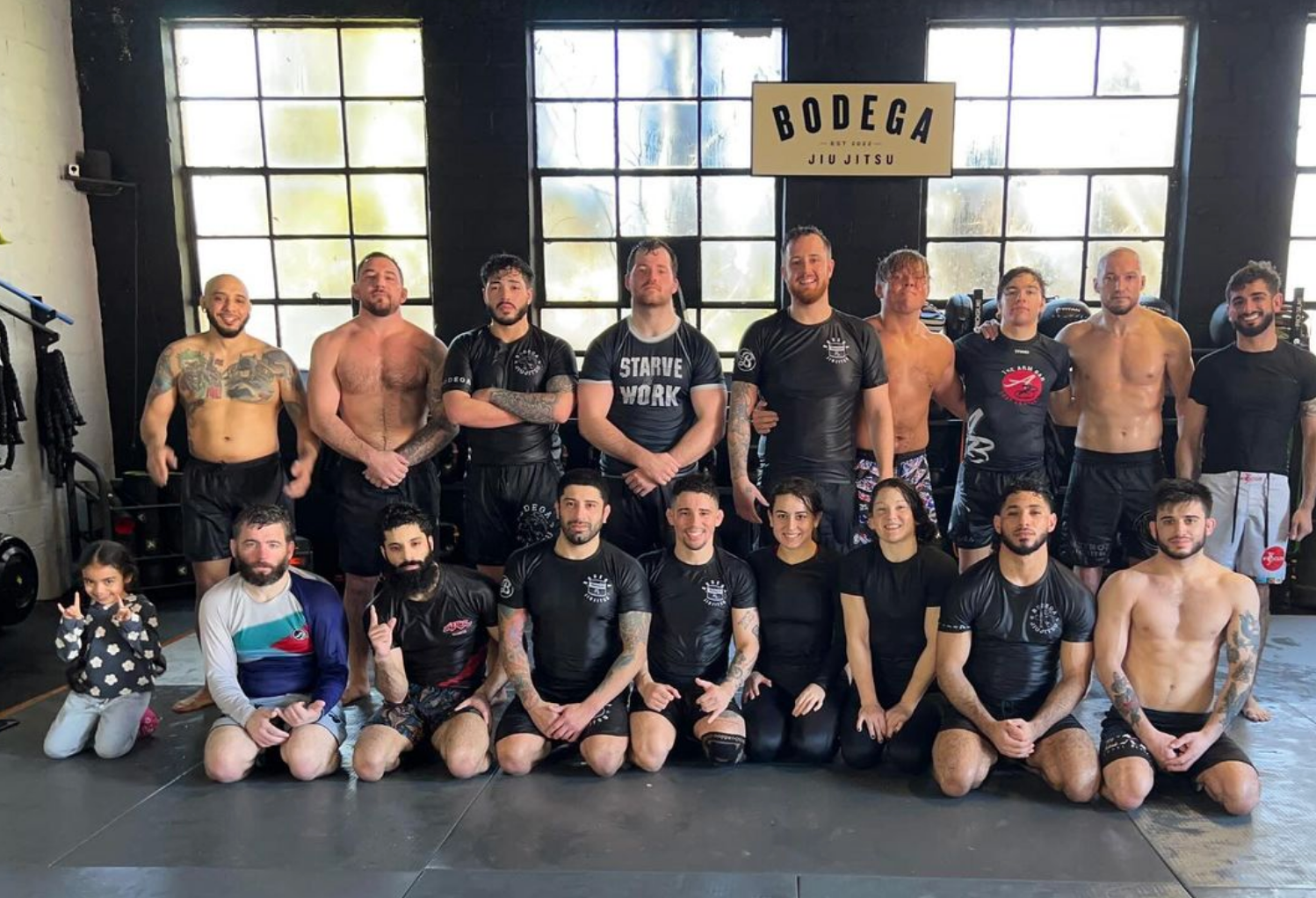
And there is a community layer that matters in a town like Maplewood. Partner training creates bonds. You learn names, you learn styles, you learn how to be a good teammate. That social accountability becomes another form of discipline: you keep showing up because you are part of something real.
Common questions about getting started
Is grappling only for athletes?
No. We teach fundamentals from the ground up, and we scale intensity so you can learn without needing prior conditioning or flexibility.
What if I feel nervous about sparring?
That is normal. We introduce live work progressively and keep rounds controlled and matched to experience, so you build comfort and skill without chaos.
Will I get injured?
Any contact sport has risk, but we reduce it with pacing, early tapping, communication, and a culture of partner respect. Training smart is a core part of our discipline model.
How much time do I need each week?
Many adults do well with two to three classes weekly, but even one consistent session builds momentum. The class schedule page helps you plan around Maplewood life realistically.
Ready to Begin
Building discipline is not about forcing yourself to feel motivated every day. It is about choosing a practice that rewards consistency, teaches you how to stay calm under pressure, and gives you a community that keeps you accountable. That is what our grappling program is designed to do, especially for adults balancing full lives in Maplewood and nearby towns.
If you want a place to train with structure, safety, and a clear path from beginner fundamentals to confident problem-solving, you can find that at Bodega Jiu-Jitsu. We keep the focus on No-Gi skills you can actually use, and we make it realistic to stay consistent long enough for discipline to stick.
Improve your fitness, confidence, and control through grappling training at Bodega Jiu-Jitsu.